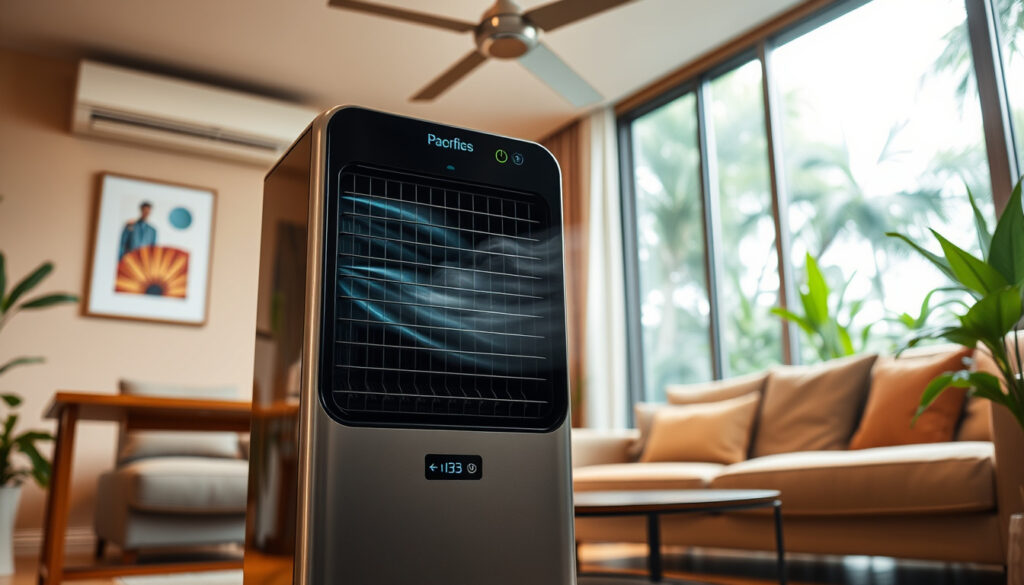
ACMECA Air Cooler Singapore: Effectiveness, Cost & Comparisons
If you’ve ever stood under a fan during a Singapore afternoon and wished for something stronger, you’ve likely wondered about air coolers. The idea of a mist-powered breeze sounds appealing, but does it actually work when humidity is already near 84%? This article looks at how evaporative coolers—including those from local brand Acmeca—perform in real Singapore conditions, and whether they’re a smart alternative to air conditioning. You’ll get data-driven answers, not marketing talk.
Average relative humidity in Singapore: 84% (National Environment Agency (Singapore)) ·
Typical room temperature range: 28–32°C ·
Evaporative cooler power consumption: 100–250W (BusyKidd) ·
Portable air conditioner power consumption: 1000–1500W (BusyKidd)
Quick snapshot
- Adds up to 20% more humidity, which can make rooms feel stickier (BusyKidd)
- Requires regular cleaning and antibacterial pads to prevent mold (BusyKidd)
- Water tank needs refilling every few hours in continuous use (BusyKidd)
- Singapore-based, specialises in misting and portable evaporative coolers (Acmeca)
- Offers both sales and rental of air coolers (Maxcool Industries)
- Products listed on Carousell and Lazada (Acmeca)
The very feature that makes air coolers energy-efficient—evaporation—is why they struggle in Singapore. When the air is already saturated with moisture, adding more water vapour yields negligible temperature drops.
The table below summarises the key facts about evaporative coolers in Singapore.
| Fact | Value | Source |
|---|---|---|
| Cooling method | Evaporative (water + fan) | BusyKidd |
| Power consumption | 100–250W | BusyKidd |
| Price range (new, typical) | S$50 – S$250 | Market observation |
| Rental cost (daily) | Contact provider (Acmeca) | Acmeca |
| Best for | Low-humidity days, outdoor events, spot cooling | BusyKidd |
| ACMECA specialty | Misting systems and ducted cooling | Acmeca |
Are air coolers effective in Singapore?
How humidity affects evaporative cooling
- Evaporative cooling works best when ambient humidity is below 60% (BusyKidd). Singapore’s average 84% humidity severely limits the evaporation rate, meaning the air feels cooler but the actual temperature drop is small.
In dry climates, an air cooler can drop temperatures by 5–10°C. Here, that range narrows to 2–4°C. The National Environment Agency reports that a fan alone can make you feel cooler without adding moisture—so for many Singaporeans, an air cooler may not outperform a simple standing fan in most conditions.
Real-world temperature drops in Singapore homes
- BusyKidd, a local comparison site, measured reductions of 2–4°C using typical portable evaporative coolers in Singapore apartments. (BusyKidd)
That’s far less than the 8–12°C drop an air conditioner provides. The catch: the slight temperature relief comes with added humidity, which can make the room feel stickier.
Best placement for air coolers in a room
- NNIO advises positioning air coolers near an open window or in semi-outdoor spaces to allow moist air to escape and fresh air to circulate. (NNIO)
With good cross-ventilation, the cooler’s effect is noticeably better. In a sealed HDB bedroom, expect less improvement—and more humidity buildup.
Bottom line: An air cooler in Singapore is a mild relief, not a replacement for AC. It works best in open, ventilated spaces.
Is an air cooler as effective as AC?
Cooling power and coverage
- Air conditioners can lower temperature by 8–12°C regardless of outdoor humidity. Air coolers achieve only 3–5°C under ideal conditions and even less in Singapore. (BusyKidd)
An AC removes humidity, making the air feel crisp; an air cooler adds humidity. For comfort, the AC wins hands-down in a Singapore climate.
Energy consumption and running costs
- Air coolers consume about 100–250W, while portable air conditioners use 1000–1500W. That’s a 5–10× difference. (BusyKidd)
Running an air cooler for 8 hours costs around S$0.16–S$0.40 (at ~S$0.30/kWh), versus S$2.40–S$3.60 for a portable AC. The trade-off is clear: big energy savings but minimal cooling.
Noise levels and installation
- Air coolers are generally quieter than portable ACs and require no venting or window kit. They are plug-and-play. (NNIO)
For renters or those who move frequently, the ease of moving an air cooler is a real benefit.
Bottom line: If you need serious cooling and dehumidification, choose AC. If you need spot cooling on a tight budget and don’t mind the humidity, an air cooler can work.
The electricity savings of an air cooler can be completely undone if you end up running a dehumidifier to fight the added moisture. In Singapore, that combination is often more expensive than running the AC.
Air Cooler vs Portable Aircon: Which One Should You Buy in Singapore?
Key factors: humidity, room size, budget
- Portable air conditioners cost S$300–S$800 while air coolers are S$50–S$250. (BusyKidd for prices; Carousell for second-hand)
For a small room under 15 m², a portable AC can keep the whole space cool. An air cooler may only cool a 2–3 metre radius directly in front of it.
Portability and ease of use
- Air coolers are lightweight (5–10 kg) and require only a power outlet and water. AC units are heavier and need a window venting kit. (NNIO)
That makes air coolers ideal for offices, workshops, or outdoor events where you cannot install an AC.
Long-term cost comparison
- Running an air cooler for 8 hours/day over a month costs ~S$7–S$12. A portable AC costs ~S$72–S$108. (BusyKidd power consumption data)
Over a year, the savings from an air cooler can be hundreds of dollars—but only if it actually keeps you comfortable enough to avoid turning on the AC.
Bottom line: For large savings and low installation hassle, choose an air cooler—but only if you accept limited cooling and increased humidity.
How much does it cost to rent an air cooler in Singapore?
Rental rates from ACMECA and other providers
- Acmeca advertises rental of evaporative air coolers for events and industrial use. Rates are not publicly listed but are quoted on request. (Acmeca)
Informal rentals on platforms like Carousell range from S$25–S$50 per day for portable units.
Deposit and contract terms
- Most rental agreements require a refundable deposit (S$50–S$100) and may include delivery and setup. (Maxcool Industries)
For short-term events, renting can be cheaper than buying. But for weekly use, purchasing a unit makes more sense.
Delivery and setup fees
- Delivery fees are typically S$20–S$40 within Singapore. Some providers include free setup. (Acmeca)
The implication: a weekend rental could cost around S$60 with delivery, about the same as a month of electricity for a portable AC.
Rental is best for one-off events. If you need cooling for more than a week per month, buying a second-hand unit from Carousell (around S$250) is often cheaper.
What are the drawbacks of an air cooler?
Health concerns: humidity, mold, allergens
- Adding 20% more humidity to an already humid room can promote mold growth and aggravate respiratory issues. (BusyKidd)
If you have asthma or allergies, an air cooler may worsen symptoms unless you clean the unit frequently and use antibacterial pads.
Limited cooling in high heat
- When outdoor temperatures exceed 32°C and humidity is above 80%, the cooling effect of an air cooler drops nearly to zero. (BusyKidd)
During Singapore’s hottest afternoons, the air cooler becomes little more than a humid fan.
Noise and water refill hassle
- Water tanks in typical portable coolers last 2–4 hours on high fan speed, requiring constant refilling. (NNIO)
Noise levels are comparable to a standing fan (40–55 dB), but the refill routine can be tiresome for overnight use.
Bottom line: Air coolers are not a set-and-forget solution. They demand regular maintenance and a tolerance for humid air.
Which is the no. 1 brand in air coolers?
Top global brands (Honeywell, Symphony, etc.)
- No single brand dominates globally. Symphony leads in India; Honeywell is popular in the US. In Singapore, brands like Acmeca, Maxcool, and BusyKidd listed brands are available. (BusyKidd)
Market share data for Singapore is scarce, but Carousell and Lazada listings show a mix of generic Chinese brands and local names.
ACMECA’s niche: misting systems and event cooling
- Acmeca targets commercial and industrial clients with misting and ducted cooling systems, not typical home users. (Acmeca)
If you’re looking for a personal air cooler, Acmeca’s portable models are available but the company’s strength is in large-scale temporary cooling.
What to look for when choosing a brand in Singapore
- Check the cooling capacity (CFM or m³/h), water tank size, and noise level. Prioritise models with hygrometer readings and automatic water pump cut-off.
Why this matters: In Singapore, the best brand is the one that offers a unit with large water tank (>5 litres) and true antibacterial filtration.
Bottom line: Don’t buy based on brand alone—focus on specifications that match your humidity tolerance and space.
The table below compares air coolers, portable ACs, and split system ACs across key factors.
| Factor | Evaporative Air Cooler | Portable Air Conditioner | Split System AC |
|---|---|---|---|
| Cooling power | 2–4°C drop (in Singapore conditions) | 8–10°C drop | 10–12°C drop |
| Power consumption | 100–250W | 1000–1500W | 800–2000W (per room) |
| Purchase cost (new) | S$50–S$250 | S$300–S$800 | S$800–$3000 |
| Installation | None | Window kit required | Professional installation |
| Humidity impact | Adds moisture | Removes moisture | Removes moisture |
| Best use case | Outdoor events, spot cooling | Bedroom, small office | Whole home |
Sources: BusyKidd (cooling and power data), NEA (energy saving advice), market pricing.
The specs table below details the technical differences between air coolers and portable ACs.
| Specification | Air Cooler | Portable AC |
|---|---|---|
| Cooling capacity (BTU) | N/A (evaporative) | 8,000–14,000 BTU |
| Fan speed options | 2–3 | 2–3 |
| Water tank capacity | 5–12 litres | N/A |
| Noise level (dB) | 40–55 | 50–60 |
| Weight | 5–10 kg | 20–35 kg |
| Energy efficiency | Very high | Moderate |
| Dehumidification | None | Yes (up to 2L/hr) |
Sources: BusyKidd, NNIO, manufacturer spec sheets.
Upsides
- Very low electricity cost
- Portable and easy to move
- No installation needed
- Can be used outdoors
- Adds humidity in dry climates (not relevant for SG)
Downsides
- Minimal cooling in high humidity
- Adds moisture, can cause mold
- Requires constant water refilling
- Noise similar to a fan
- Not effective for whole-room cooling
Confirmed facts & what’s unclear
Confirmed facts
- Evaporative cooling is less effective when humidity exceeds 70% (BusyKidd)
- Singapore’s average relative humidity is 84% (NEA)
- Air coolers consume less electricity than ACs (100–250W vs 1000–1500W) (BusyKidd)
- Acmeca provides both misting and portable coolers (Acmeca)
What’s unclear
- Exact temperature drop of Acmeca portable coolers in real Singapore homes (no independent tests)
- Long-term health effects of using air coolers in high-humidity environments
- Availability of replacement parts for Acmeca units
What the sources say
Acmeca provides excellent misting & cooling systems for indoor and outdoor cooling.
— Acmeca official website (Singapore-based provider)
ACMECA Air Cooler IFCF 1288A – lightly used, S$250.
— Carousell listing (peer-to-peer marketplace)
Singapore’s average relative humidity is 84%.
— National Environment Agency (Singapore) (government regulatory body)
For someone living in a high-rise HDB flat considering an air cooler, the trade-off is clear: you’ll save electricity but you won’t get the same cooling. If you need consistent dehumidified comfort, stick with a split AC or portable AC. If you want spot cooling for an outdoor event, a workshop, or a balcony—and you can handle the humidity and the refill routine—an Acmeca air cooler or any well-rated portable evaporative cooler can be a practical, low-cost solution. For Singapore homes, the honest answer is: air coolers are a supplement, not a replacement.
voltas.com, sethlui.com, facebook.com, nnio.asia, youtube.com, megafurniture.sg, modernhome.sg
Frequently asked questions
How often should I clean an air cooler?
Manufacturers recommend cleaning the water tank and pads every 2–3 weeks in regular use. In humid Singapore, weekly cleaning is better to prevent mold and bacteria buildup. (NNIO)
Can air coolers cause mold in the room?
Yes. By raising humidity, air coolers can promote mold growth, especially if the room lacks ventilation. Using antibacterial pads and cracking a window reduces the risk. (BusyKidd)
Do air coolers work in bedrooms?
They can, but expect a temperature drop of only 2–4°C and additional humidity. Many users find the moisture uncomfortable for sleeping. A fan may be a better choice. (BusyKidd)
What is the lifespan of an evaporative air cooler?
With proper maintenance, 3–5 years. The cooling pads need replacing every season (6–12 months) in humid climates to maintain performance.
Is an air cooler better than a fan in Singapore?
A fan does not add humidity and costs even less to run. For many, a fan provides similar comfort without the water refill hassle. The air cooler is better only when you want that slight evaporative cooling and are willing to manage humidity. (NEA)
Can I use an air cooler outdoors?
Yes—air coolers are effective in semi-outdoor spaces like patios, workshops, and event tents where humidity can escape. Their performance improves with good airflow. (BusyKidd)
How much water does an air cooler consume per hour?
Most portable units use 1–3 litres per hour on high fan speed. A 10-litre tank will last about 3–5 hours, requiring refills during continuous use.
Are ACMECA air coolers noisy?
Acmeca portable coolers produce noise levels similar to a standing fan—around 45–55 dB. Their industrial misting systems are quieter but designed for larger spaces.
More related posts
 Postnatal Massage Singapore Pte Ltd Reviews – Real Customer Feedback
 Malayalam Web Series Sex: Verified Facts & Sources
 How to Backup iPhone: Complete iCloud and Computer Guide
 km/h to m/s: Formula & Step-by-Step Conversion Guide
 Don Dae Bak Restaurant: Korean BBQ in Singapore Chinatown
 San Low Restaurant Kallang Suspension: Incident & Menu Guide
 333 Angel Number Meaning: Love, Money & Spiritual Guide
 Indian Passport Visa Free Countries 2026: Cheap & Complete