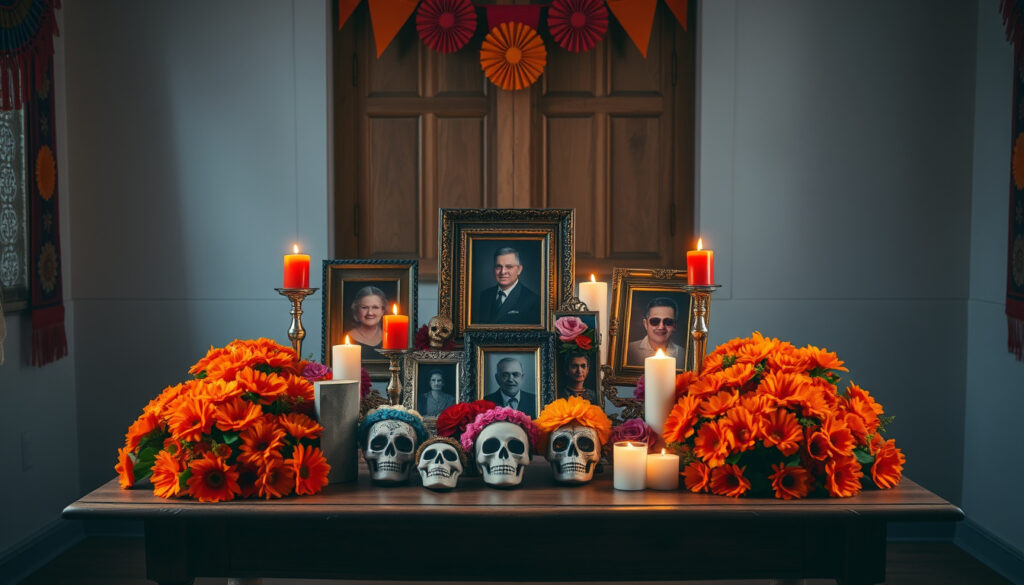
Dia de los Muertos: Complete Guide to the Day of the Dead
Día de los Muertos fuses ancient Aztec reverence for the dead with Catholic observances brought by Spanish colonizers, creating a holiday that feels more like a reunion than a farewell. This guide walks through the history, key traditions, dates, and essential etiquette for anyone who wants to understand — or respectfully join — one of the world’s most vibrant cultural celebrations.
Celebration dates: November 1–2, with some regions starting October 31 ·
Historical roots: Over 3,000 years, originating with the Aztec, Toltec, and other Nahua peoples ·
Key symbol: Cempasúchil (marigold) flowers used to guide spirits ·
Modern popularity: Over 2 million people attend Mexico City’s annual parade (since 2016)
Quick snapshot
- Celebrated November 1–2 in Mexico (Encyclopaedia Britannica)
- Ofrendas include marigolds, candles, photos, and food (Lonely Planet)
- UNESCO recognized the holiday as Intangible Cultural Heritage in 2008 (UNESCO)
- October 31 inclusion varies by region (Encyclopaedia Britannica)
- The 40‑day rule after death is a separate Catholic practice, not part of Día de Muertos (Wikipedia)
- Pre‑Columbian roots: 3,000+ years back, festival of Mictecacihuatl (Lonely Planet)
- Spanish colonization merged rituals with All Saints’ Day in the 16th century (Encyclopaedia Britannica)
- 2008: UNESCO inscription (UNESCO)
- 2026 celebrations will run Nov 1–2; plan visits and ofrendas from Oct 31 onward (Lonely Planet)
- Visitor etiquette guides continue to grow as tourism increases (Lonely Planet)
The four key facts below capture the essence of Día de los Muertos at a glance.
| Label | Value |
|---|---|
| Official name | Día de los Muertos (Day of the Dead) |
| Primary location | Mexico, also celebrated in Central America and by Mexican diaspora |
| UNESCO status | Inscribed in 2008 as Intangible Cultural Heritage of Humanity |
| Distinct from Halloween | Although close in calendar, they have different origins and meanings |
What this means: the holiday’s official recognition underscores its cultural weight beyond any seasonal association.
What is the Day of the Dead and why is it celebrated?
What is the origin of Dia de los Muertos?
- The tradition originates with Aztec, Toltec, and other Nahua peoples who held rituals honoring the dead, including a month‑long festival for the goddess Mictecacihuatl (Lonely Planet).
- After Spanish colonization in the 16th century, these Indigenous practices merged with Catholic All Saints’ Day (November 1) and All Souls’ Day (November 2) (Encyclopaedia Britannica).
How does the holiday blend Indigenous and Catholic traditions?
The fusion created a unique celebration: pre‑Columbian offerings of food, flowers, and incense coexist with Catholic prayers and church visits. UNESCO describes the result as a tradition that “emphasizes continuity between life and death” and the role of family memory (UNESCO). The ofrenda (altar) is the physical centerpiece — a blend of Aztec earth symbolism and Catholic iconography.
Visitors who understand this blended origin are far less likely to mistake the holiday for “Mexican Halloween” — and far more likely to be welcomed by local families.
The implication: the holiday’s identity is not a single origin story but a layered one, and respecting both layers is the first step toward genuine appreciation.
Is Day of the Dead Nov. 1 or 2?
What is the difference between November 1 and 2?
- November 1 is Día de los Inocentes (or Día de los Angelitos), dedicated to children who have died (Lonely Planet).
- November 2 is Día de los Muertos proper, honoring deceased adults (Encyclopaedia Britannica).
- Some regions extend the observance to November 6 (Wikipedia).
What happens on October 31st during Day of the Dead?
October 31 is often a preparation day: families set up ofrendas, bake pan de muerto, and cut papel picado. In some communities, it coincides with Halloween as a children’s costume event, but the two remain distinct. Britannica notes that ofrendas are “usually set up by October 31 and taken down after November 2” (Encyclopaedia Britannica). Lonely Planet adds that regional preparations can start in mid‑October (Lonely Planet).
The pattern: the holiday’s calendar is fluid. November 1–2 are the fixed core, but the days around them are just as important in practice.
What are three traditions of the Day of the Dead?
What color do you wear on Day of the Dead?
- Bright colors are the norm — especially orange (marigold), pink, purple, and yellow. Black is also common as a nod to mourning, but the overall palette is festive (Al Jazeera).
- Face paint in the style of calaveras (skulls) is worn by many participants, both locals and respectful visitors.
What is the meaning of the sugar skull?
Sugar skulls (calaveritas de azúcar) are decorative candies placed on ofrendas or given as gifts. They represent the deceased’s spirit and are often inscribed with the person’s name. According to Al Jazeera, calaveras also refer to humorous poems or verses that accompany altars and public displays (Al Jazeera).
What is the role of marigold flowers?
Marigolds, called cempasúchil in Nahuatl, are the signature flower of Día de los Muertos. Their bright orange petals and strong scent are believed to guide spirits back to their altars and families. Lonely Planet describes them as “used to guide spirits back to families” (Lonely Planet). Petals are often strewn in a path from the street to the ofrenda.
Commercial vendors sometimes sell cheap plastic versions of marigolds. Using real cempasúchil is a small but meaningful way to honor the tradition’s roots.
The trade-off: embracing these symbols without understanding their meaning risks reducing the holiday to a costume. Knowledgeable participation deepens the experience for everyone.
Is it okay for white people to celebrate Day of the Dead?
What not to do on Day of the Dead?
- Do not treat cemeteries or ofrendas as backdrops for casual selfies without permission (Rough Guides).
- Do not mock the holiday or the deceased.
- Do not wear calavera face paint as a “spooky” Halloween costume — it carries sacred meaning.
Foreigner visiting on Día de los Muertos: what to do or not to do?
Respectful participation is widely welcomed. The Smithsonian Latino Center emphasizes learning about the cultural significance before joining (Smithsonian Latino Center). Common etiquette includes dressing appropriately (bright, festive clothing is fine; wearing a full “catrina” costume is best reserved for parades), asking before photographing ofrendas or grave sites, and leaving the area quiet and clean. Lonely Planet advises travelers to “learn about the meaning before participating” and to avoid any behavior that commercializes or trivializes the tradition (Lonely Planet).
Why this matters: cultural exchange works both ways. When foreigners engage sincerely, they help keep the tradition visible and funded; when they don’t, they risk alienating the very communities that created the holiday.
What is the 40 day rule after death?
The 40‑day rule is a Catholic tradition, not a Día de Muertos custom. It refers to the period of mourning and prayer for the soul’s journey after death. In some Mexican communities, a novenario (nine‑day prayer) or a 40‑day mass is held, but this is separate from the Day of the Dead. Wikipedia notes the two traditions are often confused by outsiders (Wikipedia). The holiday’s core dates remain November 1–2, and its spiritual focus is on maintaining connection with the dead, not on a fixed mourning count.
The catch: conflating the 40‑day rule with Día de Muertos muddles the holiday’s actual timeline and risks imposing an external framework onto a distinct tradition.
Timeline: From ancient ritual to global celebration
- 3,000 years ago: Aztec, Toltec, and Nahua peoples hold rituals honoring the dead, including the festival of Mictecacihuatl (Lonely Planet).
- 16th century: Spanish colonization brings Catholic All Saints’ and All Souls’ Days, which merge with Indigenous traditions (Encyclopaedia Britannica).
- Early 20th century: José Guadalupe Posada creates the iconic “La Calavera Catrina” etching (Wikipedia).
- 2008: UNESCO recognizes Day of the Dead as Intangible Cultural Heritage of Humanity (UNESCO).
- 2016: Mexico City holds its first large‑scale Day of the Dead parade, inspired by the James Bond film Spectre (Lonely Planet).
The pattern: each century added a layer. What started as a pre‑Columbian harvest‑death rite is now a global cultural ambassador — but its core remains family and memory.
Confirmed facts vs. what remains unclear
Confirmed facts
- The holiday is celebrated on November 1–2 in Mexico.
- Ofrendas include marigolds, candles, photos, and food.
- The holiday originated from pre‑Columbian traditions.
- UNESCO inscribed it in 2008.
What’s unclear
- The exact relationship between the 40‑day rule and Día de Muertos is not well documented; it is a separate Catholic practice.
- Whether October 31 is universally part of the celebration varies by region.
Voices on the celebration
“The Indigenous festivity dedicated to the dead emphasizes continuity between life and death and the role of family memory.”
UNESCO
“Day of the Dead is a time when families remember their ancestors — it’s not a mournful occasion, but a joyful reunion.”
“The traditions of Día de Muertos help kids understand that death is a natural part of life, and that remembering people we loved is something to celebrate.”
The implication: whether from a global policy body or a children’s guide, the message is consistent — this is a holiday about connection, not grief.
For the foreign traveler, the choice is clear: engage with sincere curiosity and respect, or stay on the sidelines. The holiday’s beauty lies in its openness to those who take time to understand the layers of meaning behind each marigold petal, sugar skull, and candle flame. In a world where cultural lines blur, Día de los Muertos offers a rare chance to genuinely celebrate life by honoring those who came before — but only if the participant comes prepared to listen.
mexicotravelandleisure.com, andrewgoodwin.us, mexicanosenpolonia.com, folklore.usc.edu, ctpublic.org, laii.unm.edu, simple.wikipedia.org
For a deeper dive into the holiday’s origins and 2025 dates, check out this comprehensive Dia de los Muertos guide.
Frequently asked questions
How long does Day of the Dead last?
The core celebration is November 1–2, but some regions extend activities from October 31 through November 6.
What is the significance of marigold flowers?
Marigolds (cempasúchil) are believed to guide spirits back to their families through their bright color and strong scent.
What foods are traditionally prepared for Day of the Dead?
Pan de muerto (a sweet egg bread), sugar skulls, mole, tamales, and hot chocolate are common. Favorite dishes of the deceased are also placed on ofrendas.
Can you celebrate Day of the Dead if you are not Mexican?
Yes, if done respectfully. Learn the meaning, ask permission before photographing ofrendas, and avoid cultural appropriation.
What is a calavera and why is it used?
Calavera means “skull” in Spanish. Sugar skulls are decorations, and literary calaveras are humorous poems that accompany altars.
How do families prepare for the holiday?
They clean graves, set up ofrendas with photos and offerings, bake traditional foods, and sometimes attend church services.
What is the difference between Day of the Dead and Halloween?
Halloween focuses on fear and the supernatural; Día de Muertos is a joyful remembrance of deceased loved ones.
Related reading
More related posts
 Woh Hup Pte Ltd: Singapore’s Largest Private Construction Firm
 J&T Express Tracking: QR Code, Websites & Mobile Apps
 Google Pixel 9 Pro Fold Review: Price, Specs & Ireland Deals
 Best Email Newsletter Examples: Top 2026 Designs & Tips
 2500 Baht to SGD: Live Rate & Converter Comparison
 Single Premium Endowment Plan: Guide, Benefits & LIC Review
 Kim Choo Kueh Chang: History, Menu, Reheating Tips & More
 Home Cleaning Services Singapore: Compare Prices & Reviews