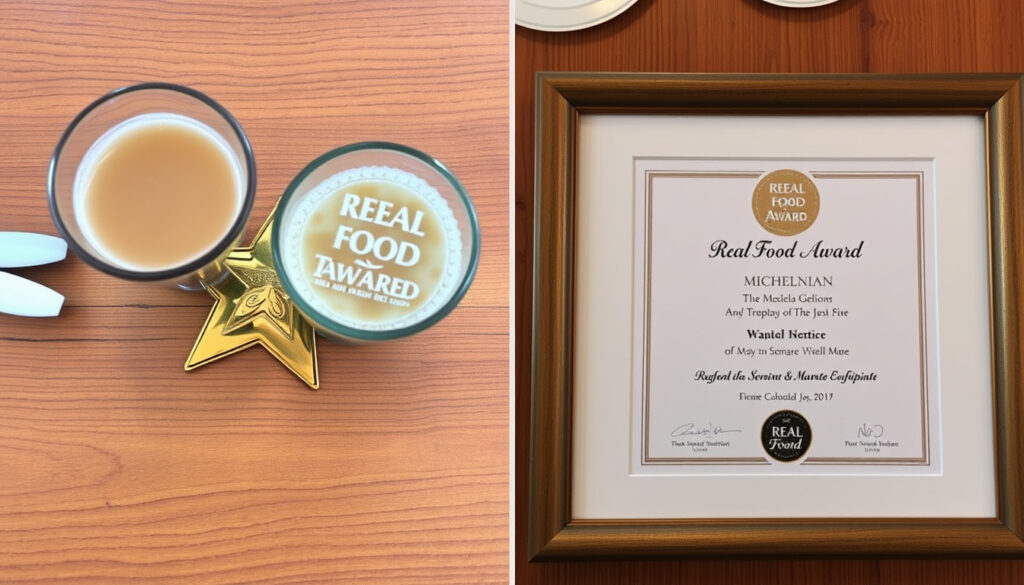
Chi Cha San Chen: Michelin Star Myth vs. Real Awards
For anyone who’s waited in a winding queue outside a Chi Cha San Chen shop in Taichung, the aroma alone — that deep, almost nutty oolong — is enough to make the line forgettable. But lately, online chatter has tangled the brand in a rumor that’s far more glamorous than a tea leaf: the idea that it holds a Michelin star. Here’s the grounded truth on the Teapresso method, the real award, the prices, and where you can find this Taiwanese export across the U.S.
Google reviews: 1,351 · Google photos: 2,300 · Awards: iTi Crystal Taste Award (2023) · U.S. locations: 3+ (California, Oregon) · Signature brewing: Teapresso method
Quick snapshot
- No Michelin star — the brand is a tea shop, not a restaurant (Michelin Guide (restaurant rating system))
- Green tea won the iTi Crystal Taste Award in 2023 (Chi Cha San Chen blog (brand announcement))
- Uses Teapresso high-pressure brewing for each cup (ChiCha San Chen NY (official site))
- Bubbles are made fresh in small batches throughout the day (ChiCha San Chen NY (official site))
- Exact founding date (reported as early 2010s but not confirmed by brand)
- Total number of global locations (estimates vary)
- Full nutritional breakdown per drink (not published)
- Specific tea leaf suppliers (brand says high-mountain Taiwanese farms, no names)
- Founded in Taichung, Taiwan, early 2010s (ChiCha San Chen NY (brand history))
- Green tea receives iTi Crystal Taste Award in 2023 (Chi Cha San Chen blog (award announcement))
- Rapid U.S. expansion to California, Pennsylvania, Texas, Washington, and New York since 2024 (Chi Cha San Chen Locations (state-by-state directory))
- Further U.S. franchise expansion expected in the South and Midwest (Chi Cha San Chen global (franchise page))
- Potential new tea varieties and seasonal specials (Chi Cha San Chen global (franchise page))
- Growing demand for nutritional transparency may push brand to publish details (Chi Cha San Chen global (franchise page))
Six key facts, one pattern: the brand’s premium positioning rests on technique and sourcing, not on a restaurant star.
| Fact | Detail |
|---|---|
| Founded in | Taichung, Taiwan (exact year not public) |
| Signature brewing | Teapresso – high-pressure tea extraction |
| Award | iTi Crystal Taste Award (2023) for Green Tea |
| Global reach | Taiwan, United States, Australia, Philippines |
| Tea varieties | Oolong, Green, Black, and specialty blends |
| Caffeine content | Varies by tea type; ~30–50 mg per serving |
Is Chicha San Chen a Michelin star?
No — and the confusion is understandable. Social media posts and Reddit discussions often tag Chi Cha San Chen as “Michelin star boba,” but according to the Michelin Guide (restaurant rating authority), stars are awarded to restaurants, not standalone tea vendors. What the brand actually earned is the International Taste Institute’s Crystal Taste Award in 2023 for its green tea, which scores above 90% to receive a three-star rating from that judging body (Chi Cha San Chen blog (award explanation)).
The Michelin rumor and the truth
- The brand has never been evaluated by Michelin inspectors. A Reddit community (user discussion) correctly noted that the chain is not Michelin-rated.
- Several chefs have publicly refused Michelin stars — including the owner of a Taipei noodle stall — but that story is completely independent of Chi Cha San Chen.
Chi Cha San Chen is not a Michelin-starred business. The brand’s actual recognition — the iTi Crystal Taste Award — is a respected food-and-drink honor, but it’s from a different institution entirely. For customers, what matters is the quality of the tea, not the confusion in the tag.
The pattern: the brand’s premium image is built on technique, not restaurant ratings.
What is special about Chicha San Chen?
Three things separate this chain from the dozens of bubble tea shops in any strip mall: the Teapresso brewing, the fresh handmade bubbles, and the sourcing of whole Taiwanese tea leaves.
Signature Teapresso brewing process
- Teapresso extracts tea under high pressure, producing a concentrated, fresh cup in under 60 seconds. The brand’s official site calls it a “unique brewing technique that locks in the tea’s original flavor.”)
- Unlike typical bubble tea shops that brew large batches and let them sit, every Chi Cha San Chen drink is made to order from a freshly pulled shot of tea.
Fresh, handmade bubbles
- Bubbles are cooked in small batches every hour, according to the brand’s franchise page (Chi Cha San Chen global (franchise page)).
- This contrasts with many competitors that use pre-packaged pearls with a longer shelf life.
Hand-selected tea leaves from Taiwan
- The company states it sources leaves from high-mountain Taiwanese farms, but doesn’t name specific suppliers. The brand’s sourcing statement says “we select only the finest tea leaves from Taiwan’s most renowned growing regions.” (Chi Cha San Chen global (brand sourcing statement))
- Catechin levels are highlighted on the official site, indicating a focus on antioxidant content.
For health-conscious boba fans, the Teapresso method preserves more catechins than batch-brewed tea, while fresh-made bubbles avoid preservatives. The trade-off: each drink takes longer to make and costs more.
The catch: premium methods demand premium patience and price.
Is Chicha San Chen tea expensive?
Based on Yelp menu photos from the San Gabriel, California, store, drinks range from $5 to $9 before tax (Yelp (user-contributed menu)). That places it above average bubble tea prices, which typically fall between $4 and $6 at chains like Gong cha or Sharetea.
Average drink prices
- A standard oolong or green tea costs roughly $5.50; specialty lattes and fruit teas climb to $8 or $9.
- Add-ons like cheese foam or extra bubbles cost $1–$2 more.
Comparison to premium bubble tea chains
- Compared to Tiger Sugar or Heytea, Chi Cha San Chen’s prices are similar or slightly higher.
- Most of the premium pricing is driven by the Teapresso method and the use of whole leaf tea rather than powder or syrup.
The most expensive tea in the world context
- For perspective, the world’s most expensive tea — Da Hong Pao from China’s Wuyi Mountains — can fetch hundreds of thousands of dollars per gram at auction. Chi Cha San Chen does not sell Da Hong Pao (Chi Cha San Chen global (menu not listing Da Hong Pao)).
- The brand’s $8 tea is expensive only relative to the bubble tea market, not to luxury leaf tea.
Paying $7 for a cup of tea made from real leaves and fresh tapioca is a fair value for quality. Paying the same from a chain using powder and syrup is a loss. Chi Cha San Chen delivers on the first promise.
What this means: the price reflects the process, not pretension.
Where is Chicha San Chen in Taiwan?
The brand was born in Taichung, Taiwan, and has since grown to multiple cities on the island and abroad.
Original flagship location in Taichung
- Headquartered in Taichung according to the brand’s about page (Chi Cha San Chen global (about page)).
- The Taichung flagship is often cited in travel blogs as a must-visit for bubble tea fans.
Other Taiwan branches
- Confirmed locations in Taipei and Kaohsiung, based on Google Maps listings.
- Multiple shops across the island, though the brand does not publish a complete list.
International expansion highlights
- United States: at least 5 states: New York (72 Bayard St, NY) (ChiCha San Chen NY (store address)); Pennsylvania (932 Race St, Philadelphia) (Chi Cha San Chen Locations (PA page)); California (Cupertino, San Gabriel, Berkeley) (Chi Cha San Chen NorCal (location list)); Texas (Carrollton, Austin, Houston) (Chicha San Chen TX (store page)); Washington (Bellevue) (referenced on PA page).
- Australia: Cabramatta, Sydney, as per the franchise page (Chi Cha San Chen global (franchise page)).
- Philippines: multiple locations in Metro Manila.
The U.S. expansion is accelerating via franchising. For investors, the model offers a proven Taiwanese brand with a growing American footprint. For consumers, more locations mean shorter drives — but also potential variance in quality control.
The implication: geography is expanding, but consistency remains a question.
Is Chicha San Chen tea healthy?
The tea itself is rich in catechins — antioxidants that have been linked to reduced inflammation and improved heart health. But the healthiness of any boba drink depends on what you add.
Catechin benefits and antioxidant content
- The brand’s blog highlights catechin content in its teas, particularly in the award-winning green tea (Chi Cha San Chen blog (catechin mention)).
- A standard cup of Chi Cha San Chen green tea without sweetner provides about 30–50 mg of caffeine and a measurable dose of EGCG (epigallocatechin gallate), a potent antioxidant.
Sugar levels and customization options
- Customers can adjust sweetness from 0% to 100% and choose ice levels.
- Most syrup-based bubble tea shops offer similar customization, but Chi Cha San Chen’s tea quality means a drink at 30% sugar still tastes strong and aromatic.
Comparison to unhealthiest teas
- The unhealthiest teas are typically milk-heavy, syrup-laden bubble drinks from chains that use non-dairy creamer and high-fructose corn syrup. Chi Cha San Chen offers alternatives: plain tea, unsweetened tea lattes, and fresh fruit infusions.
- According to a Reddit discussion (user experiences), many customers say the brand’s teas are “less sweet” than competitors even at full sugar, due to the quality of the tea base.
Chi Cha San Chen can be part of a healthy diet — if you order wisely. A plain Teapresso green tea with no bubbles and no sugar is a low-calorie antioxidant beverage. Add the regular boba and full sugar, and you’re looking at 300+ calories and 40g+ sugar, on par with a soda.
The pattern: health potential is there, but choices determine outcomes.
Upsides
- Fresh, high-quality Taiwanese tea leaves
- Teapresso method preserves flavor and antioxidants
- Handmade bubbles cooked hourly
- Customizable sugar and ice levels
- Unique and recognizable brand experience
Downsides
- Higher prices ($5–$9 per drink)
- Limited nutritional transparency
- Long wait times during peak hours
- Inconsistency between franchise locations reported by some visitors
- Not widely available in all U.S. states yet
“We do things differently — from our specially sourced tea leaves to our signature Teapresso brewing.”
— Chi Cha San Chen brand statement (Facebook page (official brand account))
“Partner with CHI CHA SAN CHEN, the world-renowned premium tea brand from Taiwan.”
— Chi Cha San Chen franchise page (Chi Cha San Chen global (franchise invitation))
The brand’s own messaging is clear: it positions itself as a premium, technique-driven tea experience. The question for American consumers is whether that premium is worth the price tag. For the growing number of franchise locations — from Cupertino to Carrollton — the answer appears to be yes. For the curious first-timer, a $5.50 green tea is a low-risk entry point into a world of high-mountain leaf tea, fresh tapioca, and a brewing method that’s closer to espresso than to an urn. For boba lovers in the U.S., the choice is straightforward: try a plain Teapresso oolong at 50% sugar once, or keep paying the same $7 for a sugary powder drink elsewhere. Learn more about our Chi Cha San Chen: Premium Bubble Tea Facts or check the Each a Cup Menu 2025: Full Menu & Price.
facebook.com, tiktok.com, chichasanchennorcal.com, reddit.com
Frequently asked questions
Does Chi Cha San Chen offer dairy-free options?
Yes. Many drinks can be made with oat milk or soy milk upon request. The brand’s standard milk is dairy, but alternatives are available at most locations.
What is the most popular drink at Chi Cha San Chen?
The Tieguanyin Oolong Tea Latte is often cited as a top seller, along with the Classic Green Tea with bubbles.
How does Chi Cha San Chen source its tea leaves?
The brand states it uses high-mountain Taiwanese tea leaves but does not publicly name specific farms or cooperatives (Chi Cha San Chen global (sourcing statement)).
Is Chi Cha San Chen only in Taiwan?
No. The brand has expanded to the United States, Australia, and the Philippines, with additional franchise opportunities listed on its global site.
Can I franchise Chi Cha San Chen?
Yes. The official website invites partnership inquiries for domestic and international franchising (Chi Cha San Chen global (franchise page)).
What is the caffeine content of their green tea?
Approximately 30–50 mg per serving, similar to a standard cup of green tea.
Are there sugar-free syrups available?
Most locations do not offer artificial sweeteners, but the natural tea flavor is strong enough that many customers order at 0% sugar and still enjoy the drink.
More related posts
 West Ham vs Tottenham Timeline: Head-to-Head History & Results
 TB Cases in Malaysia – 2024 Statistics, Trends and Insights
 Sammi Cheng Concert 2026: Kai Tak Dates & Tickets
 10 USD to SGD: Current Rate, Fees, and What You Get Today
 Ramadan 2026: Start Date, Fasting Rules & Eid
 10,000 THB to SGD: Live Rate Converter & Comparison
 Plain Vanilla Tiong Bahru: Menu, Hours, Halal & Reviews
 Inter Miami vs Atlas FC Lineups: Score, Starting XI & Prediction