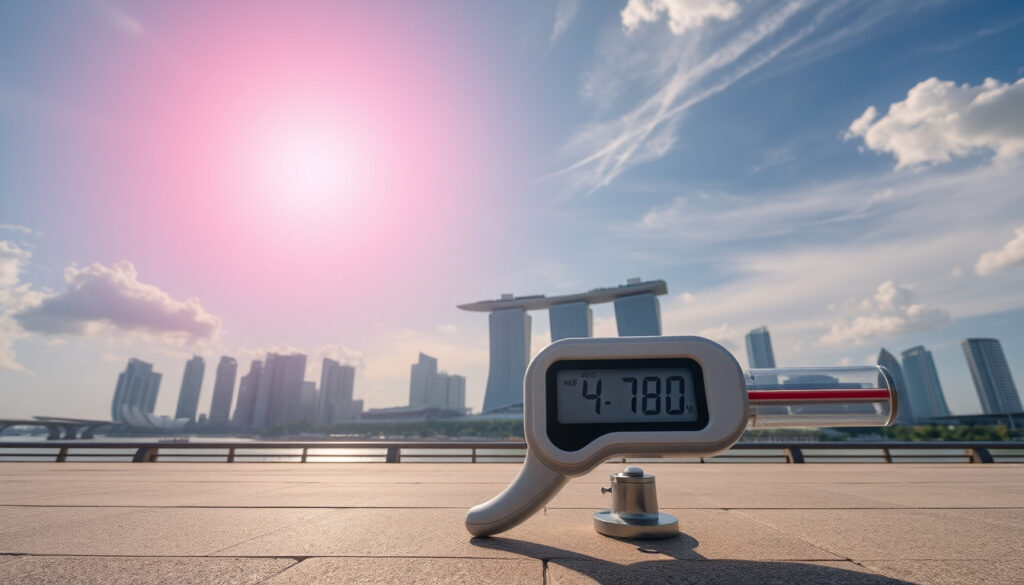
Hottest Month in Singapore: Complete Weather Guide & Data
If you’re planning a trip to Singapore, you’ve probably heard that it’s hot year-round. But which month actually takes the crown as the hottest? We dug into long-term climate data from Singapore’s Meteorological Service to give you a clear, fact-based answer — no travel myths, just the numbers.
Hottest month (average high): April, 32°C (89°F) ·
Coolest month (average low): January, 25°C (77°F) ·
Most humid month: December (85% relative humidity) ·
Rainiest month: November (287 mm average rainfall) ·
Average annual temperature: 27°C (81°F)
Quick snapshot
- April is the hottest month with a mean daily maximum of 32.4°C (Meteorological Service Singapore (national weather authority))
- December is the wettest month with 331.9 mm of rainfall (Meteorological Service Singapore)
- February is the driest month with 105.1 mm (Meteorological Service Singapore)
- Haze intensity from Indonesian forest fires varies unpredictably year to year.
- Month-to-month temperature differences are under 2°C, making “hottest” a narrow title.
- 2025 saw Singapore’s hottest June and November on record (Eco-Business (environmental news outlet))
- Rainfall trends show April and June getting wetter (up to 18.4 mm/decade).
Five long-term climate figures capture Singapore’s equatorial stability — and the narrow gap between the “hottest” and “coolest” months.
| Fact | Value |
|---|---|
| Annual average temperature | 27°C (81°F) |
| Average annual rainfall | 2,340 mm (92 inches) |
| Highest recorded temperature | 36.0°C (96.8°F) on 26 March 1998 |
| Lowest recorded temperature | 19.4°C (66.9°F) on 31 January 1934 |
| Average number of rainy days per year | 178 days |
Which month is best to visit Singapore?
What is the weather like in Singapore during the best months?
- February is often cited as the best month due to lower rainfall (105.1 mm) and more sunshine (Meteorological Service Singapore).
- December and January are cooler but wetter, with December averaging 331.9 mm of rain.
- April has the highest average temperature (32.4°C).
When is the dry season in Singapore?
Singapore doesn’t have a true dry season, but February tends to be the driest month. The northeast monsoon (November to March) brings the heaviest rains, while the inter-monsoon periods (April/May and October/November) see more afternoon thunderstorms.
February’s lower rainfall means fewer indoor breaks — and more direct sun. UV index in Singapore is consistently high year-round, so protection matters every month.
Is Singapore really hot in July?
What is the average temperature in Singapore in July?
- July has average highs around 31°C (88°F) (Meteorological Service Singapore).
- It is part of the southwest monsoon season, with frequent afternoon showers.
Does it rain a lot in July in Singapore?
July is not the wettest month, but it still sees about 156 mm of rainfall on average (Weather2Travel (travel climate resource)). Afternoon downpours are common, so plan outdoor activities for the morning.
“July is hot and humid, but the rain usually comes in short, heavy bursts. You can still enjoy the city if you time your outings right.”
— Travel expert, MakeMyTrip
Visitors who assume July is a “dry month” often get caught unprepared. The 31°C heat combined with 80% humidity makes lightweight, quick-dry clothing essential.
What is the most humid month in Singapore?
How does humidity affect the feeling of heat in Singapore?
- December has the highest relative humidity (86%) (Climates to Travel (climate data provider)).
- February is the least humid month (around 80%).
- Year-round humidity averages 84%.
Which months are least humid in Singapore?
February, August, and March rank slightly lower, but the difference is only a few percentage points. The real takeaway: Singapore is sticky every month.
What is the rainiest month in Singapore?
What is the average rainfall in November?
- November is the wettest month with an average of 287 mm of rain (National Environment Agency Singapore (government environmental agency)).
- December is close behind at 331.9 mm per the official climate table.
Which month has the least rain in Singapore?
February is the driest month, averaging 105.1 mm. The northeast monsoon brings heavy downpours from November to January, while February sits in a brief lull before the inter-monsoon thunderstorms return.
“Least rain” still means 105 mm — that’s about 10 days of rain per month. No month is truly dry in Singapore.
What is the 60-90 rule in Singapore?
Does the 60-90 rule affect visitors?
The 60-90 rule refers to extreme heat and humidity thresholds used by authorities: when temperatures near 35°C (95°F) and humidity exceeds 70%, public health advisories are triggered. It is not an official tourism metric, but a safety guideline.
What does the 60-90 rule mean for outdoor plans?
If you’re outdoors during a heat advisory, the risk of heat exhaustion rises. Most visitors won’t face the 35°C extreme (Singapore’s highest recorded temperature is 36°C), but the combination of 32°C and 85% humidity can feel just as punishing.
The 60-90 rule is a rare trigger — Singapore’s temperatures rarely hit 35°C. But the “feels-like” temperature often exceeds 40°C during humid afternoons, especially in May and June.
Which month should I avoid visiting Singapore?
Is November a bad time to visit Singapore?
- November and December are often considered less favorable due to monsoon rains and haze risk.
- Haze from forest fires in Indonesia typically peaks from June to October.
What is the worst time to visit Singapore?
There is no dangerous month, but heavy rain can disrupt outdoor sightseeing. If you want maximum sunshine, February is your best bet. If you’re on a budget, November’s low season offers cheaper flights and hotels.
What is the coldest month in Singapore?
Does Singapore have a winter?
- January is the coldest month with average lows of 25°C (77°F).
- Singapore has no true winter; it is tropical year-round.
What is the lowest temperature ever recorded in Singapore?
The coldest temperature ever recorded was 19.4°C (66.9°F) on 31 January 1934 (Meteorological Service Singapore). That’s still warmer than a spring day in many European cities.
“Singapore’s temperature range is among the narrowest of any country. The difference between the hottest and coolest month is just 1.9°C.”
— Meteorological Service Singapore (NEA), climate data summary
Twelve months, one pattern: the variation is tiny, but the details matter for planning.
| Month | Avg High (°C) | Avg Low (°C) | Rainfall (mm) | Humidity (%) |
|---|---|---|---|---|
| January | 30.5 | 25.0 | 244 | 84 |
| February | 31.2 | 25.0 | 105 | 80 |
| March | 31.8 | 25.3 | 175 | 82 |
| April | 32.4 | 25.5 | 187 | 83 |
| May | 32.2 | 25.7 | 172 | 84 |
| June | 31.8 | 25.7 | 162 | 83 |
| July | 31.4 | 25.5 | 156 | 82 |
| August | 31.3 | 25.4 | 172 | 81 |
| September | 31.3 | 25.3 | 178 | 83 |
| October | 31.5 | 25.3 | 201 | 84 |
| November | 31.0 | 25.2 | 287 | 85 |
| December | 30.5 | 25.0 | 332 | 86 |
Four seasonal markers help visualise how Singapore’s weather shifts across the year.
Timeline: Singapore’s climate signals
Coolest month; northeast monsoon peaks; frequent rain; lowest average temperature.
Hottest month (average high); inter-monsoon period; afternoon thunderstorms common.
Southwest monsoon; increased haze risk from Indonesian forest fires; still hot and humid.
Wettest month; transition to northeast monsoon; highest average rainfall.
Confirmed facts vs. what’s unclear
Confirmed facts
- April is the hottest month based on long-term averages (Meteorological Service Singapore).
- December is the most humid month (86% relative humidity).
- Singapore is hot and humid year-round (temperatures 25°C–32°C).
- The lowest recorded temperature was 19.4°C in 1934.
What’s unclear
- The exact impact of haze in a given year is unpredictable.
- Month-to-month temperature variations are minimal (under 2°C), making “hottest” a nuance.
Expert perspectives
“Singapore’s climate is so consistent that the difference between the ‘hottest’ and ‘coolest’ month is smaller than the daily temperature swing in many temperate countries.”
— Meteorological Service Singapore (NEA), climate research division
“The 1998 haze episode was a wake-up call. We now have transboundary haze monitoring to protect public health.”
— Ministry of Home Affairs spokesman, Singapore Government
“For a tourist, the real question isn’t temperature — it’s whether you’re prepared for sudden downpours. A lightweight umbrella is your best travel companion.”
— Travel expert, MakeMyTrip
For anyone planning a trip to Singapore, the choice is not between hot and cold — it’s between wetter and drier. The climate data is clear: April is the hottest month by a hair, February is the driest, and every month demands a good umbrella and a bottle of water. For the traveler who wants maximum sunshine, February wins. For the budget traveller, November’s low season brings savings — and rain. The trade-off is yours to make.
Related reading: What to See in Singapore · Marina Bay Light Show Time
timeanddate.com, civicmaple.com, weatherspark.com, bluegreenatlas.com, climechart.com, mss-int.sg, nea.gov.sg, youtube.com
Frequently asked questions
What is the average temperature in Singapore year-round?
The annual average temperature is 27°C (81°F), with monthly averages ranging from 26°C to 28°C. The variation is less than 2°C across the year (Meteorological Service Singapore).
Does Singapore have a rainy season?
Yes, the northeast monsoon (November to March) brings the heaviest rains. November is the wettest month with 287 mm of rainfall, while February is the driest at 105 mm.
How can I stay cool while visiting Singapore?
Wear lightweight, breathable fabrics, carry a reusable water bottle, and plan outdoor activities for the morning. Air-conditioning is everywhere — from malls to MRT trains.
What should I pack for a trip to Singapore?
Light clothing, a rain jacket or umbrella, sunscreen (SPF 50+), and comfortable walking shoes. A hat and sunglasses help against the intense UV.
Is June a good time to visit Singapore?
June is hot and humid (average high 31.8°C) with afternoon showers. Haze risk is moderate. It’s fine for most visitors, but you’ll want to stay flexible with indoor backup plans.
Does Singapore ever get hail or snow?
No. Singapore’s tropical climate never produces hail or snow. The lowest recorded temperature was 19.4°C (66.9°F) in 1934.
What is the UV index like in Singapore?
The UV index is consistently high year-round, often reaching 10+ (extreme) between 11 a.m. and 3 p.m. Sun protection is essential every day.
More related posts
 Yong Pung How School of Law: Guide & Facts
 Best Peranakan Food Singapore: 2025 Guide
 Verandah@Rael’s 111 Somerset: Menu, Reviews & Halal Info
 DBS Overseas Transfer Promo Code: How to Get S$60 Cashback
 APEC Card Application Singapore: How to Apply & Qualify
 333 Angel Number Meaning: Love, Money & Spiritual Guide
 10 USD to SGD: Current Rate, Fees, and What You Get Today
 Zhong Hua Secondary School – History, Facts and Milestones