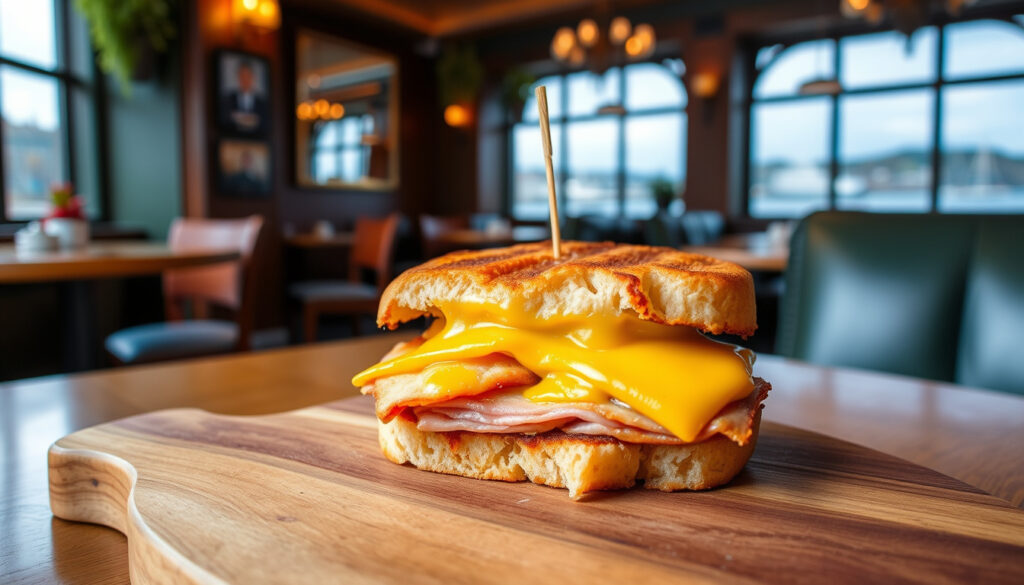
Best Croque Monsieur Near Me: Dublin & Galway Spots
The Croque Monsieur draws a dedicated lunch crowd in Parisian cafés — that much is obvious. But Ireland has quietly claimed this French classic, swapping in local farmhouse cheeses and serving it from Galway to Dublin, making the island worth a detour for serious sandwich hunters.
Origin: France · Key Ingredients: Ham, cheese, bread, béchamel · Top Irish Spots: Galway, Dublin · Common Variations: Croque Madame, Monte Cristo · Served As: Grilled sandwich
Quick snapshot
- Exact invention date disputed among sources
- First Paris café to serve it remains undocumented
- Irish adaptations gaining attention on Tripadvisor
- Galway listings updated April 2026
- Chez Max at 1 Palace Street, Dublin (Crumpets & Croissants)
- Dublin French restaurants near Dublin Castle (Crumpets & Croissants)
| Label | Value |
|---|---|
| English Name | Crunch Mister |
| Origin Country | France |
| Signature Sauce | Béchamel |
| Typical Price | €10-15 in Ireland |
| Popular Variations | Croque Madame |
What’s the difference between Croque Madame and croque monsieur?
The distinction is small but noticeable once you see it. A Croque Madame is simply a Croque Monsieur with a fried or poached egg balanced on top — that sunny-side-up addition transforms the whole dish by adding richness and a soft texture contrast to the crisp, saucy sandwich beneath.
Key ingredient differences
Both versions start with the same foundation: ham, cheese, and béchamel on grilled bread. According to Wikipedia, the Croque Monsieur relies on Gruyère or Emmental for that signature melt, while Irish adaptations often substitute local farmhouse cheeses like Cáis na Tíre or Irish Cheddar (Creme de Citron). The egg is the sole additional ingredient that separates the Madame from the Monsieur.
Preparation variations
Traditional recipes bake the assembled sandwich at 200°C until the cheese bubbles and the béchamel develops a slight golden crust (Three Hungry Piggies). Irish-style versions, such as those featured by Ballymaloe Foods, often swap Pain de Mie for sourdough and use Ballymaloe Steak Sauce alongside Dijon mustard for a local flavor twist (Ballymaloe Foods).
If you’re watching your cholesterol or prefer something lighter, stick with the Monsieur. The Madame’s egg pushes it into brunch territory — still delicious, but a different eating experience.
What is a croque monsieur in English?
Loosely translated, “Croque Monsieur” means “Mister Crunch” or “Mr. Bite” — the name references the satisfying crunch you get when you bite through the grilled exterior into the saucy, cheesy interior.
Literal translation
The French term “croquer” means to crunch or bite, and “monsieur” is simply mister. So literally you’re ordering “Mr. Crunch” — a name that doubles as a pretty accurate description of the eating experience.
Core components
The dish consists of sliced ham sandwiched between two slices of cheese (traditionally Gruyère or Emmental), topped with béchamel sauce, then grilled until the cheese melts and the exterior crisps up. Wikipedia confirms this is the standard definition across French culinary references. Irish adaptations often add their own character — one recipe described by Creme de Citron emphasizes “the crispiness of the bread, saltiness and softness of the slice of ham and then the wonderful creamy and gooey texture of the melted cheese.”
Knowing what goes into a proper Croque Monsieur helps you judge whether a café is making an authentic version or just heating up pre-sliced ham and cheddar. If there’s no béchamel in sight, you’re eating a fancy toastie, not the real thing.
Is croque monsieur the same as Monte Cristo?
Not quite — they look similar but diverge significantly in preparation method and resulting texture. The Monte Cristo is dipped in egg batter and fried, giving it a richer, more indulgent coating, while the Croque Monsieur stays closer to a grilled sandwich without the batter.
Similarities
Both sandwiches feature ham and cheese as their primary fillings, and both often appear on café menus in similar settings. Diners sometimes confuse the two because they’re both described as “French-style ham and cheese sandwiches.”
Key differences
The Croque Monsieur is assembled and then grilled or baked, often under a broiler, creating a crust from the béchamel and cheese. The Monte Cristo, by contrast, is dipped in beaten egg (like French toast) and shallow-fried, resulting in a much thicker, more uniform golden exterior. Some modern interpretations, like the Rarebit Croque Monsieur featured by Fallow Restaurant, fuse Welsh Rarebit sauce (with beer, cheddar, and mustard) onto the Croque Monsieur base — a creative hybrid that shows how flexible the template is.
| Sandwich | Cooking Method | Key Sauce | Origin |
|---|---|---|---|
| Croque Monsieur | Grilled/baked | Béchamel | France |
| Monte Cristo | Battered and fried | Often Dijon ornone | United States (French-inspired) |
| Welsh Rarebit Croque | Grilled | Cheese sauce with beer | Fusion adaptation |
| Francesinha | Baked/steamed | Spicy tomato sauce | Portugal |
Irish Croque Monsieur adaptations often lean toward the Monte Cristo in spirit — using thicker cuts of local ham and generous cheese layers — but stick to the grilled method to stay true to the French original.
Is a croque monsieur just a toastie?
It’s easy to see why people ask this — after all, a Croque Monsieur does involve bread, ham, and cheese pressed together. But the béchamel sauce is the key differentiator: it elevates what could be a straightforward toastie into something richer and more saucy, almost like a French take on a Welsh Rarebit.
Basic similarities
Both a toastie and a Croque Monsieur involve heating bread with a savory filling. The sandwich press or pan works for both. Neither requires an oven — a stovetop griddle or sandwich maker handles the job.
What sets it apart
The béchamel layer is what transforms this into something distinctly French. This thin white sauce — made from butter, flour, and milk — gets spread or spooned over the top before grilling, creating a creamy coating that soaks into the bread slightly and browns beautifully under the broiler. According to Wikipedia, the béchamel is considered essential to the Croque Monsieur identity, not optional. Additionally, the Croque Monsieur is deeply rooted in French bistro culture, appearing in Marcel Proust’s “In Search of Lost Time” as the iconic lunch dish Parisian cafés served in the early 1900s (The Boar).
There’s also a lighter vegetarian variant called Croque-mademoiselle, which Wikipedia describes as featuring melted cheese, chives, cucumber, and lettuce — essentially a Croque Monsieur minus the ham and minus the traditional richness.
Best croque monsieur near me
If you’re hunting for a solid Croque Monsieur in Ireland, Dublin and Galway offer the most options — though Galway’s French café scene is less documented than Dublin’s. Tripadvisor maintains current listings for both counties (Tripadvisor, Tripadvisor), with Galway updates reportedly from April 2026.
Top spots in Galway
Galway’s listings on Tripadvisor reportedly include several establishments offering Croque Monsieur, though specific restaurant names were less clearly documented in available sources. The city’s strong café culture and proximity to quality local produce (farmhouse cheeses from nearby artisan producers) suggests the Irish-style adaptations here would lean toward the locally-sourced version.
Dublin recommendations
Dublin has several established French restaurants that either serve Croque Monsieur or offer similar ham-and-cheese bistro dishes. TheTaste.ie lists 18 of the best French restaurants in Dublin, including venues near Dublin Castle that reportedly offer authentic-style Croque Monsieur (TheTaste.ie).
For specific addresses, verified listings include Chez Max at 1 Palace Street Dublin (beside Dublin Castle), Camerino at 41 Dawson Street Dublin, and Olesya’s Wine Bar at 18 Exchequer Street Dublin — all documented by Crumpets & Croissants (Crumpets & Croissants).
For fine dining options, One Pico (Michelin guide-listed, off Stephen’s Green) and Restaurant Patrick Guilbaud (under chef Kieran Glennon) represent the upper end of French-influenced dining in Dublin, as noted by TheTaste.ie (TheTaste.ie). While these establishments may not list Croque Monsieur on their menus, they offer French bistro-style dishes that showcase the same culinary tradition.
“Restaurant Patrick Guilbaud is cemented on the list of the finest restaurants in the country, synonymous with exquisite, contemporary Irish cuisine with French classical roots.”
“You get so many flavours and textures in one go: the crispiness of the bread, saltiness and softness of the slice of ham and then the wonderful creamy and gooey texture of the melted cheese.”
The implication: Dublin’s French dining scene offers everything from cozy bistros near Dublin Castle to Michelin-recognized fine dining. For a dedicated Croque Monsieur, the smaller cafés and bakeries — Camerino on Dawson Street, Chez Max near the Castle — are more likely to have it on their all-day menu than the high-end establishments.
Related reading: Chara Brasserie Buffet Deals · Wolfgang’s Steakhouse Reviews
Dublin and Galway deliver solid croque monsieurs, echoing the authentic croque monsieur guide that pairs classic recipes with top Parisian-style spots.
Frequently asked questions
Do the French eat croque monsieur?
Yes — it’s a staple of French café culture, particularly as a quick lunch dish. Parisians have been ordering it since the early 20th century, and it appears in Parisian cafés as a reliable midday option alongside coffee and soup.
What is similar to a croque monsieur?
Several dishes share the ham-cheese-grilled-bread template. The Monte Cristo adds egg batter and frying. Welsh Rarebit uses a beer-and-cheese sauce on toast (dating to the 18th century according to Fallow Restaurant). The Portuguese Francesinha layers ham, sausage, and steak under a spicy tomato sauce and melted cheese.
What are the top 3 sandwiches?
While rankings vary, the Croque Monsieur consistently appears among France’s most beloved sandwiches alongside the Jambon-Beurre (ham and butter on a baguette) and the French Dip (though that’s Los Angeles-originated). In Ireland’s café scene, the Irish Croque adaptation using local cheddar and Ballymaloe sauces also earns loyal followers.
Croque monsieur near Dublin — where specifically?
Verified addresses include Chez Max at 1 Palace Street Dublin, Camerino at 41 Dawson Street Dublin, and Olesya’s Wine Bar at 18 Exchequer Street Dublin. Tripadvisor maintains a current Croque Monsieur filter for County Dublin restaurants.
Best bakery in Galway Ireland?
Galway’s bakery scene is strong, with several artisan producers serving the city’s cafés. Tripadvisor’s Galway listings include Croque Monsieur options, though specific bakery names for this dish were less clearly documented in available sources.
Bakeries Galway City — what’s available?
Galway City has a range of artisan bakeries supplying local cafés. The city’s food culture supports several croque-style sandwiches, and Irish adaptations tend to use local ingredients. Tripadvisor’s updated Galway listings from April 2026 reportedly include current options.
More related posts
 Chara Brasserie Buffet Price Singapore: $58++ Lunch Deals
 Primary School Ranking by PSLE Results: Top Schools in Singapore
 Arsenal vs Aston Villa Lineups: Result & Starting XI (Dec 2025)
 Good Bad Ugly Ticket Booking: Showtimes & Online Guide
 Public Bank Share Price: Is PBBANK a Good Buy Now
 Malayalam Web Series Sex: Verified Facts & Sources
 Zhong Hua Secondary School – History, Facts and Milestones