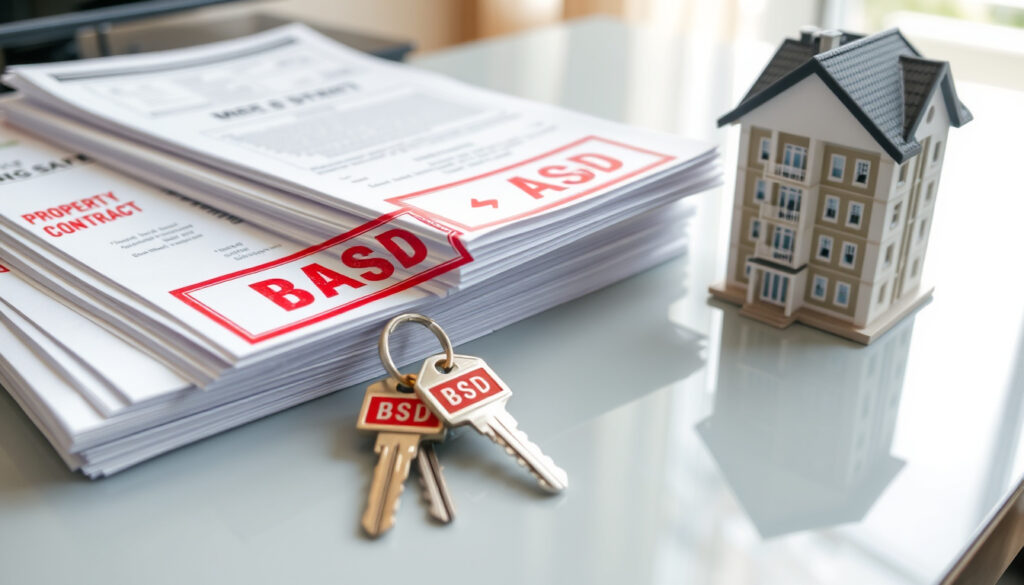
Buyer Stamp Duty Singapore – BSD and ABSD Guide 2024
Buyer’s Stamp Duty (BSD) and Additional Buyer’s Stamp Duty (ABSD) are two distinct taxes that every property buyer in Singapore must account for when purchasing residential property. BSD applies universally to all conveyances and agreements to lease, calculated on the purchase price or market value of the property, whichever is higher. ABSD was introduced in 2011 as a cooling measure and adds an extra layer of tax based on the buyer’s profile and the number of residential properties they already own. Together, these duties can significantly affect the total acquisition cost, making it essential for buyers to understand exactly how they work before signing any agreement.
The Inland Revenue Authority of Singapore (IRAS) administers both duties, with rates updated periodically to reflect market conditions and government policy objectives. For Singapore Citizens purchasing their first residential property, BSD applies but ABSD does not, providing meaningful relief for first-time buyers. However, Permanent Residents, foreigners, and entities face substantially higher ABSD rates, with foreigners currently subject to a flat 60% ABSD on all residential property purchases. Understanding these distinctions helps buyers plan their finances more accurately and avoid surprises at the signing table.
This guide breaks down BSD and ABSD rates, explains how calculations work, outlines available exemptions and remissions, and details the payment process so buyers can approach their property purchase with greater confidence. For the most current rates and application procedures, buyers should consult IRAS directly, as tax policies may be adjusted during annual Budget announcements.
What is Buyer’s Stamp Duty (BSD) in Singapore?
Buyer’s Stamp Duty is a tax imposed on documents executed in Singapore relating to the purchase or lease of property. Under the Stamp Duties Act (Chapter 59), any agreement for the sale and purchase of residential property must be stamped before it can be produced as evidence in court or submitted to the Singapore Land Authority. The duty applies to the total purchase price or the market value of the property, whichever figure is greater, ensuring that stamp duty cannot be avoided by undervaluing a transaction.
All buyers—whether Singapore Citizens, Permanent Residents, foreigners, or corporate entities—are required to pay BSD when purchasing residential property. There are no exemptions from BSD based on buyer profile. The only qualifying exemption from BSD itself relates to instruments executed by or in favour of certain charitable institutions, which does not apply to typical residential transactions. For most buyers, BSD forms a non-negotiable part of the total closing costs.
Key Insights for Property Buyers
- ABSD rates were significantly increased in December 2021 and again in April 2023 as part of government cooling measures to moderate property demand and stabilise prices
- Singapore Citizens purchasing their first property enjoy 0% ABSD, making the market more accessible for first-time buyers compared to other buyer categories
- Permanent Residents face a 5% ABSD on their first residential property purchase, a substantial gap compared to Singapore Citizens
- Foreign nationals are subject to the highest ABSD rate at 60% flat, applying to all residential properties regardless of whether it is a first purchase
- Married couples where at least one spouse is a Singapore Citizen may qualify for full ABSD remission on their joint first home, even if the other spouse holds PR or foreign status
- Housing developers are subject to a 35% remittable ABSD plus a mandatory 5% non-remittable ABSD, totalling 40% upfront on acquisitions
- ABSD remission applications must be submitted to IRAS with supporting documentation; relief is not automatic and deadlines apply
| Fact | Details |
|---|---|
| BSD Maximum Rate | 6% (progressive, applies to residential properties) |
| ABSD First Singapore Citizen Property | 0% |
| ABSD First Permanent Resident Property | 5% |
| ABSD Foreigner (All Residential) | 60% flat |
| ABSD Entity Purchase | 65% flat |
| Payment Deadline | 14 days from agreement execution |
| Payment Method | IRAS e-Stamping portal |
| Applicable Law | Stamp Duties Act (Chapter 59) |
Current BSD and ABSD Rates in 2024
Buyer’s Stamp Duty follows a progressive structure for residential properties, with rates introduced after 20 February 2018. The BSD rates apply in bands, meaning only the portion of the purchase price falling within each band is taxed at the corresponding rate. For example, on a property valued at S$1 million, the first S$180,000 may be taxed at 1%, the next portion at a higher rate, and so on up to the maximum 6% bracket. This progressive structure means higher-value properties incur proportionally higher BSD, but the rate never exceeds 6% of the total value.
Additional Buyer’s Stamp Duty operates differently—it is a flat percentage applied to the entire purchase price or market value, with rates varying significantly based on buyer profile and property count. The government introduced ABSD specifically to deter speculative buying and to moderate demand from non-resident investors. Rates have been tightened progressively since 2011, with the most significant adjustments occurring in 2018, 2021, and 2023.
ABSD Rates by Buyer Profile
The table below summarises current ABSD rates for different buyer categories as of 2024. These rates apply to the purchase price or market value of the property, whichever is higher, and are not progressive—they apply as a flat percentage to the total value.
| Buyer Type | 1st Property | 2nd Property | 3rd+ Properties |
|---|---|---|---|
| Singapore Citizen | 0% | 20% | 30% |
| Permanent Resident | 5% | 30% | 35% |
| Foreigner | 60% | 60% | 60% |
| Entity / Company | 65% | 65% | 65% |
| Housing Developer | 35% (+ 5% non-remittable) | 35% (+ 5% non-remittable) | 35% (+ 5% non-remittable) |
Rates are determined based on the buyer’s profile at the time of purchase. If a buyer is a Permanent Resident at the time of acquisition but subsequently applies for Singapore Citizenship, the ABSD paid cannot be retroactively adjusted. Prospective buyers should therefore time their purchases strategically if their residency status is expected to change.
Nationals and Permanent Residents of countries with a Free Trade Agreement (FTA) with Singapore—including the United States, Switzerland, Iceland, Norway, and Liechtenstein—are treated equivalently to Singapore Citizens for their first residential property purchase. This means FTA nationals enjoy 0% ABSD on their first property, providing a meaningful advantage over other foreign buyers.
Understanding the ABSD Surcharge for Housing Developers
Housing developers face a distinct ABSD structure designed to prevent speculative development activity. The 35% remittable ABSD applies to acquisitions of residential property with the intent to develop and sell, but developers can apply for remission if they meet specific conditions—primarily, that they develop and sell a minimum number of housing units within the required timeframe. An additional 5% non-remittable ABSD applies upfront regardless of intent, making the total upfront cost 40% on any residential property acquisition by a developer. This measure aims to cool off-market activity among property developers and ensure supply reaches end-buyers.
How to Calculate Buyer’s Stamp duty
Calculating BSD involves applying a progressive rate structure to the purchase price or market value of the property, whichever is higher. The calculation begins with identifying the relevant duty brackets and applying each rate to the corresponding portion of the property value. IRAS provides an official Stamp Duty Calculator that handles both BSD and ABSD automatically, which is the most reliable method for buyers to estimate their total liability before committing to a purchase.
BSD Calculation Example
For a residential property with a purchase price of S$1,000,000, the BSD calculation proceeds as follows. The first S$180,000 is taxed at 1%, generating S$1,800. The portion between S$180,001 and S$360,000 is taxed at 2%, generating another S$3,600. The portion between S$360,001 and S$640,000 is taxed at 3%, generating S$8,400. The portion between S$640,001 and S$1,000,000 is taxed at 4%, generating S$14,400. Adding these together yields a total BSD of S$28,200, which represents approximately 2.82% of the purchase price—well below the maximum 6% rate that applies to properties valued at S$1 million or higher.
Combined BSD and ABSD Calculation
When both BSD and ABSD apply, the two duties are calculated separately and then summed. Using the example above, a Singapore Citizen purchasing a second property at S$1,000,000 would pay S$28,200 in BSD plus 20% ABSD of S$200,000, totalling S$228,200 in stamp duties alone. A foreigner purchasing the same property would pay S$28,200 in BSD plus 60% ABSD of S$600,000, totalling S$628,200. These figures illustrate why understanding ABSD implications is critical for financial planning, particularly for buyers in higher-rate categories.
ABSD is calculated on the purchase price or market value whichever is higher, determined at the time of the agreement. If the agreed purchase price is below market value, IRAS may assess ABSD based on the market value, so buyers should ensure valuations reflect realistic expectations before signing.
Exemptions, Remissions and Payment Process
ABSD exemptions and remissions provide targeted relief for specific buyer circumstances, but they are not granted automatically. Buyers must apply to IRAS with supporting documentation, and many relief schemes have strict conditions and deadlines. Understanding these options before purchasing can help buyers avoid overpaying or missing out on legitimate savings. The availability of relief also depends on the buyer’s profile and the nature of the transaction, so seeking professional advice is often worthwhile.
Full Exemptions from ABSD
Two categories of buyers qualify for full exemption from ABSD. First, Singapore Citizens purchasing their first residential property pay no ABSD at all—this exemption is built into the system and requires no separate application. Second, qualifying FTA nationals and their PR equivalents from partner countries are treated as Singapore Citizens for their first residential property purchase, meaning they also enjoy 0% ABSD. All other buyers must pay ABSD according to their profile unless they qualify for one of the remission schemes.
Remission Schemes for Married Couples
Married couples where at least one spouse is a Singapore Citizen may apply for full ABSD remission on their joint purchase of a matrimonial home, even if the other spouse holds PR or foreign status. Under this scheme, the couple would normally pay ABSD based on the non-SC spouse’s profile—60% for a foreigner, for example—but can subsequently claim a refund upon meeting conditions. The couple must not own any other residential property at the time of purchase, and the application must be submitted within the required timeframe with proof of marriage and jointly held ownership.
ABSD remission applications are not automatic and must be submitted to IRAS with supporting documents within specified deadlines. Buyers should maintain records of all property disposals, marriage certificates, and ownership histories to support their applications. IRAS has extended certain timelines post-COVID for some schemes, but buyers should not assume extensions apply to their specific situation.
Property Replacement and Downgrading Relief
Buyers who sell their existing property and purchase a new one within 6 to 12 months may qualify for ABSD remission under the property replacement scheme. This is particularly relevant for HDB upgraders who are selling their flat to purchase a private property. HDB’s 6-month disposal rule means that eligible upgraders can obtain upfront ABSD remission rather than having to pay upfront and claim a refund later. Those exploring HDB upgrade options may find our BTO Launch Guide useful for understanding the broader housing application landscape. Downgraders selling private property to purchase an HDB resale flat may also qualify for relief under similar principles, as the government supports mobility within the property market.
Decoupling for Property Investors
Decoupling is a strategy used by property investors to reduce ABSD liability by transferring ownership shares between spouses. In a typical decoupling arrangement, one spouse sells or gifts their share of a jointly owned property to the other, effectively making the retaining spouse a “first-time” buyer again. This strategy can eliminate ABSD on the next purchase, though Permanent Residents who receive a transferred share still pay 5% ABSD as first-time buyers. Decoupling works for private properties and requires careful legal documentation; buyers considering this approach should consult a property lawyer to ensure the transfer is structured correctly.
When is Stamp Duty Payable?
Stamp duty becomes payable upon the execution of the agreement for sale and purchase. For most residential transactions, this means at the point of signing the Option to Purchase (OTP) or the formal Sale and Purchase Agreement. Buyers have 14 days from the date of execution to stamp their documents with IRAS, either online through the e-Stamping portal or at an IRAS counter. Failing to stamp within the deadline results in penalties, including an automatic composition fee and, in serious cases, prosecution under the Stamp Duties Act.
How to Pay Stamp Duty in Singapore
IRAS operates an e-Stamping portal that allows buyers to calculate, pay, and stamp documents electronically. The process involves selecting the property type, entering the purchase price or market value, and specifying the buyer profile for ABSD purposes. Payment can be made via GIRO, Visa, Mastercard, or internet banking. Once stamped, the document receives an official stamp certificate from IRAS, which serves as proof of payment. For transactions involving ABSD remission, buyers typically pay the full amount upfront and submit a separate remission claim with supporting documents within the applicable deadline.
Stamp duty must be paid within 14 days of executing the agreement. Late payment triggers automatic composition fees that can add significantly to the original liability. Buyers who anticipate delays should contact IRAS immediately to avoid penalties. The e-Stamping portal is the recommended method as it provides immediate confirmation and reduces the risk of missing deadlines.
Historical Changes and Cooling Measure Timeline
ABSD was first introduced in December 2011 as a response to rising property prices and increasing demand from foreign buyers. The original rates were modest—a flat 10% for foreigners and 3% for Permanent Residents on second and subsequent properties—but they have been progressively tightened as property market conditions warranted. Understanding this history helps contextualise why ABSD rates are structured as they are today and why the government has tools available to adjust rates if market conditions change.
- December 2011: ABSD introduced for the first time. Foreigners faced 10%, PRs 3% on second and subsequent properties.
- August 2012: Rates increased. Additional calibration introduced for developers.
- July 2018: Major tightening. ABSD for foreigners raised to 20%, PR rates increased, developer rates adjusted.
- December 2021: Significant rate hike across all categories. Foreigner rate doubled to 30%, SC second property raised from 12% to 17%.
- April 2023: Further cooling measures implemented. SC second property rate increased to 20%, third to 30%; PR second property to 30%, third to 35%; foreigner rate raised to 60%.
- 2024 onwards: Rates maintained at current levels. Government monitors market conditions ahead of each annual Budget announcement.
What Remains Established Versus Uncertain
Several aspects of stamp duty policy are firmly established based on legislation and official IRAS guidance, while others remain subject to change depending on government policy decisions. Buyers benefit from understanding which facts are stable versus which may shift, particularly if they are planning purchases over a longer timeframe.
| Established Information | Information Subject to Change |
|---|---|
| Current BSD rates (progressive up to 6%) as specified under the Stamp Duties Act post-20 February 2018 | Future ABSD rate adjustments pending Budget 2025 and subsequent announcements |
| Current ABSD rates by buyer profile as published by IRAS and updated through official government releases | Potential for new exemptions or remission schemes depending on demographic or market policy priorities |
| ABSD calculation basis (purchase price or market value, whichever is higher) | Conditions for FTA national equivalence, subject to trade agreement terms |
| 14-day payment deadline and e-Stamping process administered by IRAS | Extended application timelines for remission schemes may be adjusted |
| HDB disposal rules triggering upfront remission for eligible upgraders | Developer remission thresholds if policy rationale shifts |
Market Context and Policy Rationale
The government uses ABSD as one of several macroprudential tools to manage property market conditions in Singapore. By adjusting rates for different buyer profiles, authorities aim to strike a balance between supporting home ownership for Singapore Citizens and Permanent Residents while discouraging speculative activity and managing demand from foreign buyers. The tiered structure—whereby Singapore Citizens face the lowest rates and foreigners face the highest—reflects a deliberate policy priority to keep property accessible for residents while limiting foreign investment pressure on prices.
Property cooling measures have historically been responsive to market trends. When transaction volumes surge or prices accelerate beyond sustainable levels, the government has demonstrated willingness to tighten ABSD rates. Conversely, during periods of market cooling or economic uncertainty, relief measures may be introduced. Prospective buyers should monitor official announcements from the Ministry of Finance and IRAS, particularly ahead of annual Budget statements, as rate changes are often announced alongside other fiscal measures.
Official Sources and Credibility
The primary authoritative source for stamp duty information in Singapore is the Inland Revenue Authority of Singapore (IRAS), which administers the Stamp Duties Act and maintains the official e-Stamping portal. IRAS publishes detailed guides on both Buyer’s Stamp Duty and Additional Buyer’s Stamp Duty, including rate tables, calculation examples, and remission application procedures. These publications are updated whenever rates change and represent the most reliable reference for buyers, agents, and legal professionals.
“For the most current information on stamp duty rates and remission schemes, always refer to the official IRAS website or consult directly with IRAS. Tax policies may be adjusted during annual Budget announcements, and only official sources can confirm the applicable rates at the time of your transaction.”
— Inland Revenue Authority of Singapore (IRAS)
Secondary sources including property portals, legal advisory sites, and financial blogs provide useful contextual guides, but buyers should verify all rate information against IRAS before making financial decisions. The information presented in this article reflects rates and policies as of the most recent official update, but changes announced in future Budget statements may alter the applicable figures.
Summary
Buyer’s Stamp Duty and Additional Buyer’s Stamp Duty together represent a significant cost component for anyone purchasing residential property in Singapore. BSD applies to all buyers at progressive rates up to 6%, while ABSD adds variable surcharges based on buyer profile and existing property ownership. Singapore Citizens enjoy the most favourable ABSD rates, paying nothing on their first property, while foreigners face the highest burden at 60% flat on all residential purchases. Various remission schemes—including relief for married couples, property replacements, and downgrading—can reduce ABSD liability for eligible buyers, but these require timely applications to IRAS with supporting documentation. Payment must be made within 14 days of signing through IRAS’s e-Stamping system, and buyers should monitor official announcements for any rate changes ahead of annual Budget statements. For guidance on planning your property purchase or understanding which remission schemes may apply to your situation, consult IRAS directly or speak with a qualified property lawyer.
Those exploring other aspects of Singapore property ownership may find our BTO Launch Guide useful for understanding housing application processes, while our LTA Car Plate Bidding resource covers related government systems for vehicle registration.
Frequently Asked Questions
What is the difference between BSD and ABSD?
BSD (Buyer’s Stamp Duty) is a universal tax applying to all buyers of residential property, calculated progressively up to 6% of the purchase price. ABSD (Additional Buyer’s Stamp Duty) is a surcharge levied on top of BSD, with rates varying by buyer profile and property count. Singapore Citizens pay 0% ABSD on their first property, while foreigners pay 60% on all residential purchases.
Is stamp duty applicable on HDB resale flats?
Yes, both BSD and ABSD apply to HDB resale transactions. Singapore Citizens purchasing their first HDB resale flat pay 0% ABSD, while Permanent Residents pay 5% ABSD on a first purchase. Foreigners face 60% ABSD on any HDB resale flat, as HDB properties are classified as residential.
Can ABSD be refunded after purchase?
Yes, ABSD can be refunded through remission schemes such as property replacement, married couple relief, or decoupling. Applications must be submitted to IRAS with supporting documents within specified deadlines. Buyers who pay ABSD upfront can claim refunds if they meet the qualifying conditions for relief.
How is stamp duty calculated on joint purchases?
Stamp duty on joint purchases is calculated based on the combined buyer profile. If one joint owner is a Singapore Citizen and the other is a Permanent Resident, ABSD is determined by the higher-rate profile. Married couples where at least one spouse is a Singapore Citizen may apply for remission on joint first-home purchases.
What happens if stamp duty is not paid on time?
Failing to pay stamp duty within 14 days of executing the agreement results in automatic penalties. IRAS imposes a composition fee for late payment, calculated as a percentage of the unpaid duty. Continued non-compliance may lead to prosecution under the Stamp Duties Act, which can result in fines and imprisonment.
Do foreigners pay ABSD on all property types?
ABSD applies specifically to residential property. Foreigners purchasing non-residential property—such as commercial or industrial units—do not pay ABSD. However, any property zoned for residential use, including mixed-use developments with a residential component, may be subject to ABSD.
Can ABSD be transferred to the seller?
Stamp duty is the buyer’s legal responsibility and cannot be legally transferred to the seller. In practice, some buyers may negotiate a price adjustment with the seller, but this is a private arrangement and does not change the legal obligation to pay stamp duty to IRAS.
Are there any special ABSD rates for newlyweds?
Married couples where at least one spouse is a Singapore Citizen can apply for full ABSD remission on their joint purchase of a matrimonial home, provided they do not own any other residential property at the time. This scheme covers scenarios where one spouse holds PR or foreign status—the non-SC spouse would normally incur ABSD, but can subsequently claim a refund upon meeting conditions.
More related posts
 Michelle Lim Yan Yi – High Court Rejects Insurance Claim
 Malayalam Web Series Sex: Verified Facts & Sources
 Adidas Chinese New Year Jacket: Colors, Price & Where to Buy
 Axis Bank Share Price Today (2026): Is It a Buy or Sell
 Infinix GT 20 Pro: Specs, Gaming Review, Price & Performance
 10 Dolar Singapura Berapa Rupiah – Live Rates and Conversion Tips
 Best Arepa de Choclo Near Me: Top Tripadvisor Spots
 EZ-Link Motoring Card: How to Get, Top Up & Compare