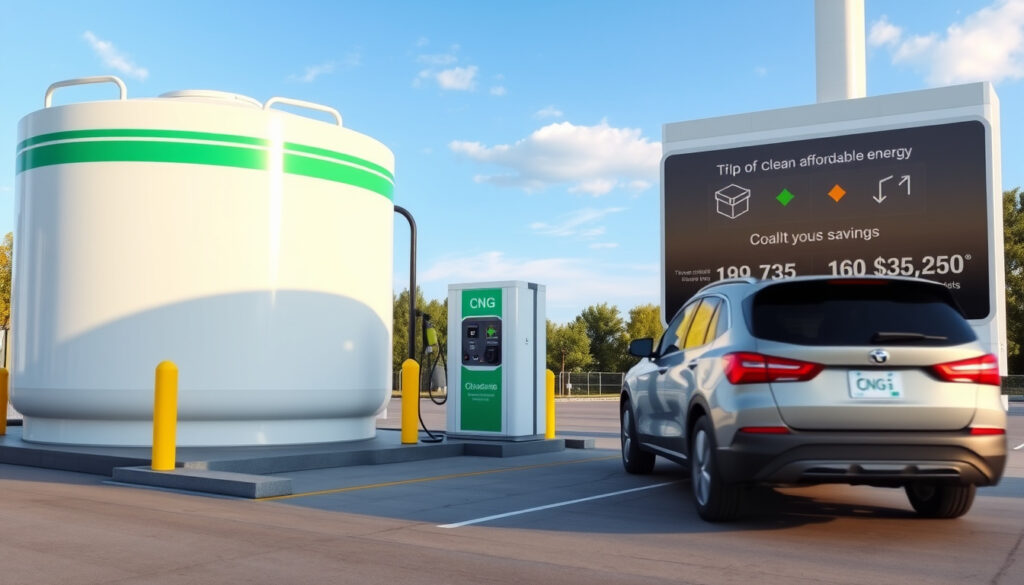
Compressed Natural Gas – Benefits, Safety, Stations and Costs
Compressed natural gas has emerged as a significant alternative fuel source in the global push toward cleaner energy solutions. As vehicle emissions regulations tighten and consumers seek cost-effective fueling options, CNG offers a compelling middle ground between traditional fossil fuels and emerging electric technologies. This comprehensive guide examines what CNG is, how it works, its advantages and limitations, and practical considerations for those considering a switch.
The fuel consists primarily of methane, compressed to extreme pressures that allow it to be stored efficiently and used in specially designed internal combustion engines. Unlike its more widely known cousin liquefied natural gas, CNG remains in gaseous form at ambient temperatures, simplifying storage and reducing certain safety concerns. Understanding the fundamentals of this fuel requires examining its composition, production methods, and the infrastructure required to deliver it to end users.
Whether you operate a fleet of commercial vehicles, commute daily in a personal car, or simply want to understand the energy landscape better, CNG merits serious consideration. The following sections break down everything from basic definitions to practical costs, safety profiles, and the current state of refueling infrastructure.
What Is Compressed Natural Gas?
Compressed natural gas is natural gas—predominantly methane (typically 85-95% CH4)—that has been compressed to approximately 200-250 bar pressure. This compression reduces its volume to less than 1% of its original amount at standard atmospheric pressure, making practical storage and transport possible in high-pressure cylindrical or spherical tanks. The process transforms a fuel that would otherwise require extensive pipeline infrastructure into a mobile energy source suitable for vehicles ranging from passenger cars to heavy-duty trucks.
The production chain begins with natural gas extraction from traditional fossil fuel sources such as oil fields and coal beds, though increasingly from landfills and other organic waste streams that produce bio-CNG. Raw natural gas undergoes processing to remove impurities including water vapor, carbon dioxide, and various sulfur compounds before compression occurs. Stationary equipment receives gas through utility pipelines or direct connections and compresses it on-site, with the compressed product then dispensed into vehicle fuel systems.
Home refueling has become possible through compact compressors like the Phill system, which connects to household natural gas lines and allows overnight refueling of personal vehicles. This democratizes access to CNG beyond the network of public refueling stations that have traditionally served fleet operators and commercial users.
CNG at a Glance
Methane (CH4) at 200-250 bar pressure
Lower costs, cleaner emissions, domestic supply
Lighter than air; disperses rapidly if released
Growing station network, home compressors available
Key Insights
- CNG contains 85-95% methane, making it predominantly methane-based fuel
- Compression at 200-250 bar (2,900-3,600 psi) enables practical onboard storage
- The fuel remains gaseous at room temperature, unlike LNG which requires cryogenic cooling
- CNG is lighter than air and will dissipate rapidly if released, reducing pooling hazards
- Vehicle fuel consumption can reach 6-7 liters CNG equivalent per 100 kilometers compared to 10 liters of petrol
- Combustion temperatures reach approximately 1,949°C, supporting efficient energy release
- The fuel supports energy transition strategies as the cleanest option among fossil fuels
Technical Properties
| Property | Value | Notes |
|---|---|---|
| Primary Component | Methane (CH4) | 85-95% concentration |
| Storage Pressure | 200-250 bar | 20-25 MPa or 2,900-3,600 psi |
| Volume Reduction | Less than 1% | Compared to atmospheric pressure |
| Physical State | Gaseous | At room temperature |
| Combustion Temperature | Up to 1,949°C | Clean burn profile |
| Energy Density | Higher than petrol per unit | Efficient fuel consumption |
Benefits of Using CNG
The advantages of compressed natural gas extend across economic, environmental, and operational dimensions. Fleet operators and individual drivers alike report meaningful savings when switching from conventional gasoline or diesel, while communities benefit from reduced emissions that contribute to better air quality.
Cost savings represent the most immediate and tangible benefit for most users. Natural gas typically trades at a significant discount to crude oil-derived fuels, and this pricing advantage translates directly to the pump. Drivers report fuel costs running 30-50% lower than equivalent gasoline consumption, though regional variations and tax structures can affect the actual savings realized.
Environmental Advantages
CNG combustion produces substantially lower levels of several harmful pollutants compared to gasoline or diesel. Carbon monoxide emissions decrease significantly, as do nitrogen oxides and particulate matter that contribute to respiratory problems and ground-level ozone formation. The methane present in natural gas burns cleaner than the heavier hydrocarbon chains in conventional fuels, producing fewer unburned hydrocarbons and other reactive compounds.
Lifecycle emissions analysis reveals a lower carbon intensity for CNG compared to traditional fuels, particularly when bio-CNG derived from organic waste sources enters the supply chain. While methane leakage throughout the production and distribution system remains a concern that researchers continue to study, the net greenhouse gas profile of CNG generally compares favorably to gasoline and diesel over the complete fuel lifecycle.
Independent testing confirms that CNG vehicles produce measurably lower emissions of carbon monoxide, nitrogen oxides, and particulate matter compared to equivalent gasoline-powered vehicles. Bio-CNG, produced from renewable organic sources, can further reduce the carbon footprint, potentially achieving near-carbon-neutral status when accounting for feedstock sequestration.
Economic Advantages
Beyond the per-gallon savings at the pump, CNG offers several economic benefits that compound over time. Natural gas prices historically exhibit less volatility than crude oil prices, providing fleet managers with more predictable operating cost budgets. The simplified engine design of dedicated CNG vehicles—with no fuel injection system exposed to liquid fuel and reduced oil contamination from blowby gases—can extend engine life and reduce maintenance intervals.
Tax incentives and regulatory credits in many jurisdictions further improve the economics of CNG adoption. Government programs designed to accelerate alternative fuel infrastructure development have supported station construction across numerous regions, while fleet purchase incentives can offset the higher initial cost of CNG-equipped vehicles.
Is CNG Safer Than Other Fuels?
Safety comparisons between CNG and other transportation fuels reveal distinct profiles that favor the compressed gas option in several important respects. Understanding these differences helps explain why many fleet operators and municipalities have embraced CNG for their vehicles, particularly those operating in populated areas or enclosed spaces.
The most significant safety advantage of CNG stems from its physical properties relative to air. At roughly half the density of air, released CNG rises and disperses rapidly rather than pooling near the ground or collecting in enclosed spaces. This behavior contrasts sharply with LPG, which is heavier than air and can accumulate in basements, trenches, or other low-lying areas where ignition sources might trigger explosive concentrations.
CNG vs. LNG vs. LPG
| Aspect | CNG | LNG | LPG |
|---|---|---|---|
| Storage Condition | Gas at 200-250 bar | Liquid at -162°C | Liquid at 8-10 bar |
| Density vs. Air | Lighter; disperses upward | Lighter; disperses upward | Heavier; pools at ground level |
| Energy Density | Baseline | 2.4x greater than CNG | Higher than CNG |
| Primary Use | Local distribution, vehicles | Long-distance shipping, no pipelines | Residential, commercial, transport |
| Leak Behavior | Rapid dispersion | Rapid vaporization and dispersion | Can accumulate dangerously |
Handling and Storage Safety
CNG tanks are engineered to withstand pressures far exceeding normal operating conditions, with rigorous testing protocols and robust materials specifications. The high-pressure cylinders—typically constructed from steel or composite materials—undergo hydrostatic testing and visual inspection at regular intervals to ensure integrity. In the event of a vehicle accident, CNG tanks have demonstrated strong resistance to rupture when properly installed and maintained.
Natural gas is naturally odorless and non-toxic. Utility companies add sulfur compounds (mercaptans) to the gas distributed through pipeline systems to create a distinctive smell that helps users detect leaks before dangerous concentrations accumulate. Homeowners with natural gas appliances rely on this odorant for safety awareness, and the same principle applies to CNG systems receiving gas from odorized pipelines.
The non-toxic nature of methane means that any release, while presenting flammability concerns, does not create toxic exposure risks. Workers handling CNG equipment face no skin absorption hazards or acute toxicity threats from direct contact, simplifying training requirements and personal protective equipment needs compared to fuels like gasoline or certain industrial chemicals.
CNG Stations and Vehicle Use
The refueling infrastructure supporting CNG has expanded considerably over the past two decades, though it remains less ubiquitous than the gasoline station network that drivers take for granted. Understanding where CNG stations exist and how the refueling process works helps prospective users evaluate whether the fuel suits their driving patterns and geographic location.
Finding CNG Stations
Public CNG refueling stations concentrate in regions with strong government support for alternative fuels and high-density fleet operations. Metropolitan areas with bus fleets, taxi services, and municipal vehicle pools have driven station development in many countries, creating pockets of good coverage amid broader areas with limited access. Transit authorities, garbage collection companies, and delivery services often operate private stations accessible only to their own vehicles or authorized affiliates.
Locator tools available through government energy offices and industry associations help drivers identify the nearest stations when planning routes or considering a vehicle purchase. The Department of Energy’s station finder provides a searchable database covering thousands of locations, while regional mapping services aggregate data from multiple providers into user-friendly interfaces.
How CNG Vehicles Work
Compressed natural gas vehicles operate on modified versions of traditional spark-ignition internal combustion engines. The fundamental operating principle mirrors gasoline engines—fuel and air mixture enters the cylinder, compresses, ignites via spark plug, and drives the piston downward to produce rotational power. However, the fuel delivery and storage systems differ substantially from conventional designs.
CNG vehicles carry the fuel in robust high-pressure tanks, typically mounted in the vehicle’s undercarriage or trunk area depending on design constraints. When the driver requests power, CNG flows from the tank through a pressure regulator that reduces the extreme tank pressure to engine-appropriate levels before passing through injectors that meter precise amounts into the intake manifold. The engine control unit manages these injectors using the same principles applied to gasoline direct injection systems.
Three primary vehicle configurations accommodate CNG: dedicated vehicles built from the factory to run exclusively on natural gas, bi-fuel vehicles that can switch between CNG and gasoline, and dual-fuel systems that use natural gas with diesel pilot ignition in heavy-duty applications. Each configuration offers different trade-offs between range, convenience, and upfront cost.
Converting Vehicles to CNG
Existing gasoline vehicles can undergo conversion to run on CNG through the installation of compressed natural gas fuel systems. Certified conversion shops install tanks, regulators, fuel lines, and electronic controls that integrate with the original engine management system. These conversions require professional installation to ensure safety, performance, and regulatory compliance.
The conversion process adds weight and reduces trunk space due to the high-pressure tank requirements, and the upfront investment must be weighed against projected fuel savings over the vehicle’s remaining service life. Fleet operators who accumulate high mileage often realize the fastest payback, while occasional drivers may find the economics less compelling.
For those evaluating vehicle options, the YZJ Shipping Share Price Forum discusses how shipping and logistics companies approach fuel economics in fleet planning, offering perspectives relevant to commercial vehicle operations considering alternative fuels.
CNG Fuel Costs and Economics
Understanding the true cost of CNG requires examining both the immediate fuel expenses and the longer-term financial picture including vehicle acquisition, maintenance, and residual values. While per-gallon equivalent prices generally favor CNG over gasoline, the total cost of ownership analysis varies significantly based on usage patterns, local fuel pricing, and available incentives.
Natural gas pricing moves somewhat independently from crude oil markets, meaning CNG users often experience different price trajectories than gasoline and diesel consumers. This decoupling provides portfolio diversification benefits for fleet managers managing large vehicle populations, smoothing out fuel budget volatility that comes from dependence on a single commodity.
Current Economic Factors
Precise CNG pricing data varies by region, season, and supplier, but general trends show CNG trading at a meaningful discount to gasoline on a gasoline gallon equivalent basis. The gasoline gallon equivalent standardizes energy content measurement, allowing fair comparison across fuels with different physical properties and energy densities.
Infrastructure standardization efforts, including specifications such as DIN EN 16723-2, have helped establish consistent quality standards and refueling protocols across markets. This harmonization reduces friction for fleet operators operating across multiple regions and supports broader adoption by reducing technical uncertainty.
Current market data shows CNG generally costs less than gasoline or diesel, though specific regional pricing varies considerably. Prospective buyers should research local fuel costs and available tax incentives rather than relying on national averages. The gap between CNG and conventional fuel prices can narrow or widen based on natural gas supply conditions, regulatory changes, and broader energy market dynamics.
For those seeking to understand broader financial planning considerations, reviewing credit report information helps consumers evaluate their financing options when considering the higher upfront costs associated with natural gas vehicles or conversion systems.
CNG Adoption Timeline
The development of natural gas as a vehicle fuel spans more than a century, with significant acceleration occurring in recent decades as environmental concerns and energy security interests converged to drive policy support and technology advancement.
- 1800s — Natural gas first emerged as a byproduct of petroleum extraction, with early applications limited by the lack of safe storage and transport methods. The fuel was often flared at well sites as a waste product.
- 1930s-1940s — Compressed natural gas began appearing as a vehicle fuel in countries with abundant natural gas reserves and limited petroleum access. Early applications served municipal bus fleets and commercial delivery vehicles.
- 1970s-1980s — Oil price shocks and energy security concerns prompted renewed government interest in alternative fuels including CNG. Research programs developed improved tank technology and fuel system components.
- 1990s — Environmental regulations targeting vehicle emissions accelerated OEM investment in natural gas vehicle development. Major manufacturers introduced dedicated CNG models for fleet markets.
- 2000s — Infrastructure expansion accelerated as government incentives supported station construction. Bio-CNG production from renewable sources emerged as an additional supply pathway.
- 2010s — Standardization efforts matured with international specifications for fuel quality, station equipment, and vehicle systems. Fleet adoption expanded in transit, refuse, and delivery sectors.
- 2020s — Integration with broader decarbonization strategies positioned CNG as a transitional fuel alongside electrification. Growing RNG (renewable natural gas) supply improved lifecycle carbon metrics.
What We Know and What Remains Uncertain
| Established Information | Uncertainties |
|---|---|
| CNG composition and basic properties are well documented across multiple authoritative sources | Specific conversion costs vary by vehicle type, region, and installer without standardized benchmarks |
| Safety advantages relative to LPG (dispersion behavior) are well established | Infrastructure growth projections lack consensus; regional development varies significantly |
| Lower per-unit fuel costs compared to gasoline are consistently reported across markets | Long-term natural gas pricing relative to crude oil remains unpredictable |
| CNG vehicle technology is mature with established engineering specifications | Specific 2025 fuel price trends and forecasts are not available in current sources |
| Environmental benefits (lower CO, NOx, particulates) are well documented | Methane leakage rates throughout distribution systems continue to be studied |
| Station availability concentrates around fleet hubs and metropolitan areas | Individual resale values for converted vehicles vary widely |
The Role of CNG in the Energy Transition
Compressed natural gas occupies a transitional position in the broader evolution of transportation energy systems. As policymakers and industry leaders seek pathways to reduce greenhouse gas emissions while maintaining the operational capabilities that commerce and individuals require, CNG offers an immediately available solution that leverages existing infrastructure and proven technology.
The cleanest burning of the fossil fuels, natural gas produces fewer emissions per unit of energy generated than coal or petroleum products. When paired with renewable natural gas derived from organic waste streams, CNG can approach carbon neutrality while maintaining the energy density and refueling speed advantages that make internal combustion engines practical for many applications.
The technology also provides a practical solution for segments of the transportation sector where battery electric or hydrogen fuel cell alternatives remain impractical—long-haul trucking, marine vessels, rail applications, and heavy equipment operations. Maintaining optionality across multiple technology pathways rather than committing exclusively to a single solution reduces systemic risk as the energy transition unfolds.
Expert Perspectives and Industry Sources
“Compressed natural gas represents a pragmatic bridge fuel that delivers meaningful environmental improvements today while the industry continues developing the next generation of zero-emission technologies.”
— U.S. Department of Energy, Alternative Fuels Data Center
Government agencies including the Department of Energy, Environmental Protection Agency, and California Air Resources Board maintain extensive technical resources on natural gas vehicle technology, emissions performance, and infrastructure requirements. These sources provide authoritative guidance grounded in testing, modeling, and regulatory experience accumulated over decades of alternative fuel development.
Industry organizations such as NGV America aggregate information from member companies and publish practical guidance for fleet operators evaluating natural gas vehicle programs. The organization’s FAQ resources address common technical and operational questions based on extensive field experience across diverse applications.
“The standardized specifications now in place for CNG fuel quality and station equipment have eliminated much of the technical uncertainty that early adopters faced. Fleet operators can proceed with confidence that properly maintained systems will perform as designed.”
— ANSI Blog on Compressed Natural Gas Vehicles
Summary and Next Steps
Compressed natural gas represents a mature, well-understood alternative fuel that delivers measurable benefits across economic, environmental, and safety dimensions. The technology has matured through decades of development and deployment, with established engineering standards, proven vehicle platforms, and growing infrastructure that makes it practical for an expanding range of applications.
Prospective adopters should evaluate their specific circumstances—including typical driving patterns, local station availability, vehicle purchase or conversion costs, and applicable incentives—before committing to a switch. The economics work best for high-mileage drivers with reliable access to CNG stations or those who can install home refueling equipment.
For those ready to explore CNG further, locating the nearest refueling station and researching available OEM models or certified conversion options provides a practical starting point. Consulting with fleet operators who have experience with natural gas vehicles can yield valuable insights that generic information cannot provide.
Frequently Asked Questions
What is the energy content of CNG compared to gasoline?
CNG contains approximately 127,000 BTU per gasoline gallon equivalent compared to about 114,000 BTU for gasoline, meaning CNG actually delivers more energy per standardized unit despite being a gaseous fuel.
How long does CNG refueling take?
Refueling times vary based on tank size and station flow rates, but typically range from 3-8 minutes for passenger vehicle tanks, comparable to gasoline refueling times. Home compressors operate more slowly, usually overnight.
Are there government incentives for CNG vehicles?
Federal and state/provincial incentives vary by jurisdiction. Many regions offer tax credits, HOV lane access, or fleet purchase incentives for natural gas vehicles. Users should research current programs in their specific location.
Can CNG power heavy-duty trucks?
Yes, CNG is used extensively in heavy-duty applications including transit buses, garbage trucks, and regional delivery vehicles. Dedicated CNG heavy-duty engines are available from major manufacturers for these applications.
How does cold weather affect CNG vehicles?
CNG vehicles start and operate effectively in cold weather, though tank pressure may drop more rapidly in extremely cold conditions as the fuel cools. Modern systems include cold-weather optimization features.
What maintenance do CNG vehicles require?
CNG vehicles generally require less frequent oil changes due to cleaner combustion reducing oil contamination. Spark plugs, ignition systems, and fuel system components may have extended service intervals compared to gasoline vehicles.
Does CNG cause engine damage?
Properly converted or factory-built CNG vehicles experience no unusual engine wear. The clean-burning characteristics of natural gas actually reduce carbon deposits and oil degradation compared to gasoline operation.
More related posts
 ChatGPT Persian: Free Access, Telegram Bot & Voice Guide
 Michelle Lim Yan Yi – High Court Rejects Insurance Claim
 Tampines Ave 7 Accident: Fatal Crash, Driver Charges & Updates
 Race Card & Results: Today, Tomorrow, UK & Irish
 Arsenal vs Aston Villa Lineups: Result & Starting XI (Dec 2025)
 Kang Ha-neul Relationship Status, English, and Personal Life
 Excel Drop Down List: Step-by-Step Guide with Examples