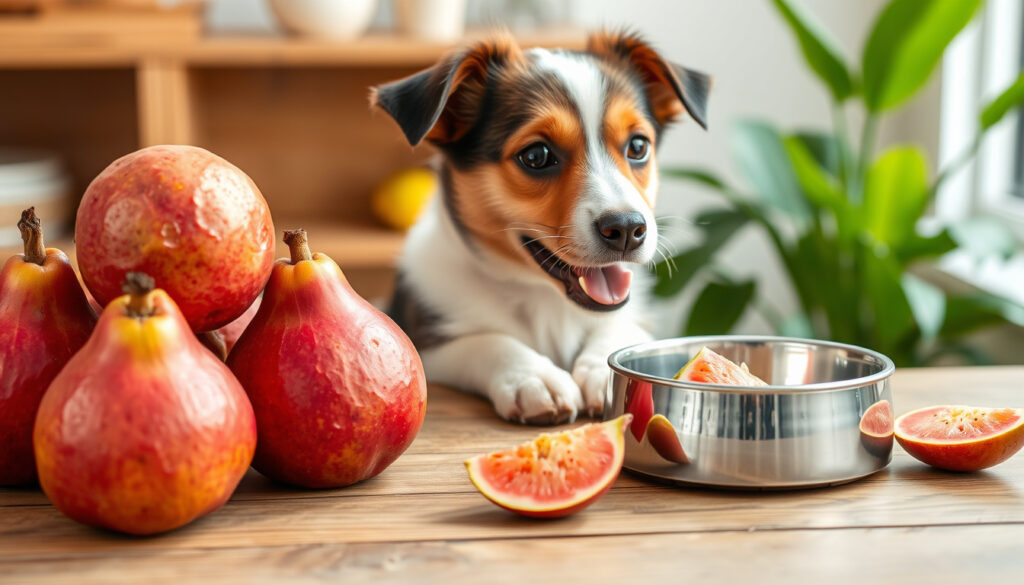
Can Dogs Eat Guava? Benefits, Risks and Safe Feeding Guide
Your dog tilts her head at you while you’re slicing tropical fruit, and suddenly that snack feels like a decision with stakes. Guava is packed with nutrients humans love—but is it safe for pups? The answer comes down to one rule: flesh only, everything else off the plate. Here’s what the research says about benefits, risks, and how to serve it right.
Safe in moderation: Yes, flesh only · Key nutrients: Vitamins A, C, K and fiber · Remove before feeding: Rind and seeds · Potential issues: Allergic reactions or stomach upset · Top sources agree: MasterClass, PetStock, PetChef
Quick snapshot
- Flesh safe in moderation (MasterClass Pet Nutrition Guide)
- Rich in vitamins A, C, K and fiber (PetStock Pet Retail Guide)
- Remove rind and seeds before serving (MasterClass Pet Nutrition Guide)
- Effects of guava leaves on dogs
- Precise safe quantities for dried guava
- Long-term effects of regular feeding
- MasterClass article updated 2026
- PMC toxicology study published 2019
- Bark & Whiskers guide March 2024
- Moderation remains key as more pet owners explore tropical fruits
- Veterinary guidance likely to clarify serving size standards
The following table consolidates the key facts pet health sources consistently report about guava for dogs.
| Label | Value |
|---|---|
| Recommended serving | Occasional small treat |
| Key vitamins | A, C, K |
| Fiber content | Supports digestion |
| Sources consensus | Safe if prepared properly |
| Allergic reaction risk | Rare but possible |
| Calories vs commercial treats | Lower |
Are guavas poisonous to dogs?
No, guava flesh is not poisonous to dogs. According to MasterClass (Pet Nutrition Guide), dogs can eat guava in moderation as an occasional treat. Unlike grapes or cherries, guava does not appear on lists of the most toxic fruits for dogs. The PetStock (Pet Retail Guide) confirms that guava is safe when the rind and seeds are removed first.
General safety overview
Guava flesh provides a nutrient-dense snack that beats most commercial treats on calorie count. Houndsy (Dog Wellness Platform) notes that guava is low in calories compared to packaged biscuits, making it a smarter occasional indulgence. The flesh supplies vitamins that support your dog’s immune system and digestion without the additives common in processed treats.
Comparison to toxic fruits
Guava sits far outside the danger zone occupied by grapes, raisins, and cherries with pits. Toxipets (Vet-Reviewed Safety Guide) states that guava is safe in small amounts when seeds are removed to prevent blockages. This makes it one of the safer exotic fruits you can share with your dog—just skip the parts that cause problems.
Is any part of guava poisonous?
Yes—guava seeds, skin, and leaves carry risks that make them unsuitable for dogs. The seeds present the most immediate danger, while the rind is tough to digest and the leaves are outright toxic. MasterClass (Pet Nutrition Guide) explicitly advises removing all three before offering guava to your pet.
Guava seeds
- Seeds pose choking hazard, especially for small breeds
- Risk of intestinal blockages if swallowed whole
- Contain trace cyanide, potentially toxic in large quantities
- Always remove seeds completely before serving
Guava skin
The rind is fibrous and difficult for dogs to digest. MasterClass (Pet Nutrition Guide) recommends peeling the fruit entirely. If you have organic guava, you might skip peeling the flesh itself, but the outer layer must go. Bark & Whiskers (Pet Care Resource) adds that the stem should also be removed before feeding.
Guava leaves
Guava leaves are toxic to dogs and can cause stomach irritation, vomiting, or diarrhea. MasterClass (Pet Nutrition Guide) lists leaves among the parts of the guava plant that should never reach your dog’s bowl. Scientific research from PMC NCBI (National Center for Biotechnology Information) on Psidium guajava extracts indicates potential toxicity concerns beyond just the leaves.
Is guava dog friendly?
Absolutely—when you serve only the flesh, guava is one of the more dog-friendly tropical fruits available. PetStock (Pet Retail Guide) highlights that guava is rich in vitamins A, C, and K, as well as fibre, which support your dog’s immune system and digestion. The Houndsy (Dog Wellness Platform) notes that the fruit boosts immunity and aids digestion through its fiber content.
Nutritional benefits
- Vitamin C supports immune function
- Vitamin A promotes healthy vision and skin
- Vitamin K aids blood clotting
- Fiber supports digestive health
- Antioxidants combat free radicals
Forms like juice or dried
Processed guava products are a different story. DoggleLife (Dog Nutrition Resource) warns that guava paste, jelly, and dried guava are unsafe due to concentrated sugars and additives. PetStock (Pet Retail Guide) emphasizes that only fresh, properly prepared guava delivers benefits—processed versions can cause stomach upset and weight gain.
Guava paste, jelly, and dried guava carry concentrated sugars that can upset your dog’s stomach and contribute to weight gain. Pet owners must stick to fresh flesh only.
What fruits are toxic to dogs?
The truly dangerous fruits for dogs include grapes, raisins, cherries (pits), avocados (pit), and citrus fruits in large amounts. Guava does not make any major toxic-fruit lists, which is why it has become a popular alternative for pet owners seeking healthier treat options. Toxipets (Vet-Reviewed Safety Guide) confirms that guava is safe when served correctly.
Guava vs common toxics
- Grapes and raisins: acute kidney failure risk — guava has no such danger
- Cherries: pits contain cyanide — guava seeds contain only trace amounts
- Avocado: persin toxin in pit and skin — guava leaves are the toxic part only
- Coconut: high fat content — guava flesh is relatively lean
Top 10 toxic foods context
Guava does not appear on veterinary toxicology lists of the most dangerous foods for dogs. MasterClass (Pet Nutrition Guide) positions guava as a safe fruit when properly prepared, distinguishing it from genuinely hazardous options. Houndsy (Dog Wellness Platform) confirms guava is safe for all breeds if prepared correctly and in moderation.
Unlike grapes or chocolate, guava poses no well-documented systemic toxicity risk. This makes it one of the safer exotic fruits—provided you remove the seeds, rind, and leaves.
Can dogs eat tropical fruit like guava?
Yes, dogs can eat tropical fruit like guava—as long as you follow the preparation rules. The PetStock (Pet Retail Guide) specifically recommends tropical fruits including guava as a nutrient-rich treat option. Pet Universe Nourish (Pet Nutrition Platform) confirms that guava provides a boost of nutrients in bite-sized pieces without seeds.
Preparation steps
- Wash the fruit thoroughly—prefer organic when possible
- Peel the rind completely
- Remove all seeds with a spoon or knife
- Cut flesh into small, bite-sized pieces
- Feed only as an occasional treat, not a meal replacement
Risks and precautions
Even properly prepared guava carries some risk. Bailey’s CBD (Dog Nutrition Resource) notes that potential allergic reactions include itching, rashes, and gastrointestinal upset—though these are rare. Houndsy (Dog Wellness Platform) advises monitoring your dog after guava consumption, especially if seeds were accidentally ingested.
Dogs can eat tropical fruit like guava safely—but only the flesh, properly prepared, in moderation. Any deviation from this formula introduces risk.
Upsides
- Rich in vitamins A, C, K and fiber
- Supports immune system and digestion
- Lower in calories than commercial treats
- Safe for all breeds when prepared correctly
- Varieties like Thai and Pink guava are antioxidant-rich
Downsides
- Seeds pose choking and blockage risk
- High fiber may cause diarrhea in some dogs
- Processed forms (paste, jelly, dried) unsafe due to sugar
- Allergic reactions possible though rare
- Guava leaves are toxic to dogs
How to serve guava to your dog
Follow these four steps for safe guava serving. First, wash the fruit thoroughly under running water. Second, peel off the rind completely using a vegetable peeler or knife. Third, cut the fruit in half and scoop out all seeds with a spoon—small breeds face higher risk from residual seeds. Fourth, slice the clean flesh into bite-sized pieces appropriate for your dog’s size.
Serving sizes by dog weight
While no official veterinary serving exists, Bailey’s CBD (Dog Nutrition Resource) recommends treating guava as an occasional snack rather than a dietary staple. Small dogs should receive one or two small pieces per serving, while larger breeds can have a few more—but always in moderation. Houndsy (Dog Wellness Platform) adds that excess guava can cause gastrointestinal upset due to its fiber and sugar content.
Variety-specific notes
Different guava varieties carry slightly different risk profiles. DoggleLife (Dog Nutrition Resource) documents that Mexican guava is safe in moderation but its high fiber may cause diarrhea. Thai guava, rich in vitamin C, is safe with seeds removed. Pink guava offers antioxidants but requires complete seed removal. White guava provides vitamin C and fiber with the same preparation requirements.
Dogs can eat guava in moderation. You can feed your dog guava as an occasional treat but remove the rind and seeds first.
— MasterClass (Pet Nutrition Guide)
Guava is rich in vitamins A, C, and K, as well as fibre, which can support your dog’s immune system and digestion.
— PetStock (Pet Retail Guide)
Guava seeds can present a potential choking hazard for dogs, especially small breeds or those prone to swallowing food without chewing.
— Bailey’s CBD (Dog Nutrition Resource)
Related reading: Chara Brasserie Buffet Price Singapore: $58++ Lunch Deals · Don Dae Bak Restaurant: Korean BBQ in Singapore Chinatown
Guava delivers vitamins much like other tropical fruits, where mango feeding risksmango feeding risks underscore the need to remove pits and limit portions.
Frequently asked questions
Can dogs eat guava juice?
Guava juice is not recommended for dogs. Most commercial guava juices contain added sugars and preservatives that can cause stomach upset and contribute to weight gain. Fresh guava flesh is a far better option than any processed juice product.
Can dogs eat dried guava?
No, dried guava should be avoided. DoggleLife (Dog Nutrition Resource) notes that dried guava contains concentrated sugars and often preservatives that make it unsafe for dogs. Stick to fresh guava flesh only.
Can shih tzu eat guava?
Shih tzus can eat guava, but extra care is needed with preparation. Small breeds like shih tzus face higher choking risk from seeds, so seed removal must be thorough. Houndsy (Dog Wellness Platform) confirms guava is safe for all breeds when prepared correctly.
What is the most toxic fruit for dogs?
Grapes and raisins are among the most toxic fruits for dogs, capable of causing acute kidney failure even in small amounts. Toxipets (Vet-Reviewed Safety Guide) provides a comprehensive list of toxic foods. Guava does not appear on these lists when properly prepared.
Can dogs eat papaya?
Papaya is generally safe for dogs in moderation, similar to guava. Remove the seeds and rind before serving, as the seeds contain compounds that may be harmful in large quantities. Both papaya and guava offer digestive benefits from their fiber content.
What are the 10 most toxic foods for dogs?
The most toxic foods for dogs typically include chocolate, grapes, raisins, onions, garlic, xylitol, alcohol, caffeine, macadamia nuts, and avocados (especially the pit). MasterClass (Pet Nutrition Guide) notes that guava does not make these lists, distinguishing it from genuinely dangerous options.
What fruits are toxic to dogs?
The fruits most commonly toxic to dogs are grapes, raisins, cherries (due to pits and cyanide), and avocados (due to persin in the pit and skin). PetStock (Pet Retail Guide) confirms that guava, when properly prepared, does not fall into this toxic category.
Pet owners who follow the preparation rules can safely share guava’s vitamin boost with their dogs—but only when they strip away the rind, seeds, leaves, and stem before serving. Processed forms like paste, jelly, and dried guava belong in your own pantry, not your dog’s bowl. Feed small pieces, watch for allergic reactions, and your dog can safely enjoy this tropical fruit.
More related posts
 How to Reset Network Settings on iPhone, Android, Windows
 Singapore to Da Nang Flight: Direct Times & Prices
 Thomson-East Coast Line Map: Route, Stations & Stages
 Primary School Ranking by PSLE Results: Top Schools in Singapore
 Best Pretzel with Cheese Dip Near Me: Ireland Delivery
 F&N Foods Pte Ltd: Profile, Products & Careers
 Public Bank Share Price: Is PBBANK a Good Buy Now
 Sports Injury Clinic Singapore: Costs, Insurance & Recovery