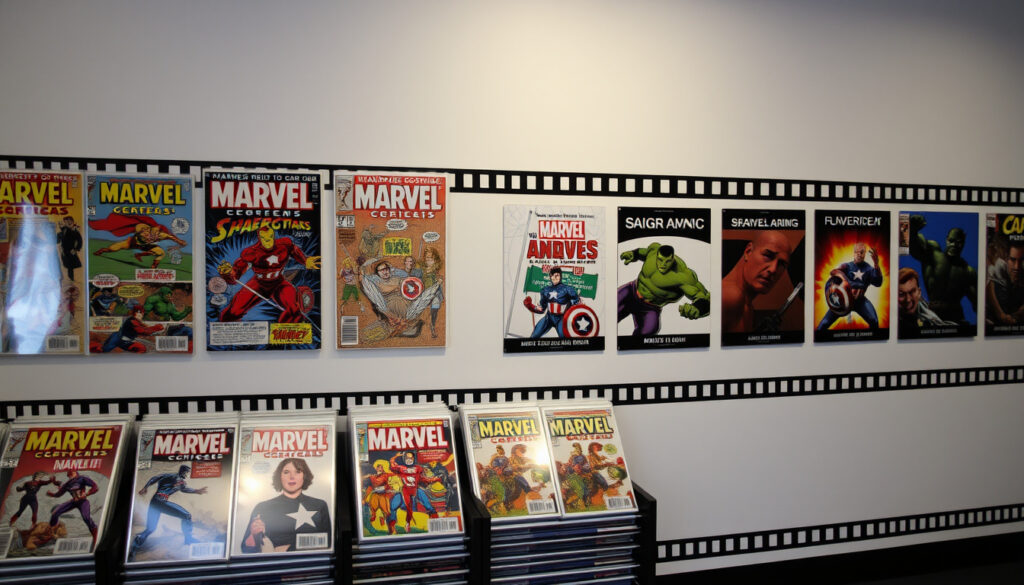
Marvel Movies in Order: Release vs Chronological Guide
Deciding which Marvel movie to start with can feel like stepping into a multiverse of options. With 34 films spread across five phases, the Marvel Cinematic Universe (MCU) offers two main paths: theatrical release order or the in-universe chronological timeline. This guide lays out both approaches, highlights where they diverge, and helps you pick the route that fits your viewing style.
Total MCU films released: 34 · First film: Iron Man (2008) · Latest film (as of 2024): Deadpool & Wolverine (2024) · Number of phases: 5
Quick snapshot
- Iron Man launched the MCU in 2008 (Rotten Tomatoes film guide)
- Avengers: Endgame is the 22nd MCU film (Space entertainment team)
- The MCU consists of 34 films as of 2025 (GamesRadar watch guide)
- Exact number of future films after 2025 (Marvel Studios official timeline)
- Whether non-MCU Spider-Man films count in totals (Space analysis)
- Best placement of Captain Marvel in chronological watch order (Hulu streaming guide)
- 2008: Iron Man released, launching the MCU (Rotten Tomatoes)
- 2019: Avengers: Endgame concludes the Infinity Saga (Space)
- 2024: Deadpool & Wolverine integrates X-Men (GamesRadar)
- 2025: Captain America: Brave New World, The Fantastic Four: First Steps (Marvel.com)
- More Disney+ series will expand the timeline (Hulu)
What is the correct order to watch Marvel?
Two main orders dominate the discussion: release order (how audiences first saw the films) and chronological order (how the story unfolds in the MCU timeline). Each has a different starting point and sequence.
Release order kicks off with Iron Man (2008) and follows the theatrical schedule. Chronological order begins with Captain America: The First Avenger set in the 1940s, then moves through Captain Marvel (1995) and Iron Man (Space guide).
| Order type | Starting film | Year of first film | Spoiler risk for post-credits |
|---|---|---|---|
| Release order | Iron Man | 2008 | None – designed for theatrical rollout |
| Chronological order | Captain America: The First Avenger | 1942 (setting) | May spoil post-credits teases |
The implication: release order protects narrative surprises built into post-credit scenes, while chronological order bundles the story across decades (GamesRadar breakdown).
Release order vs chronological order
- Release order is the sequence in which Marvel Studios released each film, starting with Iron Man on May 2, 2008 (Rotten Tomatoes timeline).
- Chronological order rearranges films by in-universe dates. For example, Captain America: The First Avenger (set in the 1940s) comes before Captain Marvel (1995), which comes before Iron Man (2008) (Marvel.com official order).
- Space notes that chronological placement of Captain Marvel varies among sources – some put it directly after Captain America: The First Avenger, others after Agent Carter (Space).
First-time watchers who jump into chronological order risk seeing a post-credits scene for The Avengers before they’ve watched Thor, diluting the intended surprise.
Marvel phases explained
- Phase One: Iron Man (2008) to The Avengers (2012) – 6 films (Rotten Tomatoes phase guide).
- Phase Two: Iron Man 3 (2013) to Ant-Man (2015) – 6 films (Rotten Tomatoes).
- Phase Three: Captain America: Civil War (2016) to Spider-Man: Far From Home (2019) – 11 films.
- Phase Four: Black Widow (2021) to Black Panther: Wakanda Forever (2022) – 7 films (including Disney+ series).
- Phase Five: Ant-Man and the Wasp: Quantumania (2023) onward – currently 4 films plus series.
Marvel Studios groups films into phases that each tell a larger story arc. The Infinity Saga spans Phases 1–3, and the Multiverse Saga covers Phases 4–6 (Marvel phase overview). The pattern: if you watch by phase, you get natural chapter breaks that match the studio’s intended pacing.
Is it necessary to watch Marvel in chronological order?
Chronological order is a popular recommendation for rewatches, but for first-timers the answer is no – many fans and critics suggest release order instead.
Pros and cons of chronological order
- Pro: Story events unfold in the actual timeline of the universe, which can make connections clearer (GamesRadar).
- Con: You’ll see Guardians of the Galaxy (2014) before Thor: The Dark World (2013) because its timeline placement is earlier, breaking phase groupings (Space).
- Pro: Prequels like Captain Marvel feel natural when placed before Iron Man.
- Con: Post-credit scenes that tease future films lose their surprise – for example, the Avengers post-credits scene referencing Thanos appears before Guardians of the Galaxy in chronological order (Hulu).
Impact on story understanding
- Chronological order does not significantly improve comprehension of the main plot – most MCU films recap necessary context (Marvel.com).
- The Infinity Saga is self-contained in release order; the narrative beats land as intended.
- For newcomers, release order avoids confusion from jumping between different eras and tones.
Skipping chronological order won’t make you miss key plot points – the films are written so each works as a standalone chapter.
How to see Marvel step by step?
For a first watch, release order is the simplest and most spoiler-free path. Here’s the step‑by‑step list from Phase One through Phase Five.
- Iron Man (2008) – Start here: it introduces Tony Stark and the MCU’s tone.
- The Incredible Hulk (2008) – This runs parallel to Iron Man (Rotten Tomatoes release list).
- Iron Man 2 (2010) – Introduces Black Widow and War Machine.
- Thor (2011) – Sets up Asgard and the Tesseract.
- Captain America: The First Avenger (2011) – The origin of the super‑soldier.
- The Avengers (2012) – The first team‑up.
- Iron Man 3 (2013) – Post‑Avengers fallout.
- … Continue with all Phase Two films, then Phase Three, Four, and Five in release order as listed by Rotten Tomatoes and Space (full sequence).
The full list is 34 films long. A complete spreadsheet with every title and release date is maintained by Marvel.com on the Disney+ timeline (official timeline).
What are the Marvel movies list?
The MCU release list covers 34 films from 2008 to 2024, divided into five phases.
List of all MCU films by release year
- 2008: Iron Man, The Incredible Hulk
- 2010: Iron Man 2
- 2011: Thor, Captain America: The First Avenger
- 2012: The Avengers
- 2013: Iron Man 3, Thor: The Dark World
- 2014: Captain America: The Winter Soldier, Guardians of the Galaxy
- 2015: Avengers: Age of Ultron, Ant-Man
- 2016: Captain America: Civil War, Doctor Strange
- 2017: Guardians of the Galaxy Vol. 2, Spider-Man: Homecoming, Thor: Ragnarok
- 2018: Black Panther, Avengers: Infinity War, Ant-Man and the Wasp
- 2019: Captain Marvel, Avengers: Endgame, Spider-Man: Far From Home
- 2021: Black Widow, Shang‑Chi and the Legend of the Ten Rings, Eternals, Spider-Man: No Way Home
- 2022: Doctor Strange in the Multiverse of Madness, Thor: Love and Thunder, Black Panther: Wakanda Forever
- 2023: Ant‑Man and the Wasp: Quantumania, Guardians of the Galaxy Vol. 3, The Marvels
- 2024: Deadpool & Wolverine
Sources: Rotten Tomatoes release calendar (Rotten Tomatoes), supplemented by Space’s chronological ordering notes (Space).
List of upcoming films
- 2025: Captain America: Brave New World (Feb 14), The Fantastic Four: First Steps (May 2), Thunderbolts (Jul 25), Blade (Nov 7) – dates subject to change (Marvel.com).
- 2026: Avengers: Doomsday (May 1), Spider‑Man (no title yet, Jul 24).
- 2027: Avengers: Secret Wars (May 7).
Marvel has not confirmed a final count for Phase Six; the multiverse saga is expected to expand through at least 2027 (GamesRadar). The pattern: Marvel announces slates 2–3 years out, so the list will likely grow.
Are there 37 Marvel movies?
That number sometimes appears in discussions, but the MCU itself has 34 films as of 2025. The 37 figure may include non‑MCU Marvel films (such as Sony’s Spider‑Man trilogy or Fox’s X‑Men series) or upcoming titles that haven’t been officially counted.
Breakdown of MCU film count
- Phase One: 6 films
- Phase Two: 6 films
- Phase Three: 11 films
- Phase Four: 7 films
- Phase Five (ongoing): 4 films released so far
- Total MCU films as of 2025: 34 (Space).
Non‑MCU Marvel movies
- Sony’s Spider‑Man trilogy (2002‑2007) – not part of the MCU timeline.
- Fox’s X‑Men series (2000‑2020) – separate universe until Deadpool & Wolverine crossed over.
- Venom and Morbius – Sony’s Spider‑Man Universe, not MCU.
- If you count all live‑action Marvel‑licensed films, the count exceeds 50. But the official MCU count is 34 (Hulu).
When someone says “37 Marvel movies,” ask which universe they’re counting. The MCU is separate from Sony’s and Fox’s older catalogues.
Timeline section
The MCU timeline spans decades, from the 1940s to the near future. Below are the key milestones.
- 2008: Iron Man and The Incredible Hulk launch the MCU (Rotten Tomatoes).
- 2012: The Avengers assemble for the first time in theaters.
- 2019: Avengers: Endgame ends the Infinity Saga (Space).
- 2024: Deadpool & Wolverine brings X‑Men elements into the MCU (GamesRadar).
- 2025: Captain America: Brave New World and The Fantastic Four: First Steps mark the next phase (Marvel.com).
Clarity section
We separate what’s firmly known from what remains debatable.
Confirmed facts
- Iron Man is the first MCU film (2008) – per Marvel Studios release history (Rotten Tomatoes).
- Avengers: Endgame is the 22nd MCU film (Space).
- Marvel Studios has released 34 films as of 2025 (GamesRadar).
- Each phase groups films with a narrative arc (Marvel.com).
- Release order is the official theatrical sequence (Hulu).
What’s still unclear
- Exact number of future MCU films after 2025 – many announced but not dated (Marvel.com).
- Whether Sony’s Spider‑Man: No Way Home is considered an MCU film or a co‑production – no official clarification.
- The precise chronological placement of Captain Marvel between Agent Carter and Iron Man varies by source (Space vs Marvel.com).
- If non‑MCU Marvel films (e.g., X‑Men) will be retroactively integrated – unclear (GamesRadar).
Quotes section
“The MCU is a shared universe where characters cross over between films – that’s the core of what we do.”
Kevin Feige, President of Marvel Studios (Marvel.com)
“The MCU is divided into phases, each with a narrative arc that builds toward a larger story.”
Marvel.com editorial team (Marvel.com)
Summary
Choosing release order over chronological order is the safest bet for new viewers – you avoid spoilers and follow the story as Marvel intended. For seasoned fans, chronological order adds a layer of discovery. The decision comes down to what you value more: narrative surprise or timeline curiosity. If you’re starting the MCU today, begin with Iron Man (2008) and work through the release list. A 34‑film journey that keeps its secrets intact – and when you’re done, the chronological rewatch will feel like a whole new experience.
For a comprehensive breakdown of every MCU film, consult a detailed Marvel viewing order guide, which covers both chronological and release approaches.
Frequently asked questions
How many phases are in the MCU?
Five phases as of 2025. Phase One (2008‑2012), Phase Two (2013‑2015), Phase Three (2016‑2019), Phase Four (2021‑2022), and Phase Five (2023‑present). Phase Six will begin in 2026 (Rotten Tomatoes).
What is the first Marvel movie?
Iron Man (2008) is the first MCU film. Captain America: The First Avenger is the first chronologically in the in‑universe timeline (Space).
Do I need to watch TV series to understand the movies?
Not for the main plot. Films recap essential context. Series like WandaVision and Loki add depth but are optional (GamesRadar).
Is Black Widow a prequel?
Yes – it is set between Captain America: Civil War and Avengers: Infinity War, even though it released in 2021 (Hulu guide).
Which Marvel movie should I start with?
Start with Iron Man (2008) in release order. If you prefer chronological, begin with Captain America: The First Avenger (Marvel.com).
Should I skip any Marvel movies?
No film is essential to skip, but The Incredible Hulk and Thor: The Dark World are often considered less important for the main saga (Space).
How long does it take to watch all Marvel movies?
About 70 hours for the 34 films (excluding credits). Adding Disney+ series could double that (GamesRadar).
Are the X‑Men movies part of the MCU?
Not originally, but Deadpool & Wolverine (2024) marks the first crossover. Older Fox X‑Men films are not MCU canon (Hulu).
More related posts
 TB Cases in Malaysia – 2024 Statistics, Trends and Insights
 Axis Bank Share Price Today (2026): Is It a Buy or Sell
 Devil’s Plan Season 2:Winner, Cast, Controversy & Season 3 Update
 Tan Teng Hock Unlicensed Instructor: Jailed After 100+ Students
 Best Tarta de Brocoli Near Me: Guide to Finding or Making It
 Tampines Ave 7 Accident: Fatal Crash, Driver Charges & Updates
 Hard Rock Hotel Desaru Coast: 5-Star Guide, Reviews & Amenities
 Wings of Time Fireworks Symphony: Worth It? Times Tickets Guide