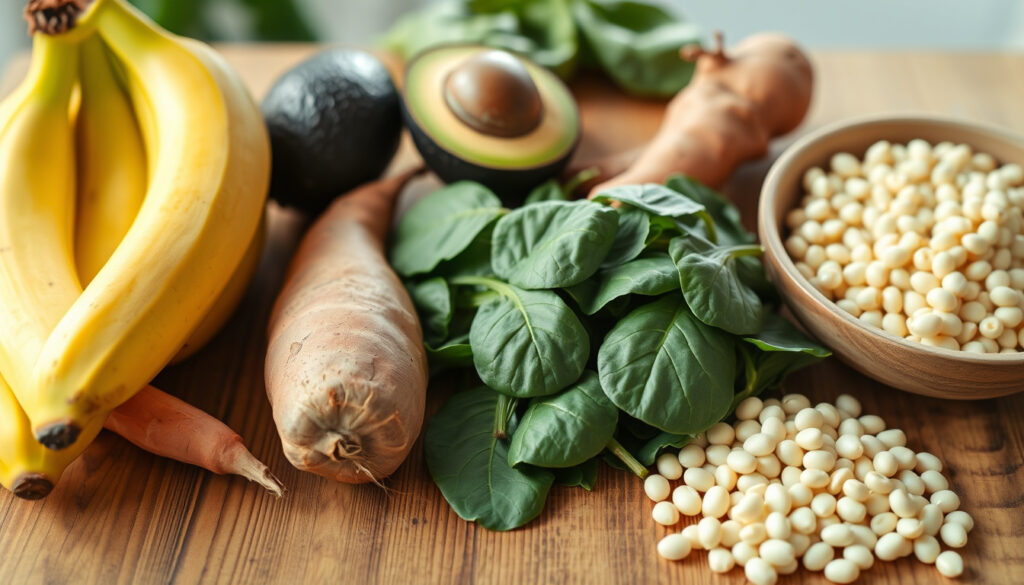
Foods Rich in Potassium: Top Sources & Daily Guide
You’ve probably heard that bananas are the go-to for potassium, but what if the real powerhouses are hiding in your pantry? Potatoes, beans, and leafy greens actually pack more potassium per serving than the iconic yellow fruit. This guide breaks down the highest sources, how to hit your daily target without supplements, and what happens when your levels drop.
Recommended daily intake for adults: 4,700 mg ·
Highest food per serving: Potato with skin (926 mg) ·
Highest fruit per serving: Avocado (975 mg per whole fruit) ·
Top drink per cup: Tomato juice (556 mg) ·
Percent of U.S. adults meeting RDA: Less than 50%
Quick snapshot
- Potassium is essential for nerve function, muscle contraction, and blood pressure regulation (NIH Office of Dietary Supplements).
- The FDA sets a Daily Value of 4,700 mg for adults (U.S. Food and Drug Administration).
- Low potassium (hypokalemia) can cause cardiac arrhythmia (National Kidney Foundation).
- The optimal potassium-to-sodium ratio is still debated; some studies suggest 2:1 is ideal (NIH DASH guide).
- FDA began requiring potassium on Nutrition Facts labels in 2020–2021 (U.S. Food and Drug Administration).
- More fortified foods and clear labeling will help consumers track potassium intake (USDA National Agricultural Library).
Five key numbers, one pattern: the highest-potassium foods come from the legume and vegetable families, not fruit. Here’s how they stack up.
| Category | Top Food | Potassium (mg per serving) | % Daily Value (based on 4,700 mg) |
|---|---|---|---|
| Vegetables | Potato (baked, with skin, 1 medium) | 926 | 20% |
| Fruits | Avocado (1 whole fruit) | 975 | 21% |
| Drinks | Coconut water (1 cup) | 600 | 13% |
| Legumes | White beans (cooked, 1 cup) | 1,190 | 25% |
| Beans | Green soybeans (raw, 1 cup) | 1,587 | 34% |
The implication: white beans and green soybeans blow past the 1,000 mg mark, easily covering a quarter of your daily needs in a single serving. Most fruits, bananas included, don’t come close.
What food has the highest potassium?
Top vegetables high in potassium
- Potato with skin (1 medium baked) – 926 mg (NIH Office of Dietary Supplements)
- Beet greens, cooked (1 cup) – 909 mg (National Kidney Foundation)
- Spinach, cooked (1 cup) – 839 mg (National Kidney Foundation)
- Swiss chard, cooked (1 cup) – 961 mg (NIH DASH guide)
Vegetables like Swiss chard and beets are often overshadowed by bananas, but they deliver nearly double the potassium per serving. The pattern: leafy greens and root vegetables are the real heavy hitters.
Top legumes and beans
- White beans, cooked (1 cup) – 1,190 mg (National Kidney Foundation)
- Lentils, cooked (1 cup) – 731 mg (USDA National Agricultural Library)
- Soybeans, green (raw, 1 cup) – 1,587 mg (USDA National Agricultural Library)
Beans and legumes regularly top the charts. White beans alone give you 25% of the Daily Value in a single cup. The trade-off: they need cooking, but that’s a small price for a potassium powerhouse.
Potatoes, Swiss chard, and white beans all outperform bananas by a wide margin. If you’re relying on bananas alone, you’re missing the best sources.
Which fruit has the highest potassium?
Avocado vs. other fruits
- Avocado (1 whole fruit) – 975 mg (National Kidney Foundation)
- Guava (1 cup) – 688 mg (National Kidney Foundation)
- Star fruit (1 cup) – 626 mg (National Kidney Foundation)
- Banana (1 medium) – 422 mg (NIH Office of Dietary Supplements)
Avocado, often mistaken as a fat source, is actually the fruit with the highest potassium per serving — more than double a banana. Guava and star fruit also beat the banana.
Dried fruit potassium content
- Dried apricots (1/2 cup) – 1,100 mg (National Kidney Foundation)
- Prunes (1/2 cup) – 745 mg (National Kidney Foundation)
- Raisins (1/2 cup) – 618 mg (USDA National Agricultural Library)
Dried fruits concentrate potassium because water is removed. A half-cup of dried apricots delivers nearly a quarter of your daily target. The catch: they also concentrate sugar, so portion control matters.
For anyone looking to increase potassium without supplements, swapping a banana for half an avocado or a handful of dried apricots makes a measurable difference.
What drink is very high in potassium?
Tomato juice and vegetable juice
- Tomato juice (1 cup) – 556 mg (National Kidney Foundation)
- Vegetable juice cocktail (1 cup) – 468 mg (USDA National Agricultural Library)
Tomato juice is a potassium supplement in a glass. Watch for added sodium, though — many commercial brands add salt, which undercuts the blood-pressure benefit of potassium.
Coconut water
- Coconut water (1 cup) – 600 mg (National Kidney Foundation)
Coconut water is often marketed as a sports drink, but it’s genuinely high in potassium. One cup provides 13% DV. The trade-off: it’s low in sodium, so it’s not a complete electrolyte replacement for heavy sweating.
Orange juice and milk
- Orange juice (1 cup) – 496 mg (National Kidney Foundation)
- Milk (1 cup) – 366 mg (USDA National Agricultural Library)
Both orange juice and milk contribute meaningful potassium. A glass of OJ with breakfast adds roughly 10% DV. For those who prefer a savory option, tomato juice wins.
The pattern: tomato juice and coconut water are the top drinkable sources, each delivering over 500 mg per cup. Orange juice and milk are solid secondary options.
How can I get 100% potassium daily?
Sample 4,700 mg day menu
This menu combines whole foods to hit the daily target without relying on supplements.
| Meal | Food | Potassium |
|---|---|---|
| Breakfast | 1 cup orange juice (496 mg) + 1 cup yogurt (573 mg) | 1,069 mg |
| Lunch | 1 baked potato with skin (926 mg) + 1 cup cooked spinach (839 mg) | 1,765 mg |
| Snack | 1 avocado (975 mg) | 975 mg |
| Dinner | 1 cup cooked white beans (1,190 mg) + 1 cup tomato juice (556 mg) | 1,746 mg |
| Total | 5,555 mg |
This menu exceeds 4,700 mg by a comfortable margin. The implication: you don’t need supplements — just a combination of potatoes, leafy greens, legumes, avocado, and a glass of juice or yogurt.
Foods to avoid if limiting potassium
- Salt substitutes (often contain potassium chloride) – high potassium per teaspoon (National Kidney Foundation)
- Molasses (1 tbsp – 498 mg) (USDA National Agricultural Library)
- Chocolate (dark, 1 oz – 158 mg) (National Kidney Foundation)
For people with kidney disease or on potassium-restricted diets, these foods can push levels too high. The catch: what’s healthy for most people can be dangerous for a few.
If you have chronic kidney disease, consult your doctor before increasing potassium intake. The National Kidney Foundation provides specific lists of high-potassium foods to limit.
What are the symptoms of low potassium?
Early warning signs
- Fatigue and weakness (National Kidney Foundation)
- Muscle cramps and spasms (NIH DASH guide)
- Constipation (NIH Office of Dietary Supplements)
Low potassium, or hypokalemia, often creeps in with vague symptoms. Many people dismiss fatigue as stress, but persistent cramps and constipation are red flags.
Severe symptoms requiring medical attention
- Arrhythmia (irregular heartbeat) (National Kidney Foundation)
- Muscle paralysis (NIH Office of Dietary Supplements)
- Breathing difficulty (NIH DASH guide)
Severe hypokalemia is a medical emergency. Common causes include diuretic use, prolonged vomiting, diarrhea, or a diet extremely low in fruits and vegetables. The pattern: early symptoms are subtle, but severe cases hit fast.
The implication: if you’re on diuretics or have a condition that causes electrolyte loss, monitor your potassium levels. A blood test is the only way to confirm.
“Beans, peas, and lentils are high-potassium foods. Add them to salads, soups, tacos, casseroles, and pasta dishes — or try hummus and cut-up vegetables.”
— Harvard Health Publishing (Harvard Medical School)
“Potassium is a nutrient of public health concern because low intakes are associated with increased risk of high blood pressure and cardiovascular disease.”
— U.S. Dietary Guidelines 2020–2025 (U.S. Department of Health and Human Services)
“Some high-potassium foods include mushrooms, winter squash, tomato juice, cantaloupe, honeydew, nectarines, parsnips, lima beans, potatoes, and blackstrap molasses.”
— WebMD (health information publisher)
For the average American, the choice is clear: eat more beans, potatoes, leafy greens, and avocado — or risk falling short on a nutrient that directly affects your heart and muscles. The USDA reports that most Americans aged 14 and up get only about half the recommended potassium intake. That gap is fixable with a few smart swaps at the grocery store.
webmd.com, accessdata.fda.gov, healthline.com, ars.usda.gov, vogue.com, wicworks.fns.usda.gov, ods.od.nih.gov
If you want to see which foods pack the most potassium, this ranking of potassium-rich foods provides a ranked list of the top 20 sources.
Frequently asked questions
Are eggs very high in potassium?
No. One large egg contains about 63 mg of potassium, which is less than 2% of the Daily Value. Eggs are not considered a significant source.
What boosts potassium quickly?
Drinks like coconut water (600 mg per cup) or tomato juice (556 mg per cup) can raise potassium levels rapidly. For a food boost, eat a banana or a handful of dried apricots.
What vegetables are high in potassium?
Swiss chard (961 mg per cup), beet greens (909 mg), spinach (839 mg), and potatoes (926 mg) are among the highest. Also good: broccoli, brussels sprouts, and winter squash.
Can you have too much potassium?
Yes, but it’s rare from food in healthy people. The NIH states that potassium from food has not been shown to cause harm in those with normal kidney function. However, people with kidney disease or taking certain medications (like ACE inhibitors) should monitor intake.
Is potassium good for blood pressure?
Yes. The DASH eating plan, which is rich in potassium, is proven to lower blood pressure. The NIH DASH guide recommends 4,700 mg of potassium daily as part of a heart-healthy diet.
What foods should I avoid if I have high potassium?
If you have hyperkalemia, limit high-potassium foods like bananas, oranges, potatoes, tomatoes, avocados, dried fruits, beans, and salt substitutes. Consult a dietitian for a personalized plan.
How does potassium affect heart health?
Potassium helps regulate heartbeat and muscle contractions. Low levels can cause arrhythmia, while adequate intake is linked to lower blood pressure and reduced stroke risk.
For more on potassium-rich ingredients, see our guide to Best Tarta de Brocoli Near Me — broccoli is listed by the National Kidney Foundation as a high-potassium vegetable. Also check out Best Peranakan Food Singapore: 2025 Guide for dishes that often feature sweet potatoes, leafy greens, and legumes.
More related posts
 CPF LIFE Payout Adjustments Budget 2025: Key Changes
 Free Slot Demo www.cyclesstonge.com: No Deposit Guide
 Bishan-Ang Mo Kio Park: Guide to Design, Trails & Access
 How to Go to Marina Bay Sands by MRT: Exits & Tips
 333 Angel Number Meaning: Love, Money & Spiritual Guide
 Hunchback of Notre Dame: True Story, Disease, Original Ending
 Single Premium Endowment Plan: Guide, Benefits & LIC Review
 DBS Coin Deposit Machine: Fees, Locations, and How to Use