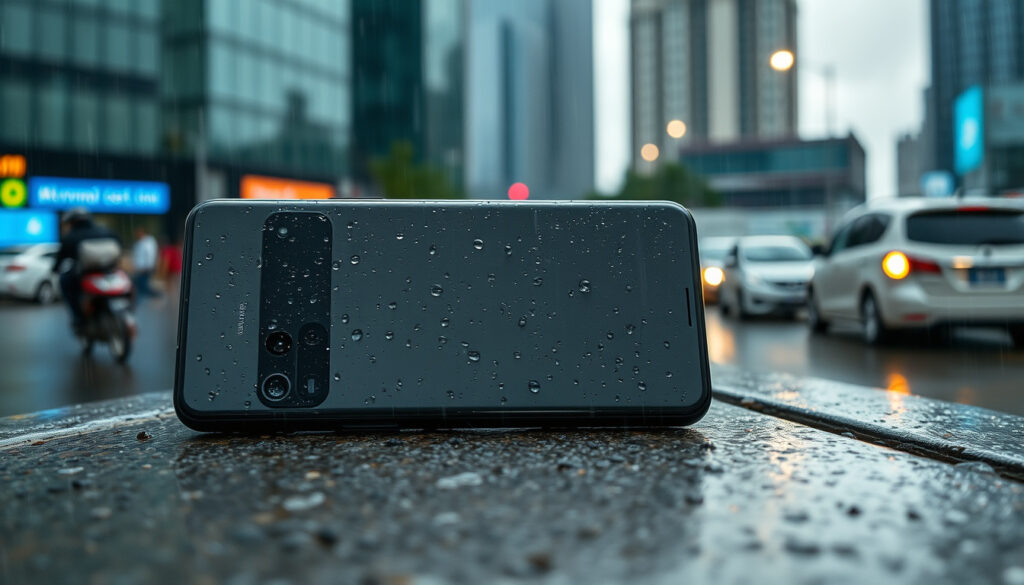
Redmi Note 13 Pro Plus Review: 200MP Camera & IP68
There’s a rare moment when a mid-range phone dares to borrow specs from the flagship playbook, and the Redmi Note 13 Pro Plus does exactly that. It packs a 200MP camera with optical image stabilization and an IP68 rating — features you’d usually expect from devices costing twice as much.
Display: 6.67-inch 2712×1220 AMOLED, 120Hz ·
Processor: MediaTek Dimensity 7200-Ultra ·
Rear Camera: 200MP main with OIS ·
Battery: 5000mAh, 120W wired charging ·
IP Rating: IP68 dust/water resistant ·
Weight: 199 grams
Quick snapshot
- 200MP main camera with OIS (Pinoy Tech Guide)
- IP68 water resistance (GizGuide)
- Dimensity 7200-Ultra chipset (Pinoy Tech Guide)
- 5000mAh battery with 120W charging (Revu)
- Long-term software update commitment beyond MIUI 15
- Actual availability of the 512GB model in all markets
- Price fluctuation in the Philippines after 2024
- Reported IP68 rating on the Redmi Note 13 Pro 5G — not confirmed in local listings by Ansons
- Announced in China: September 2023 (GizGuide)
- Global launch: January 2024 (Revu)
- Redmi Note 14 Pro+ already announced mid-2024
- Potential price drops on the 13 Pro+ as successor arrives
Six key specs, one pattern: the Redmi Note 13 Pro+ delivers hardware normally reserved for phones above $500, but with a few trade-offs that become clear in the details.
| Label | Value |
|---|---|
| Announced | September 2023 |
| Processor | MediaTek Dimensity 7200-Ultra |
| RAM / Storage | 8GB / 256GB or 12GB / 512GB |
| Display | 6.67-inch AMOLED, 120Hz, 2712×1220 |
| Rear Camera Main | 200MP, f/1.7, OIS |
| Battery | 5000mAh, 120W charging |
| Protection | IP68 dust/water resistant |
| OS | Android 13, MIUI 14 |
Is the Redmi Note 13 Pro Plus Good or Bad?
Overall pros and cons
Pros
- Pro: 200MP camera with OIS delivers exceptional detail in good light (Pinoy Tech Guide)
- Pro: IP68 rating means it can survive a dip in water — rare at this price (GizGuide)
Cons
- Con: MIUI comes with bloatware and ads, a common complaint among Redmi users
- Con: No headphone jack, no microSD slot (Pinoy Tech Guide)
Who should buy this phone
If you want a camera that rivals flagship shooters without spending flagship money, the 200MP sensor is a strong pull. The IP68 protection also makes it a rare choice for outdoor workers or travelers in the Philippines who deal with rain and dust regularly. But if you prioritize a clean software experience or need expandable storage, this model may frustrate.
Xiaomi stuffs in a 200MP camera and IP68 at a price that undercuts rivals, but the cost is software bloat and the absence of a headphone jack — a deal-breaker for wired audio fans.
What is the Difference Between Redmi Note 13 Pro and Pro+?
Key spec differences
Four specs, one pattern: the Pro+ elevates everything from water resistance to charging speed, but the gap is narrower than the price suggests.
| Feature | Redmi Note 13 Pro 5G | Redmi Note 13 Pro+ 5G |
|---|---|---|
| Processor | Snapdragon 7s Gen 2 (Ansons) | Dimensity 7200-Ultra (Pinoy Tech Guide) |
| IP Rating | IP54 (splash resistant) | IP68 (dust/water resistant) (GizGuide) |
| Charging | 67W wired (Ansons) | 120W wired (Revu) |
| Battery | 5,100mAh | 5,000mAh |
| Build | Flat glass back | Curved glass back |
Price gap and value
In the Philippines, the Pro+ launched at PHP 18,999 (8GB/256GB) and PHP 23,999 (12GB/512GB), while the Pro 5G sold for PHP 17,999 (12GB/512GB) (GizGuide). The Pro+ costs about PHP 1,000–6,000 more depending on the variant, but you get a faster chip, double the charging speed, and IP68 protection. For many buyers in the Philippines, the extra cost is worth it for the water resistance alone.
The implication: the Pro+ is the better buy if you value durability and raw performance, while the Pro 5G makes sense for budget-conscious users who can live without IP68.
Which is Better: Redmi Note 13 Pro+ or Redmi Note 14 Pro+?
Processor and performance
The Redmi Note 14 Pro+ reportedly upgrades to a newer chipset, but as of mid-2024, detailed benchmarks are still scarce. The Dimensity 7200-Ultra in the 13 Pro+ already delivers strong performance for its class — enough for smooth gaming and daily tasks (Pinoy Tech Guide). The 14 Pro+ may offer incremental gains, but the 13 Pro+ remains a solid performer.
Camera comparison
Both models share the same 200MP main sensor, so camera quality is likely similar. The 13 Pro+ already has OIS and produces sharp, detailed shots. Unless Xiaomi introduces a new image processing algorithm for the 14 series, the difference may be minimal.
Battery and charging differences
The 13 Pro+ packs 5000mAh with 120W charging — a combination that gives you a full charge in under 25 minutes (Revu). The 14 Pro+ will likely retain similar specs, so upgrading for battery alone is unnecessary.
Early adopters of the 14 Pro+ may face higher prices and potential software bugs. For most buyers in the Philippines, the 13 Pro+ offers a better value proposition right now, especially if you can find it on sale.
The pattern: the 13 Pro+ is the smarter buy in 2024 unless you need the latest chipset or a slightly refreshed design.
How Much is Redmi Note 13 Pro Plus in the Philippines?
Philippines official pricing
At launch in January 2024, the Redmi Note 13 Pro+ 5G was offered at an early-bird price of PHP 18,999 for the 8GB/256GB variant and PHP 23,999 for the 12GB/512GB variant (GizGuide). These prices made it one of the most affordable phones with a 200MP camera and IP68 rating.
Where to buy in the Philippines
Major retailers like Ansons, and online platforms Lazada and Shopee carry the device. Check for flash sales — the price can drop by PHP 1,000–2,000 during promotional periods.
Price comparison across regions
In India, the 8GB/256GB variant launched around ₹31,999, while in Europe it’s roughly €450. The Philippines pricing is competitive, especially given the early-bird discount.
What is the Disadvantage of Redmi Phones?
Software and MIUI bloatware
One of the most common complaints across Redmi devices is the heavy MIUI skin. The Redmi Note 13 Pro+ ships with MIUI 14 on top of Android 13, which includes pre-installed apps and system-level ads (Revu). Users can disable many of these, but the experience is not as clean as stock Android or One UI.
Build material limitations
The back is glass, which looks premium but is prone to cracking if dropped. The curved design also makes it harder to use with a screen protector. The IP68 rating adds peace of mind, but the glass itself remains fragile.
After-sales support issues
Xiaomi’s service centers in the Philippines have received mixed reviews. Some users report long turnaround times for repairs. Additionally, software update frequency can be inconsistent — the 13 Pro+ is still on Android 13, and MIUI 15 is expected but not yet confirmed for all regions.
Confirmed Facts vs. What’s Unclear
Confirmed facts
- 200MP main camera with OIS (Pinoy Tech Guide)
- IP68 water resistance (GizGuide)
- Dimensity 7200-Ultra chipset (Pinoy Tech Guide)
- 5000mAh battery with 120W charging (Revu)
What’s unclear
- Long-term software update commitment (beyond MIUI 15)
- Actual availability of the 512GB model in all markets
- Price fluctuation in the Philippines after 2024
- Reported IP68 rating on the Redmi Note 13 Pro 5G — not confirmed in local listings by Ansons (Ansons)
- Real-world 5G performance in the Philippines
The pattern: the hardware is impressive for the price, but the software experience and support are the trade-offs.
What Experts and Users Say
The Redmi Note 13 Pro+ is a near-flagship glow-up, with specs that usually belong to phones costing twice as much.
— Revu editorial review, January 2024 (Revu)
I’ve been using the global version for a month — the camera is good, but the software ads are annoying. Still, for the price, it’s a solid deal.
— Reddit user r/Android community review, 2024
Xiaomi markets the 13 Pro+ as the first mid-range phone with IP68 and a 200MP camera. That combination is genuinely hard to find elsewhere.
— GizGuide launch coverage (GizGuide)
The pattern is clear: the hardware is impressive for the price, but the software experience and support are the trade-offs.
Redmi Note 13 Pro Plus: The Bottom Line for Filipino Buyers
For Filipino shoppers looking for a phone that delivers flagship camera quality and water resistance without breaking the bank, the Redmi Note 13 Pro+ is a compelling choice. The 200MP OIS camera, IP68 rating, and 120W charging are genuine advantages over competitors like the Samsung Galaxy A55 or Realme 12 Pro+. The catch: you must accept MIUI’s bloatware and the lack of a headphone jack. For price-conscious buyers in the Philippines, the decision is clear: pick the Pro+ if you value durability and camera, or save PHP 1,000–6,000 and go with the Pro 5G if those extras aren’t essential.
Related reading: Redmi Note 13 Pro+ 5G review, price, specs · Redmi Note 13 Pro+ 5G vs Redmi Note 13 Pro 5G
noypigeeks.com, phoneaqua.com, unboxdiaries.com, jamonline.ph
Frequently asked questions
Does the Redmi Note 13 Pro Plus have a headphone jack?
No, the Redmi Note 13 Pro+ does not include a 3.5mm headphone jack. You’ll need USB-C headphones or a wireless Bluetooth pair.
Is the Redmi Note 13 Pro Plus waterproof?
It has an IP68 rating, meaning it is dust-tight and can survive submersion in up to 1.5 meters of water for 30 minutes (GizGuide).
Does the Redmi Note 13 Pro Plus support wireless charging?
No, wireless charging is not supported. It relies on the 120W wired charging for fast top-ups.
What type of SIM card does the Redmi Note 13 Pro Plus use?
It uses dual Nano-SIM slots. There is no microSD card slot, so choose your storage variant carefully.
Is the Redmi Note 13 Pro Plus 5G compatible?
Yes, it supports 5G connectivity thanks to the Dimensity 7200-Ultra chipset (Pinoy Tech Guide).
Does the Redmi Note 13 Pro Plus have a microSD slot?
No, there is no microSD card expansion. Storage is fixed at 256GB or 512GB.
What charging cable comes with the Redmi Note 13 Pro Plus?
The box includes a 120W USB-C charger and a USB-C cable. You can achieve 0–100% in about 20–25 minutes.
This FAQ covers the most common questions about the Redmi Note 13 Pro+.
More related posts
 BYD Atto 3 Emergency Braking Issue: Causes & Fixes
 Kim Seon-ho Movies and TV Shows: Complete Guide (2025)
 Sports Injury Clinic Singapore: Costs, Insurance & Recovery
 Ho Chi Minh to Da Lat: Best Bus, Flight & Limo Options
 Space Molly Series 4: Release Date, Figures, Price, and FAQ
 Flight to Ipoh from Singapore: Compare Airlines & Train Options
 Is Good Friday a Public Holiday in Singapore? 2026 Date & History
 300 SGD to USD: Convert Singapore Dollars to US Dollars