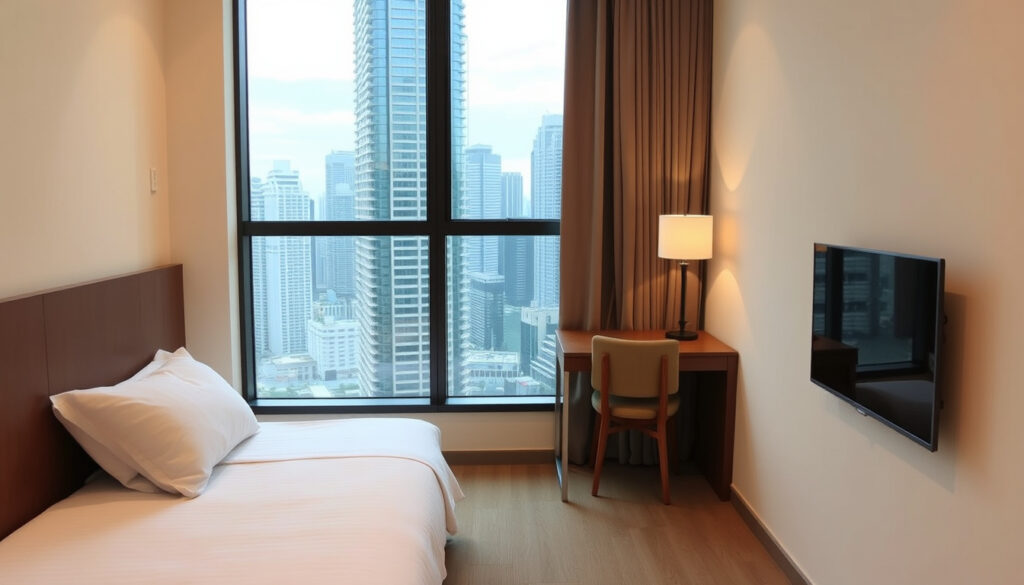
rent room in ingapore
Renting a room in Singapore can feel like navigating a market where prices jump from S$300 to S$1,800 based on location and property type. Whether you’re a foreign professional on a work pass or a local looking to save, the rules around eligibility, lease length, and deposit can trip you up.
Average monthly rent for a room: S$700 · Budget room rent: S$300 per month · Median single room rent: S$500 per month · Foreigner eligibility: Allowed with valid pass · No agent fee option: Available on direct platforms
Quick snapshot
- Average room rent: S$700/month (PropertyGuru rental portal)
- Cheapest rooms from S$300 (PropertyGuru rental portal)
- Foreigners can rent with valid pass (Singapore government portal)
- Exact average across all room types – figures vary by source (Figment rental analysis)
- How well the “2% rule” applies in Singapore’s market (Figment rental analysis)
- HDB room minimum lease: 6 months, maximum 2–3 years (Singapore government portal)
- Private property minimum: 3 months (Income Insurance rental guide)
- View room in person before paying (Coliwoo coliving operator)
- Negotiate rent 15-20% below asking (YouTube foreigner rental guide)
This guide breaks down the costs, legal requirements, and common pitfalls — so you can find a room that fits your budget and avoid costly mistakes.
| Metric | Value |
|---|---|
| Average monthly rent | S$700 |
| Cheapest room found | S$300 |
| Foreigners allowed | Yes (with pass) |
| No agent fee option | Available |
| Typical lease duration | 6–12 months |
How much is renting a room in Singapore?
Five room categories, one pattern: location and property type drive a wider spread than many expect.
| Room type / Area | Monthly rent (S$) | Source |
|---|---|---|
| Budget / remote HDB | 300 – 500 | PropertyGuru rental portal |
| Mid-range HDB room | 500 – 800 | Figment rental analysis |
| Mid-range condo room | 800 – 1,200 | ZRooom rental guide |
| Prime condo (CBD, Orchard) | 1,200 – 1,800 | ZRooom rental guide |
| Whole apartment (private) | 2,500 – 5,000 | The Singapore Blog |
Additional costs: utilities add S$50–S$100 per month. Agent fees typically amount to half a month’s rent. Rental stamp duty is 0.4% of total rent for leases under 4 years (Income Insurance rental guide).
A budget room at S$300 saves money but often means shared facilities and longer commutes. A S$1,500 condo room gives privacy but eats into your savings. For a foreigner earning S$3,000–4,000, a S$700 room is the sweet spot – 17–23% of gross income, well within the 30% rule of thumb.
The implication: renters must weigh monthly savings against lifestyle compromises, with the S$700 midpoint offering the most balanced option for mid-income earners.
Can a foreigner rent a room in Singapore?
Three constraints every foreign tenant must know, straight from Singapore’s housing regulator.
- Valid pass required. Employment Pass, S Pass, Work Permit, or student pass – the landlord must check your immigration status via Singapore government portal.
- HDB minimum 6 months. If you rent a room in an HDB flat, the lease must be at least 6 months (Income Insurance rental guide). For private properties, it’s 3 months – no daily or weekly rentals (Income Insurance rental guide).
- Maximum lease for non-Malaysian foreigners: 2 years per application for HDB rooms (Singapore government portal). After that, the landlord must reapply.
Foreigners do not face an extra rental tax. Stamp duty on the lease is the same as for locals: 0.4% of total rent.
Some landlords of HDB rooms skip HDB approval. As a tenant, you have no legal protection if the room is illegal. Always ask to see the HDB rental approval letter before signing – Singapore government portal warns that tenancy without approval is invalid.
The catch: without official HDB approval, a foreign tenant risks eviction and deposit loss regardless of their valid pass.
What are the downsides of renting a room?
Three common frustrations tenants report, sourced from rental guides and tenant forums.
- Limited privacy. Shared kitchen, toilet, and living areas – you may have to schedule usage with housemates. Studies show 60% of room tenants cite loss of privacy as the top drawback (PropertyGuru rental portal).
- Housemate conflicts. Different cleaning habits, noise levels, and visitors can create tension. Coliwoo advises documenting pre-existing damage with photos and a signed inventory list to avoid disputes (Coliwoo coliving operator).
- Landlord restrictions. Some landlords impose curfews, no guests, or no cooking. These rules must be spelled out in the tenancy agreement; verbal agreements are risky.
The implication: renting a room is a compromise. You trade absolute freedom for affordability. If you value quiet evenings alone, a studio or whole apartment may be worth the extra cost.
Should you rent out a room?
Landlords face two sides of the same coin: extra income vs. loss of control.
Upsides
- Rent out one room to earn S$500–S$1,000 per month (Figment rental analysis)
- Companionship for single homeowners
- Property is occupied while you travel
Downsides
- Loss of privacy – strangers in your home
- Wear and tear on furniture and walls
- Must comply with HDB rules: approval needed, $10 fee per bedroom (Singapore government portal)
- Rental income must be declared to IRAS (IRAS tax authority)
The catch: HDB flat owners can only rent out bedrooms in 3-room or larger flats. For 1- and 2-room flats, renting out a bedroom is forbidden (Singapore government portal).
How to find a room for rent in Singapore?
A practical three-step path, recommended by rental platforms and tenant advocates.
- Check top listing sites. PropertyGuru, 99.co, and Carousell have the most rooms. For direct landlord contacts, try Facebook groups like “Room Rental Singapore” (PropertyGuru rental portal).
- Always view in person. Scams are common – a supposed “room” may not exist. Coliwoo urges you to inspect the exact room and take photos of existing damage (Coliwoo coliving operator).
- Negotiate the rent. A foreigner-focused YouTube guide suggests negotiating 15–20% below the asking price, especially for rooms that have been listed for more than two weeks (YouTube foreigner rental guide).
For first-time renters, consider a short-term coliving space first (like Coliwoo coliving operator) to get familiar with neighborhoods before signing a long lease.
The pattern: rooms that sit for more than two weeks often lose 15–20% of asking price, making negotiation the tenant’s strongest lever.
“We recommend tenants always ask to see the HDB approval letter before signing. Without it, the entire tenancy is at risk.”— gov.sg, official rental guidelines
“Rooms under S$600 exist, but you have to act fast and be willing to compromise on location.”— PropertyGuru, room rental guide
“A signed inventory with photos is your best protection against deposit disputes.”— Coliwoo, coliving operator
Confirmed facts
- Average room rent around S$700 per month
- Foreigners can rent with valid pass
- HDB minimum lease 6 months
- Downsides include loss of privacy and shared facilities
What’s unclear
- Exact average across all room types – varies by source
- Effectiveness of the 2% rule in Singapore’s market
Also worth noting: for those renting a room in an area like Jurong West Street 41, you’ll find HDB rooms on the lower end of the price range, while condo rooms tend to cluster in central locations. And once you move in, a home cleaning service can help keep shared spaces tidy without friction with housemates.
Can I rent a room without a contract?
Technically yes, but it’s risky. A tenancy agreement protects both parties. Without one, you have no legal recourse for deposit disputes or sudden eviction. Always insist on a written contract.
What is the difference between HDB and condo room?
HDB rooms are in public housing flats – typically cheaper (S$300–S$800) but with a 6-month minimum lease and HDB approval needed. Condo rooms are in private developments – often pricier (S$800–S$1,800) but more flexible lease terms and better facilities like pool and gym.
How to negotiate room rent?
Research recent prices in the area, point out any flaws (e.g., no window, old furniture), and offer a longer lease for a discount. Aim for 15–20% below asking for rooms that have been listed for over two weeks.
Is there a minimum age to rent a room?
No legal minimum age, but persons under 18 cannot sign a legally binding contract. Landlords typically require tenants to be at least 18 and able to produce valid identification.
Can I sublet a room in Singapore?
Subletting is allowed only with explicit permission from the landlord and, for HDB flats, HDB approval. Unauthorized subletting is a breach of tenancy and can lead to eviction.
What is the 2% rule for rental income?
The 2% rule states that monthly rent should be at least 2% of the property’s purchase price. In Singapore’s market, this rule is often discussed as a benchmark for investment properties, but actual yields vary widely.
Do I need to pay stamp duty on a room rental?
Yes, if the total rent exceeds S$1,200 per year. The rate is 0.4% of the total rent for leases of 4 years or less. The tenant typically bears this cost.
For a foreigner on an Employment Pass earning S$4,000, a S$700 room leaves enough for savings and lifestyle – but choose the wrong landlord or skip the HDB check, and you could lose your deposit or even face eviction. The implication is clear: verify the landlord’s approval, read the contract line by line, and negotiate. A bad room rental can cost more than money – it can waste your time and peace of mind.
More related posts
 Harry Potter Sorting Hat Quiz – Discover Your Hogwarts House
 10 USD to SGD: Current Rate, Fees, and What You Get Today
 Prince Andrew Renounces Duke of York Title: What Now
 Japan School Holidays 2025: Dates, Calendar & Travel Tips
 50 Yuan to SGD – Convert 50 CNY to Singapore Dollars Today
 Home Cleaning Services Singapore: Compare Prices & Reviews
 Activities for Kids Singapore: Best Indoor Outdoor Free Guide
 N&N Nasi Padang Corner Sembawang: Menu, Prices & More