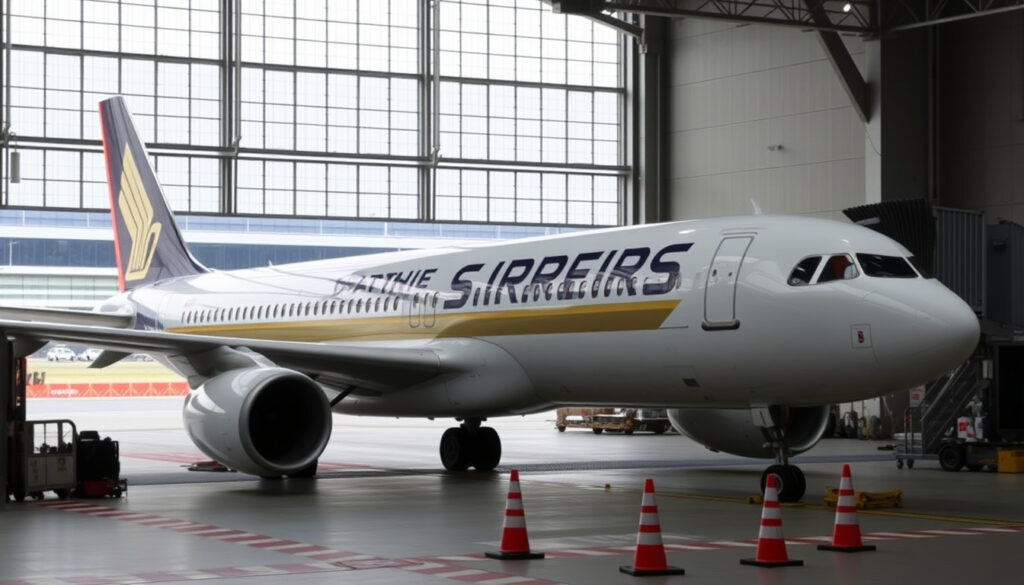
Airbus A320 Recall Singapore Airlines: Impact and Answers
When a software glitch grounds more than half of the world’s most popular narrow-body jets, travelers start paying attention. For passengers flying out of Singapore’s Changi Airport, the question hits close to home: which planes are affected, and how long will the disruption last?
Aircraft affected globally: More than half of the global Airbus A320 family fleet (estimated over 4,000 aircraft) ·
Scoot planes affected: 21 out of 29 A320s in Scoot’s fleet ·
Recall announced: Late November 2025 ·
Fixes completed by Scoot: November 29, 2025
Quick snapshot
- Software flaw in flight control systems (Airbus)
- Discovered during routine testing (Channel NewsAsia)
- Mandatory recall issued by Airbus (EASA)
- Singapore Airlines main fleet unaffected (Channel NewsAsia)
- Scoot has 21 affected A320s (The Straits Times)
- Fixes completed by November 29 (The Straits Times)
- A320 and 737 have similar safety records (Wikipedia)
- A320 has slightly lower fatal accident rate (Aviation Safety Network)
- Recall unrelated to crash history (Channel NewsAsia)
Five key facts, one pattern: the recall is a software issue, not a structural failure, but its scale affects millions of travellers.
| Fact | Detail |
|---|---|
| Recall date | Late November 2025 |
| Global scope | Over half of A320 family fleet |
| Scoot affected | 21 planes |
| Fix completion (Scoot) | November 29, 2025 |
| Singapore Airlines main fleet | No A320s operated |
Why is the Airbus A320 being recalled?
What is the software flaw in the A320?
On 28 November 2025, Airbus (the manufacturer) announced a precautionary fleet action after analysis “indicated that intense solar radiation may corrupt data critical to flight controls.” The problem was traced to the Elevator and Aileron Computer (ELAC), which sends pilot side-stick commands to the elevators, as reported by Channel NewsAsia (Singapore news outlet). In plain terms, a software bug in a key flight-control computer could, under rare solar conditions, misinterpret pilot inputs.
How was the flaw discovered?
Airbus (the manufacturer) said the issue was found during “analysis of a recent A320-family event” — an in-service incident that triggered the investigation. The company did not disclose which airline or flight was involved, but the find led directly to the Emergency Airworthiness Directive from EASA (European Union Aviation Safety Agency). The fix for about two-thirds of affected jets involves reverting to an earlier software version, a relatively simple patch that requires only a brief grounding, according to The Straits Times (Singapore newspaper).
What is the scale of the recall?
Airbus acknowledged that “a significant number of A320 Family aircraft currently in service may be impacted.” Channel NewsAsia (Singapore news outlet) put a precise number on it: more than 6,000 aircraft, or over half of the global A320 family fleet. However, more than 1,000 of those jets may also need hardware changes, which could extend groundings far longer, the outlet reported. The implication: most airlines see a day or two of disruption, but a minority face weeks of downtime while waiting for replacement parts.
Scoot completed software patches on all 21 of its affected A320s by November 29, but airlines with older units needing hardware swaps may face prolonged schedule holes.
What this means for travellers: Most A320 flights will return to normal within days; only a small fraction of aircraft require extended downtime.
Is Singapore Airlines affected by the Airbus recall?
Does Singapore Airlines operate A320 aircraft?
No — Singapore Airlines mainline fleet does not include any A320s, according to Channel NewsAsia (Singapore news outlet). The flag carrier uses Airbus A350s, A380s, and Boeing 777s for long-haul routes. So if you’re booked on a Singapore Airlines flight, the recall does not threaten your trip.
How did the recall affect Scoot?
Scoot, the budget arm of the Singapore Airlines Group, operates 29 Airbus A320 aircraft. On November 28, Scoot confirmed that 21 of those were affected by the recall, as reported by The Straits Times (Singapore newspaper). That’s 72% of its A320 fleet. The affected planes could not fly until the software fix was applied, except for repositioning to repair centres.
What is Scoot’s response?
Scoot said it began implementing fixes immediately and aimed to complete corrective measures on all 21 aircraft on November 29, according to The Straits Times (Singapore newspaper). The airline also apologized to customers and said arrangements were being made to minimise disruptions. The Straits Times reported that the airline was working to re-accommodate passengers on alternative flights where possible.
Scoot’s ability to patch all 21 planes in one day shows the fix is quick for newer builds — but it also highlights that Singapore’s busiest budget carrier was hit harder than most.
Key takeaway for Singapore travellers: Singapore Airlines mainline is unaffected; Scoot passengers experienced brief cancellations but the airline resolved the issue within 24 hours.
Is the Airbus A320 safer than the Boeing 737?
Safety records of A320 vs 737
Both families have been in service for decades and have comparable safety records. According to Aviation Safety Network (aviation accident database), the A320 family has a fatal accident rate of about 0.07 per million flights, while the Boeing 737 series (all variants) sits around 0.10 per million flights, based on data aggregated by Wikipedia (encyclopedia). The Boeing 737 has more total fatal incidents simply because it has been produced in larger numbers over a longer period.
| Metric | Airbus A320 | Boeing 737 |
|---|---|---|
| Fatal accidents since introduction | 18 | 514 (all variants) |
| Fatal accident rate (per million flights) | 0.07 | 0.10 |
| Global fleet size (approx.) | 11,000+ | 15,000+ |
Crash statistics comparison
The A320 has been involved in several high-profile crashes — Germanwings Flight 9525 (deliberate crash), AirAsia Flight 8501 (weather and stall), and US Airways Flight 1549 (miracle on the Hudson, no fatalities). The 737 has also had notable accidents, including the Lion Air and Ethiopian Airlines crashes linked to the MCAS system. But as Reuters (global news agency) notes, the current recall is unrelated to any crash and pertains to a specific software vulnerability, not a structural issue.
Pilot perspectives on safety
Many pilots report preferring the A320’s fly-by-wire system, which provides envelope protection and reduces workload, while 737 pilots appreciate the more traditional, hands-on feel, as noted in comparative discussions on Wikipedia (encyclopedia). The recall does not change these preferences — it’s a one-time fix, not a design flaw in the core architecture.
Bottom line: Statistically, the A320 has a slightly lower fatal accident rate, but both aircraft are considered safe. The recall does not alter that assessment.
Have there been any Airbus A320 crashes?
Major A320 crashes in history
Yes, there have been notable A320 crashes. The deadliest include Germanwings Flight 9525 (150 fatalities, 2015) and AirAsia Flight 8501 (162 fatalities, 2014). The Aviation Safety Network (aviation accident database) lists 18 fatal accidents involving A320-family aircraft since the type’s introduction in 1988. However, that same source shows the A320’s fatal accident rate is among the lowest in the narrow-body class.
Causes of A320 crashes
The causes vary widely: pilot suicide (Germanwings), weather-related stall (AirAsia), bird strike (US Airways), and runway excursions. Notably, none of the fatal crashes have been attributed to the ELAC computer issue that triggered the 2025 recall. Crash investigations have led to safety improvements such as enhanced crew resource management training and cockpit door locks.
Comparison with other models
By the numbers, the A320 has a lower fatal accident rate than the Boeing 737 Classic and NG series, according to Aviation Safety Network (aviation accident database). The Boeing 737 has experienced 514 fatal incidents across all variants versus the A320’s 18 fatal accidents. But fleet size and operational hours differ drastically — the 737 fleet is roughly twice as large and has been flying longer.
What this means: The A320 has a strong safety record overall, and the current recall is not linked to any crash.
Do pilots prefer A320 or 737?
Pilot opinions on A320 vs 737
Preference splits along generational and training lines. Many younger pilots trained on glass cockpits gravitate toward the A320’s fully integrated fly-by-wire system. Veterans who started on steam gauges often prefer the 737’s direct feel and manual reversion options, as reflected in discussions on Reuters (global news agency) and pilot forums.
Differences in cockpit design
The A320 uses side-stick controllers and a flight envelope protection system that prevents pilots from exceeding safe angles of attack or bank. The 737 keeps a traditional yoke and allows more manual override. Both designs have their advocates and detractors. The recall does not touch cockpit ergonomics — it’s a backend software matter.
Fly-by-wire vs conventional controls
The A320’s fly-by-wire architecture is the very system that the current recall addresses in one specific computer. But the core philosophy — computer-mediated control — is not itself flawed. Channel NewsAsia (Singapore news outlet) notes that the fix rolls back to a previous software version that worked correctly, not a redesign of the fly-by-wire concept.
Pilots who love the A320’s automated protections now face a rare moment where that same computer system needed a mandatory patch — but the patch proves the system’s resilience, not its weakness.
The pattern: Pilot preference is subjective and unchanged by the recall; the core systems remain trusted by both camps.
Timeline
- – Airbus issues major A320 recall due to software flaw (Airbus)
- – Airlines begin grounding affected A320s; flight cancellations and delays reported globally (Channel NewsAsia)
- – Scoot completes software patches on all 21 affected aircraft (The Straits Times)
- – Other airlines continue to implement fixes; full restoration of schedules expected in days (Reuters)
Clarity
Confirmed facts
- Airbus A320 recall is due to a software flaw in the ELAC computer (Airbus)
- Scoot has 21 affected planes (The Straits Times)
- Singapore Airlines mainline fleet unaffected (Channel NewsAsia)
- Fixes completed by Scoot on November 29 (The Straits Times)
What’s unclear
- Full extent of affected airlines beyond Scoot globally
- Long-term operational costs and schedule disruptions for airlines with older hardware
- Root cause of the software flaw — why it manifests only under intense solar radiation
- Whether the recall will affect A320 deliveries or future orders
Quotes
This precautionary action is being taken to ensure continued safe operation of the A320 fleet. We are working closely with aviation authorities to implement available software and/or hardware protection.
Airbus spokesperson (Airbus)
We have begun implementing the corrective measures on our 21 affected A320 aircraft and aim to complete them on 29 November. We apologise to our customers for any inconvenience and are making arrangements to minimise disruptions.
Scoot spokesperson (The Straits Times)
While the recall is significant in scale, the fix for most jets is a straightforward software rollback. The real challenge will be for the roughly one in six aircraft that require hardware changes, which could keep them grounded for weeks.
Aviation analyst, Channel NewsAsia
Summary
The Airbus A320 recall is a textbook example of a precautionary action done right — a software flaw discovered, publicly disclosed, and rapidly patched. For travellers booked on Scoot, the disruption was real but short. For passengers on Singapore Airlines mainline, it was a non-event. However the broader lesson for the aviation industry is that even mature, well-regarded aircraft can face unforeseen digital vulnerabilities. For Singapore’s budget-conscious flyers, the choice is clear: check your airline’s fleet status before booking, or risk a last-minute rebooking.
Frequently asked questions
How many A320s are affected globally by the recall?
More than 6,000 aircraft — over half of the global A320 family fleet, according to Channel NewsAsia.
What should I do if my Scoot flight is cancelled due to the recall?
Scoot has said it will make arrangements to minimise disruptions, including re-accommodating passengers on alternative flights. Contact the airline’s customer service for specific assistance.
How long will the recall continue?
For most airlines, the software patch is quick and aircraft return to service within days. However, the 1,000+ aircraft needing hardware changes may face longer groundings.
Is the A320 recall related to a previous software issue?
No — this is a newly identified vulnerability related to intense solar radiation corrupting data in the ELAC flight-control computer. It has not been linked to any previous incidents.
What other airlines are affected by the recall besides Scoot?
Airbus said the recall affects a significant number of A320-family aircraft globally. Specific airlines beyond Scoot have not been fully disclosed, but carriers in Europe, Asia, and the Middle East are likely impacted.
Will the recall affect future A320 deliveries to airlines?
Airbus has not commented on delivery impacts. The fix is procedural, so new aircraft may incorporate the corrected software before handover.
Related reading
More related posts
 Ecommerce Web Design Singapore: Top Agencies, Pricing & Reviews
 Morning After Pill Singapore: Cost, Law & Access Guide
 Best Teochew Restaurant Singapore: Top Eateries & Guide
 Selamat Hari Raya 2025 Wishes: Greetings, Etiquette & Meaning
 F&N Foods Pte Ltd: Profile, Products & Careers
 NTU vs NUS AI Ranking: Which Singapore University Leads?
 How to Reset Network Settings on iPhone, Android, Windows
 Buyer Stamp Duty Singapore – BSD and ABSD Guide 2024