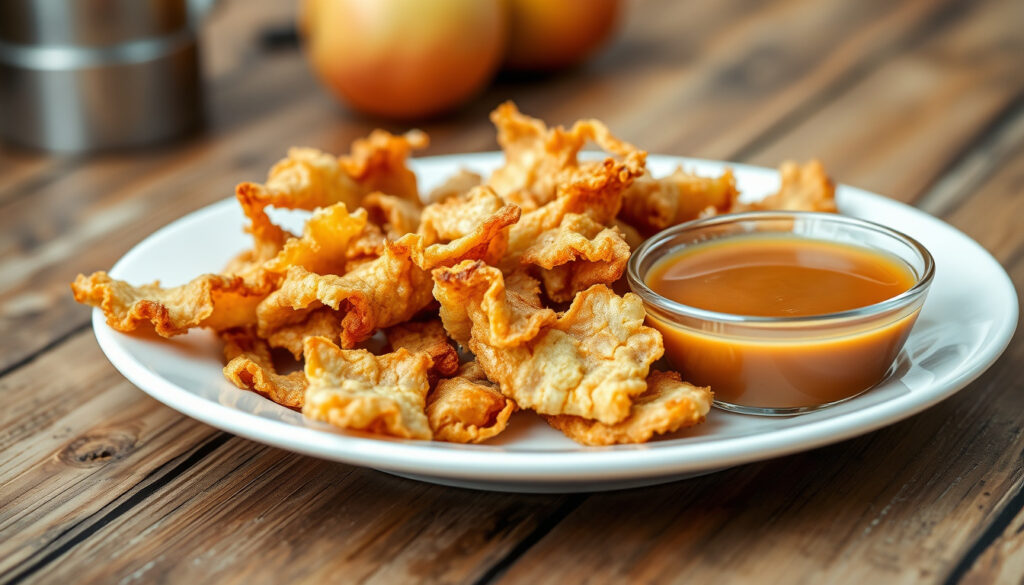
Be t Pork Crackling with Apple Sauce Near Me: Tip & Local Find
Cracking into a piece of perfectly crispy pork crackling, followed by the sweet tang of apple sauce, is the sound of a Sunday well spent. For many in the UK, this is the ultimate roast combination – and for good reason. Getting the crackling just right requires the right cut, the right temperature, and a few chef-approved tricks. According to Novel Wines (wine and food specialists), a method that dries the skin thoroughly and roasts at alternating temperatures can produce “really crisp and crunchy” crackling.
Optimal crackling oven temperature: 220°C (425°F) · Recommended pork cuts for crackling: Pork belly, pork loin, pork shoulder · Time to achieve crispy crackling (per kg): 35 min initial roast + 15 min high heat finish · Historical pairing of pork and apple: Over 1,000 years of tradition · Top-rated M&S crackling joint weight: 1.2 kg (serves 4)
Quick snapshot
- Acidity cuts through the rich fat of pork (Novel Wines)
- Historical tradition dating back to the 8th century (The Londoner food blog)
- Easy to make at home with just apples, sugar and lemon (Nicky’s Kitchen Sanctuary)
- Pork belly – highest fat content, crispiest crackling (eatori)
- Pork loin – thinner crackling, lighter texture (Chef Adam Byatt)
- Pork shoulder – good if scored and dried properly (Ken Hom)
- Score deeply, dry overnight (Novel Wines)
- Pour boiling water over scored skin before seasoning (eatori)
- High heat finish (220°C+) (The Londoner)
- Local butchers and farm shops – ask for belly with skin on (Reddit London forum)
- M&S crackling joints – boneless, scored, 1.2 kg (M&S product page)
- Pubs like Southampton Arms in London (Reddit user recommendation)
Key facts at a glance
Five critical data points that every crackling hunter should have in their back pocket.
| Label | Value |
|---|---|
| Crackling oven temp | 220°C (425°F) |
| Best cut for crackling | Pork belly (fat content > 30%) |
| Apple sauce history | Used with pork since 8th century |
| M&S product weight | 1.2 kg (serves 4) |
| Boiling water effect | Tightens skin, improves puffing |
Does apple sauce go well with pork?
What is the best sauce to have with pork?
The short answer is yes – and for good reason. Apple sauce’s acidity cuts through the rich fat of pork, making each bite feel lighter and more balanced. According to Novel Wines (food-pairing specialists), this pairing has been a cornerstone of European cooking since the 8th century. While gravy, mustard, and even cranberry sauce all have their fans, apple sauce remains the classic British accompaniment.
The acidity in apples acts as a palate cleanser, letting you taste the pork’s savoury richness without feeling overwhelmed by fat. It’s the same logic behind serving lemon with fish or mint with lamb.
How to make caramelised apple sauce for pork
For a deeper, more complex flavour, caramelised apple sauce is surprisingly easy. Chef Adam Byatt (Michelin experience) recommends cooking peeled, chopped apples with butter and sugar over low heat for about 40 minutes until they break down and turn golden. Nicky’s Kitchen Sanctuary (popular UK recipe blog) suggests using Bramley apples and a squeeze of lemon juice for tartness, and notes the sauce freezes well for future roasts.
Which cut of pork gives the best crackling?
Pork belly vs pork loin for crackling
Not all cuts are created equal when it comes to crackling. Pork belly, with its fat content often exceeding 30%, is widely regarded as the champion. eatori’s crackling guide states that the thick fat layer under the skin bastes the meat as it renders, producing an exceptionally puffy, crunchy crust. Pork loin, by contrast, has a thinner fat cap – Adam Byatt (chef and video host) notes the crackling will be thinner and more delicate, but still satisfying if the skin is scored properly.
Pork shoulder crackling quality
Pork shoulder sits in the middle. It has good marbling but the skin is often thicker and more uneven. Ken Hom’s Saturday Kitchen roast pork video demonstrates that scoring deeply and drying the skin overnight can yield crackling from shoulder that rivals belly. The catch: shoulder requires more attentive roasting to avoid the skin becoming leathery.
The pattern: the fattier the cut, the better the crackling – but technique can compensate for leaner options.
Why do we eat apple sauce with pork?
Historical reasons for pork and apple pairing
The tradition of pairing pork with apple sauce is not a modern invention. According to Novel Wines (culinary history reference), the combination dates back to at least the 8th century in European cooking. Apples were abundant in autumn, when pigs were traditionally slaughtered, and the fruit’s acidity helped digest the fatty meat. By the 16th century, apple sauce had become a standard British accompaniment, as noted in The Londoner’s recipe blog.
What started as a practical necessity – preserving pork with apples in autumn – evolved into a flavour pairing so iconic that modern chefs still defend it as the only acceptable condiment for roast pork.
Does pouring boiling water on pork make better crackling?
Do you put oil or salt first for crackling?
Yes, it does. eatori (cooking technique specialists) recommends pouring boiling water over the scored pork rind before drying and salting. The hot water opens the scores and tightens the skin, leading to a puffier, more even blister. Once dry, salt alone is the preferred seasoning – oil can trap moisture and hinder crispiness. Novel Wines uses a dry brine approach and adds lemon juice partway through roasting for extra acidity that boosts crackling formation.
Salt draws moisture out of the skin; oil locks it in. For the best crackling, skip the oil and rely on a dry, salty crust exposed to high heat.
How do you cook M&S pork crackling joints?
What is Marks and Spencer’s crackling joint?
M&S sells an “Ultimate British Pork Crackling Joint” – a boneless pork joint with the skin already scored for convenience. The joint weighs about 1.2 kg and serves four people. According to the M&S product page, oven instructions typically start at 220°C for 30 minutes to set the crackling, then reduce to 180°C for the remaining cooking time (about 25 minutes per 500 g).
Do over 60s get a discount at M&S?
M&S offers a “M&S Over 60s” discount on certain days (usually Tuesdays), but it is not product-specific and may exclude promotional items. The discount policy changes regularly and is not guaranteed for the crackling joint.
Comparison: Pork cuts for crackling
Three cuts, three distinct personalities – the table below shows how they compare on the factors that matter most.
| Cut | Fat content | Crackling texture | Ease of cooking | Best for |
|---|---|---|---|---|
| Pork belly | 30%+ | Thick, bubbly, crunchy | Moderate (needs drying and scoring) | Ultimate crackling experience |
| Pork loin | 15-20% | Thinner, delicate, crisp | Easy (less fat to render) | Lighter meal, quicker cook |
| Pork shoulder | 20-25% | Medium, can be uneven | Harder (needs careful scoring and drying) | Large roasts, pulled pork + crackling |
The implication: choose belly for maximum crunch, loin for speed, and shoulder if you’re feeding a crowd and willing to put in the prep.
Specifications: Optimal cooking temperatures and times
Four methods, one pattern: high heat for crackling, lower heat for meat – and always finish with a blast.
| Method | Initial temp/time | Reduced temp/time | Finish | Source |
|---|---|---|---|---|
| Novel Wines | 200°C for 30 min | 180°C for 90 min | 200°C for 30 min (crackling removed) | Novel Wines |
| The Londoner | 220°C for 60 min | N/A (constant high heat) | Grill if needed | The Londoner |
| eatori | 250°C for 35 min | 120°C for remainder | N/A | eatori |
| M&S joint | 220°C for 30 min | 180°C for ~50 min | Rest 10 min | M&S |
The catch: no single method guarantees perfect crackling every time – the variable is your oven’s actual temperature and the pork’s moisture level.
Pros and cons of different crackling methods
Upsides
- High heat (220°C+): delivers consistent, bubbly crackling in under an hour (The Londoner)
- Boiling water + salt: produces exceptionally puffy skin with minimal ingredients (eatori)
- Overnight dry brine: flavour penetrates deeply while skin dehydrates (Novel Wines)
Downsides
- High heat can dry out lean meat if not monitored (Adam Byatt)
- Boiling water method can cause splashing – handle carefully (Ken Hom)
- Removing crackling to cook separately adds a step (Novel Wines)
Step-by-step: Perfect crackling with apple sauce
- Score and dry the skin. Use a sharp knife to make cuts 1 cm apart through the skin (not the meat). Pat dry with paper towels and leave uncovered in the fridge overnight. (eatori)
- Pour boiling water over the scores. Just before roasting, pour a kettle of boiling water over the skin – this tightens the scores for maximum puff. (eatori)
- Season with salt only. Rub a generous amount of flaky sea salt into the scores. No oil. (Novel Wines)
- Roast at 220°C for 30 minutes to set the crackling, then reduce to 180°C for the remainder (about 25 min per 500 g). (Novel Wines)
- Make apple sauce while the pork roasts. Simmer peeled, chopped Bramley apples with a splash of water and sugar for 10-15 minutes, then mash. (Nicky’s Kitchen Sanctuary)
- Finish the crackling under the grill if needed. If the skin isn’t bubbly enough after roasting, remove it and place under a hot grill for 5 minutes. (The Londoner)
What’s confirmed – and what’s still unclear
Confirmed facts
- Apple sauce pairs well with pork due to acidity (Novel Wines)
- Pork belly gives the best crackling (eatori)
- Pouring boiling water over scored skin helps crispiness (eatori)
- M&S sells a boneless pork crackling joint (M&S)
What’s unclear
- Effectiveness of slow cooker for crackling compared to oven (Reddit discussions)
- Exact discount policy for over-60s at M&S for this product (M&S terms)
- Optimal apple sauce recipe for maximum pairing (subjective)
What the experts say
“Pour boiling water over the scored skin before seasoning with salt.”
“The crispiest, most delicious crackling you’ll ever find.”
– The Londoner (food and lifestyle blog)
“The best I’ve had in London – pork bap, apple sauce, cracklings at Southampton Arms.”
– Reddit user on r/london
Related reading: Best Arepa de Choclo Near Me · Best Pretzel with Cheese Dip Near Me: Ireland Delivery
For a more detailed breakdown of techniques and local recommendations, check out our best pork crackling with apple sauce guide.
Frequently asked questions
What is the best temperature for pork crackling?
220°C (425°F) is widely recommended for initial blistering. Novel Wines and The Londoner both use this temperature for the first 30-60 minutes.
Can I make crackling in a slow cooker?
It’s possible but not ideal – slow cookers trap moisture, which prevents the skin from crisping. Most sources recommend transferring to the oven for a final high-heat blast.
How do I store leftover crackling?
Store in an airtight container at room temperature for up to 2 days. Re-crisp in a hot oven at 180°C for 5 minutes.
Is apple sauce healthy?
Homemade apple sauce with no added sugar is a good source of fibre and vitamin C. Nicky’s Kitchen Sanctuary uses Bramley apples and lemon juice for a low-sugar version.
What wine goes with pork crackling?
A crisp, acidic white wine like Sauvignon Blanc or a light red like Pinot Noir can cut through the fat. The acidity of apple sauce also pairs well with dry Riesling.
How long should I dry the pork skin before roasting?
Overnight (12-24 hours) in the fridge, uncovered, is ideal. At minimum, 2-3 hours at room temperature after scoring.
Can I use store-bought apple sauce?
Yes, but homemade is preferred for fresher taste and customisable sweetness. Nicky’s Kitchen Sanctuary recommends Bramley apples for a traditional tart flavour.
The pattern across all sources is clear: the best crackling comes from pork belly, dried and salted, blasted at 220°C, and served with a tart apple sauce that cuts the richness. For anyone searching for “best pork crackling with apple sauce near me” in the UK, the choice is between sourcing from a local butcher or picking up an M&S joint – and either way, the cooking technique determines success more than the cut. Master the boiling water trick, skip the oil, and you’ll never settle for soggy skin again. The cook who follows these steps consistently gets crackling that commands the table.
More related posts
 San Low Restaurant Kallang Suspension: Incident & Menu Guide
 What Is ETF Investment? A Beginner’s Guide to ETFs
 Google Pixel 9 Pro Fold Review: Price, Specs & Ireland Deals
 BYD Atto 3 Emergency Braking Issue: Causes & Fixes
 Pan Pacific Jakarta – Location Amenities Reviews Guide
 Jurong West Street 41: HDB Living & Postal Codes
 Kim Seon-ho Movies and TV Shows: Complete Guide (2025)
 10 USD to SGD: Current Rate, Fees, and What You Get Today