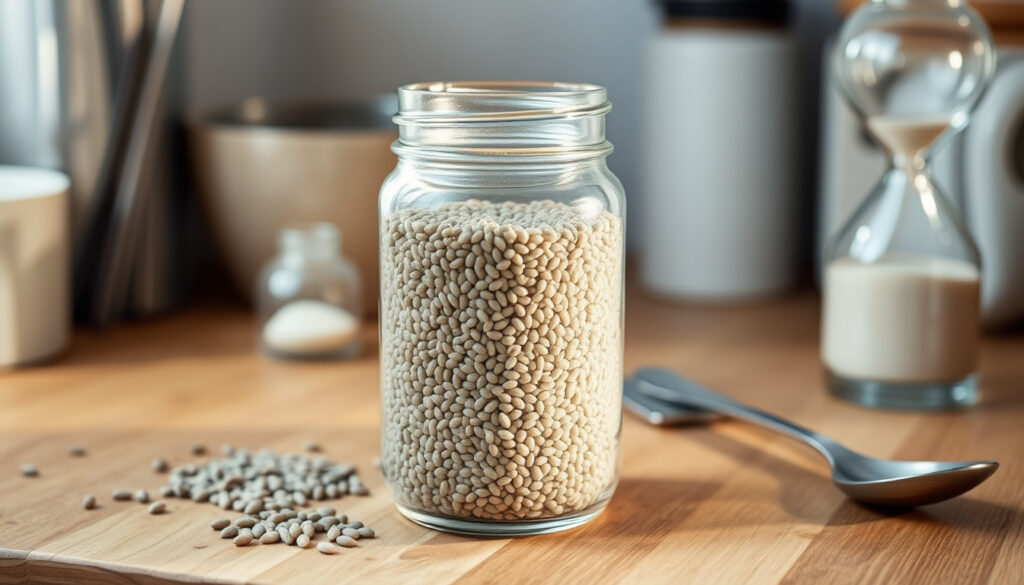
How to Eat Chia Seeds: Soaking, Timing, Safety & Benefits
If you’ve ever swallowed a spoonful of dry chia seeds with too little water, you know the gummy surprise that follows. That gel—which turns a tiny seed into a nutrient bomb—is one reason this ancient grain has become a modern pantry staple, but how you eat them can make the difference between a digestive helper and a choking hazard.
Fiber per 1 oz (28g) serving: 10 grams ·
Omega‑3 per 1 oz serving: 5 grams ·
Recommended daily serving: 1–2 tablespoons (15–30g) ·
Soaking time for gel: 20–30 minutes ·
Calories per 1 oz serving: 138 kcal
Quick snapshot
- Chia seeds are safe for most people when consumed in moderation (USDA FoodData Central)
- Soaking improves digestibility and reduces choking risk (Australian Prescriber)
- One ounce provides 10 g of fiber, 5 g of omega‑3 (USDA FoodData Central)
- Whether chia seeds alone lower blood pressure in people (NCCIH)
- Optimal timing for weight loss remains unconfirmed by strong evidence (Healthline)
- Chia has been cultivated in Mexico and Guatemala since pre‑Columbian times (Encyclopaedia Britannica)
- FDA approved chia seeds as a food ingredient in 2009 (U.S. Food and Drug Administration)
- More research needed on interactions with blood‑pressure and diabetes medications (NCCIH)
- Potential expansion as a sustainable egg replacer in commercial baking (Harvard T.H. Chan School of Public Health)
Six key specs, one pattern: chia seeds pack a nutrient density that few whole foods can match, but their preparation directly determines safety and absorption.
| Attribute | Value |
|---|---|
| Botanical name | Salvia hispanica |
| Native region | Central America |
| Typical serving size | 1–2 tablespoons (15–30g) |
| Fiber per 1 oz serving | 10 grams |
| Omega‑3 per 1 oz serving | 5 grams |
| Calories per 1 oz serving | 138 kcal |
What is the right way to eat chia seeds?
Can chia seeds be eaten raw?
- Yes, dry chia seeds are safe to eat raw, but they absorb liquid in your mouth and throat, which can create a choking hazard if swallowed with insufficient fluid (National Capital Poison Center).
- Soaking or grinding improves the texture and makes nutrients more accessible (Harvard T.H. Chan School of Public Health).
How long to soak chia seeds before eating?
- Soak for 20–30 minutes to achieve a gel‑like consistency. A longer soak (overnight) yields a thicker pudding (Healthline).
- The gel forms because soluble fiber and mucilage in the seed coat bind with liquid (Harvard T.H. Chan School of Public Health).
Should you chew or swallow chia seeds?
- Chewing is safe and can help break the seed coat. Swallowing dry seeds whole with little liquid increases choking risk (Australian Prescriber).
- For people with swallowing difficulties, soaked or ground seeds are strongly advised (National Capital Poison Center).
How to eat chia seeds with water?
- Mix 1–2 tablespoons of seeds into 8–10 ounces of water, stir, and let sit for 20 minutes. Drink the gel as is, or add lemon or honey for flavor (Healthline).
How to eat chia seeds with yoghurt?
- Stir 1–2 teaspoons of dry seeds directly into yoghurt. They will soften slightly after 5–10 minutes without becoming fully gelled, creating a pleasant texture (Encyclopaedia Britannica).
Soaking isn’t just about texture—it’s the difference between a nutrient boost and a potential trip to the emergency room. Dry chia seeds can expand to 10–12 times their volume in the esophagus.
The pattern is clear: proper hydration turns a hazard into a health asset.
Is there a downside to eating chia seeds?
Should I eat chia seeds if I have low blood pressure?
- The National Center for Complementary and Integrative Health states there is not enough reliable evidence to conclude that chia seeds alone lower blood pressure in people (NCCIH).
- However, taking large amounts alongside blood‑pressure‑lowering medication may cause additive effects. The NCCIH advises caution for those on antihypertensive drugs.
What are the dangers of chia seeds?
- Choking hazard: dry seeds can swell in the esophagus, especially if swallowed with too little liquid (National Capital Poison Center).
- Digestive issues: very large servings may cause bloating, gas, or abdominal discomfort due to high fiber content (Medical News Today).
- The U.S. Food and Drug Administration recommends introducing high‑fiber foods gradually and pairing them with adequate fluid (FDA dietary fiber guidance).
The implication: known risks are manageable with simple precautions.
Is it better to consume chia seeds at night or in the morning?
What is the best time to drink chia seeds for weight loss?
- No high‑quality human trial has determined an optimal time for weight loss (NCCIH).
- Some consumer guidance suggests morning consumption may support satiety and energy, while evening use may aid overnight digestion (Healthline).
How to use chia seeds in the morning on an empty stomach?
- Mix 1 tablespoon of seeds into a glass of water or lemon water and let it sit for 20 minutes before drinking. This provides hydration, fiber, and omega‑3s to start the day (Harvard T.H. Chan School of Public Health).
What are the benefits of soaking chia seeds overnight?
- Overnight soaking fully hydrates the seeds, making the nutrients more bioavailable and creating a ready‑to‑eat pudding texture (Harvard T.H. Chan School of Public Health).
- This method reduces the phytate content, which can improve mineral absorption (Medical News Today).
How much chia seeds should you eat per day?
- A daily intake of 1–2 tablespoons (15–30 g) is commonly recommended by nutrition experts (American Heart Association).
- Start with 1 teaspoon and gradually increase to improve tolerance (FDA dietary fiber guidance).
The pattern: when you eat matters less than that you prepare them correctly.
Do chia seeds reduce belly fat?
Are chia seeds good for nerve health?
- Chia seeds are one of the richest plant sources of the omega‑3 fatty acid ALA, which supports nerve cell structure and function (USDA FoodData Central).
- No direct evidence links chia supplementation to improved nerve health in humans, but the nutrient profile is favorable (NCCIH).
How to use chia seeds for glowing skin?
- Antioxidants in chia seeds, including chlorogenic acid and caffeic acid, may help protect skin from oxidative damage (Harvard T.H. Chan School of Public Health).
- Topical use: a gel made from soaked seeds can be applied as a natural mask, though clinical evidence is limited (Medical News Today).
The implication: realistic expectations keep this seed in its proper place.
What not to mix with chia seeds?
- Avoid mixing large amounts of chia seeds with anticoagulant medications (blood thinners) without medical supervision, because the omega‑3 content may have mild anti‑clotting effects (NCCIH).
- Chia’s high fiber content can interfere with the absorption of some diabetes medications; take chia at least 2 hours apart from medication (Healthline).
- Do not consume dry chia seeds directly without enough liquid—this is the most common choking risk (National Capital Poison Center).
If you are on any daily medication, especially for blood pressure or diabetes, a quick check with your pharmacist before adding chia to your routine is a wise precaution.
The catch: drug interactions are rare but real, and easily managed with a consultation.
Step-by-Step Guide to Eating Chia Seeds
- Measure 1–2 tablespoons of chia seeds. Start with 1 tablespoon if you are new to high‑fiber foods.
- Mix with 6–10 parts liquid (water, milk, juice, or yoghurt). For a pudding, use a ratio of ~1:4; for a drink, ~1:10.
- Let sit for 20–30 minutes at room temperature, or refrigerate overnight for a thicker texture. Stir after 5 minutes to break up clumps.
- Stir again and check consistency. If too thick, add more liquid. Add toppings like fruit, nuts, or honey.
- Enjoy as a pudding, smoothie booster, or egg replacer in baking (1 tbsp seeds + 3 tbsp water = 1 egg).
For an alternative no‑soak method, sprinkle dry seeds over oatmeal, yoghurt, or salads—just ensure you drink enough fluid alongside.
Confirmed facts
- Chia seeds are safe for most people in moderate amounts (1–2 tbsp daily) (USDA FoodData Central)
- Soaking improves digestibility and reduces choking risk (Australian Prescriber)
- One ounce provides 10 g fiber and 5 g omega‑3 (USDA FoodData Central)
What’s unclear
- Whether chia seeds significantly lower blood pressure on their own (NCCIH)
- Optimal timing for weight loss (Healthline)
- Long‑term effects of very high daily consumption (Medical News Today)
What experts say
There is not enough reliable evidence to conclude that chia seeds alone lower blood pressure in people.
— NCCIH (U.S. federal research agency)
Soaking chia seeds is non‑negotiable for safety and digestion. The three best ways are in water, in yoghurt, or as an egg substitute—but never dry on its own.
— Dr. Sethi (nutrition expert)
The American Heart Association recognizes chia as a nutrient‑dense seed that can fit into a heart‑healthy eating pattern, but it does not recommend chia as a treatment for hypertension.
— American Heart Association (heart health authority)
For the average consumer, chia seeds are a safe, nutrient‑dense addition to a balanced diet—provided they are soaked or consumed with enough liquid. The real divide is between those who treat chia as a casual sprinkle and those who understand the mechanics of soluble fiber: the first group may face choking or digestive issues; the second gets a steady supply of fiber, omega‑3s, and antioxidants. For anyone managing blood pressure or taking medication, the choice is clear: talk to a doctor before making chia a daily habit, or risk unintended interactions that outweigh the benefits.
If you are new to these tiny seeds, a guide on eating chia seeds safely explains the proper soaking methods and daily intake limits to avoid digestive discomfort.
Frequently asked questions
Can chia seeds be cooked?
Yes, chia seeds can be added to hot cereals, soups, and baked goods. Heat does not destroy their nutrients, though it may slightly reduce the thickening ability of the gel.
What is the best liquid to soak chia seeds?
Water, milk (dairy or plant‑based), fruit juice, and coconut water all work well. The liquid choice affects the final flavor and nutrient profile.
Can chia seeds be added to hot food?
Yes, stir them into oatmeal, porridge, or soup. They will absorb some liquid and soften without forming a rigid gel.
Are chia seeds gluten‑free?
Yes, chia seeds are naturally gluten‑free. However, check packaging for cross‑contamination if you have celiac disease.
How to store chia seeds?
Store in an airtight container in a cool, dry pantry for up to 2 years. For longer freshness, refrigerate or freeze.
Can you eat chia seeds during pregnancy?
Moderate consumption (1–2 tbsp per day) is generally considered safe during pregnancy, but consult your healthcare provider because of the high fiber and potential blood‑pressure effects.
Do chia seeds expire?
Yes, they can go rancid due to their omega‑3 content. Rancid seeds smell fishy or bitter. Proper storage extends shelf life.
More related posts
 Good Afternoon in Chinese: Xiàwǔ Hǎo & Cantonese Guide
 2500 Baht to SGD: Live Rate & Converter Comparison
 Mustafa Online Gold Rate Today: 22K & 24K
 Tonde Hi Ni Iru – SPYAIR Haikyuu Opening Lyrics Meaning
 UOB Debt Consolidation Plan: Rates, Requirements & Review (2026)
 Race Card & Results: Today, Tomorrow, UK & Irish
 Can Dogs Eat Guava? Benefits, Risks and Safe Feeding Guide
 Bee Choo Bukit Merah: Appointment, Reviews, Herbal Hair Treatment